Different Types of Rocks
There are three classifications of rocks:
- Igneous
- Metamorphic
- Sedimentary
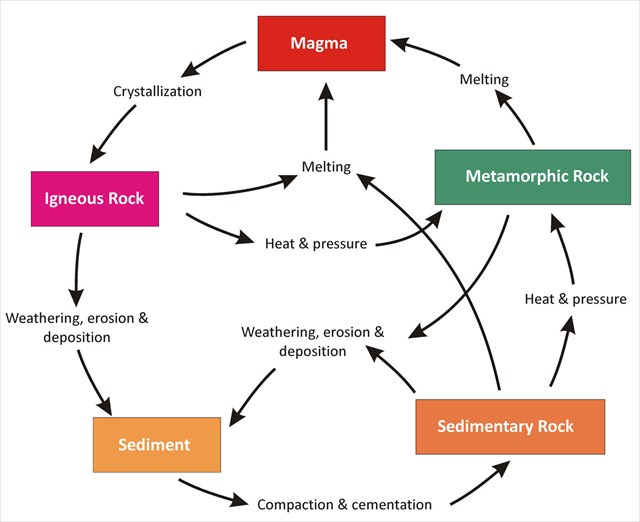
Figure 1 - The rocks of the Earth are always in a constant state of change.
Igneous
Igneous rocks put simply are cooled molten rock. Magma is molten rock beneath the Earth's surface and due to the magma's slow cooling, intrusive igneous rocks form and are characterized by large crystals due to extended cooling time. An example of an intrusive rock is granite. Extrusive igneous rocks form when lava on the Earth's surface cools rapidly and small or no crystals form. Examples of extrusive rocks are basalt or obsidian.
An excellent place to find Igneous Rocks are in the Scottish Highlands and on the Isle of Skye.
Metamorphic
Metamorphic rocks can be considered a hybrid of igneous and sedimentary rocks. They are generally existing rocks that are compressed under immense heat and pressure to be partially melted but also have their chemical composition changed slightly. Due to the high level of compression and partial melting, these rocks are very hard and tough. These rocks are found in the Caledonian Mountains. Examples of these rocks are Gneiss and Quartzite.
Sedimentary
There are three classifications of sedimentary rocks. Sedimentary rocks can be:
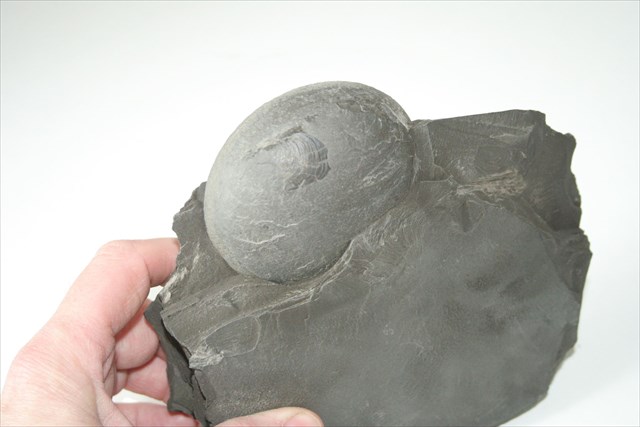
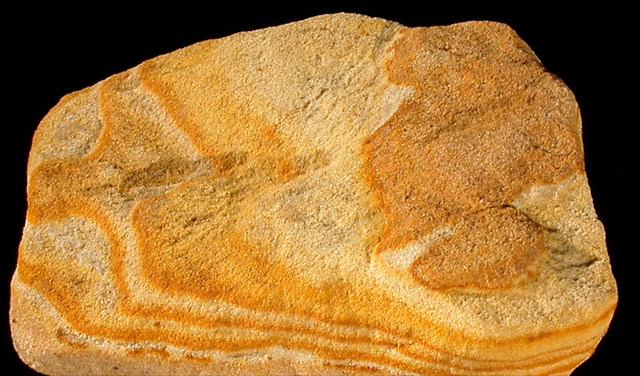
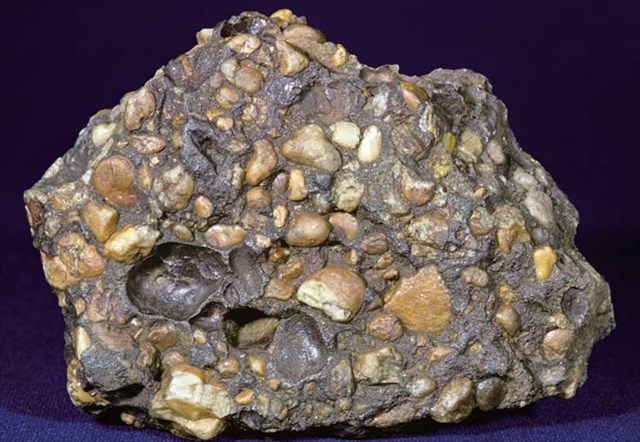
- Clastic where fragments (or clasts) of other rocks compressed under pressure to form a new mix of rock such as sandstone, shale, or conglomerate. These rocks are comprised of rock particles (clasts), clay, mica, quartz, and feldspar. The differences are shown in Table 1.
- Chemical in nature, where saline solution evaporates to leave salt behind as halite or mineral ions are deposited to form new rock.
- Biochemical where coal falls under this classificationin addition to limestone where the skeletons of tiny marine animals were compressed to form rock (Mussieux and Nelson, 1998).
As the name suggests, sedimentary rocks are formed from sediments (particles) of other rocks, precipitated minerals from ion-rich water, or from the remains of plants or animals.
Most of the solid volume of the Earth consists or igneous or metamorphic rocks (92%) while the majority of the surface of the Earth is made up of sedimentary rock (73%) due to the deposition of the surface where most sedimentary rocks form.
Clastic Sedimentary Rocks
Table 1 - Clastic sedimentary rocks are defined by the size of the particles they contain.
 |
 |
 |
| Mudstone (grain size up to 0.0625 mm) |
Sandstone (grain size 1/16 mm to 2 mm) |
Conglomerate (grain sizes greater than 2 mm) |
Clastic sedimentary rocks generally deposited in layers called strata. The occurs because when sediments are deposited in water they gradually settle out into natural layers as shown in Figures 2 and 3.

Figure 2 - Sediments are deposited from rivers into deep water bodies into strata.

Figure 3 - An example of strata at the southern tip of South America.
Chemical Sedimentary Rocks
Chemical sedimentary rocks form when mineral ions suspended in water and deposited when the water evaporates away leaving the minerals behind. Examples of these include halite (table salt), gypsum (as found in drywall), or tufa/travertine.
Biochemical Sedimentary Rocks
Biochemical sedimentary rocks are formed out of the direct remains of former living organisms.
- Coal: comprised of dead awamp material
- Limestone: made from the skeletons of microorganisms and the calcium within their bodies (primarily made of calcite and aragonite)
- Chert: made from micro and macro fosssils of organism (primarily made of silica)
What am I seeing here?
These rocks for the new alpine house were recycled from a road building project in Germany and make for excellent planters due to their easy stackability and rough texture allowing for plants to root.
The main difference between Tufa and Travertine is that Travertine tends to form at hot springs with Calcium Carbonate in the water. Since hot water more readily dissolves mineral ions, Travertine around hot springs is denser from all of the porous cavities getting filled with precipitated minerals. Tufa contains more voids and is overall less dense.
To Log This EarthCache
Please e-mail me the answers to the EarthCache answers through my geocaching.com profile or through Geocaching Message Centre to prove your visit to this site. Do not post answers in your log!
1.) Desribe the look and texture of the rock in front of you.
2.) What are at least two differences between Travertine and Tufa? Much can be found on the cache page.
3.) Do you think the rock in front of you, behind the sign is Tufa or Travertine?
4.) What subcategory of sedimentary rock does the rock in front of you fall into?
5.) From the sign: Which destination in Scotland can you find outcrops of this rock?