IF YOU WOULD LIKE TO ADD TO THIS SERIES, PLEASE CONTACT THE SERIES OWNER (SEE BELOW)
We are often told (correctly, if somewhat ideologically), that geocaches should take us to somewhere "interesting", and not simply be placed just for the sake of it. The aim of this series is to try and adhere to this ideal by basing caches around details given on an Interpretation Board about the area in which it is situated. By definition, it is hoped that this information will be "interesting", and will help the cacher discover things about the area that would often not be revealed by a traditional cache.
This is a series of caches that follow the disused railway track alongside the River Wye to Biblins Bridge and then back on the other side of the river to the ferry opposite Symonds Yat East (3 miles in total).
In the 17th century, a weir was built here to divert water to the ironworks. The New Weir ironworks were in use from at least the 1590s up until the 1800s. It had various forges, mills and hammers powered by water wheels for refining iron from nearby furnaces.
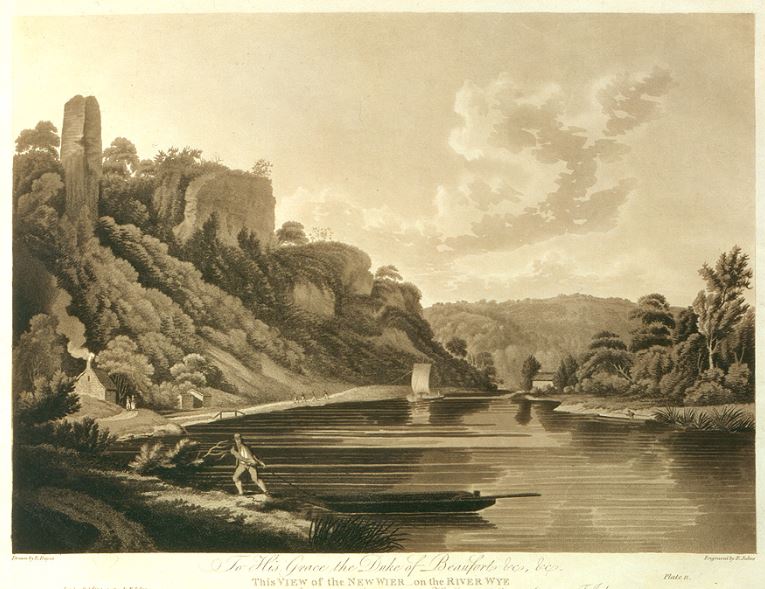
In 1753 George White retired from the business and granted a 14-year lease of the site to Mr. John Partridge, an ironmonger from Ross, for a £270 annual rent. At this time the works seem to have consisted of fineries and puddling mill for the turning out of manufactured iron as sheet and rod iron. The pig iron for fining was brought from Tintern by river and from Carmarthen by vessel to Llandogo and from there by barge. John Partridge condensed the forge at New Weir into one unit with the forge at Lydbrook, both of which were served by his large furnace at Bishopswood.
The lease continued in the family until the death of Mrs. Osborne of Monksmill in Gloucestershire in 1798, when the contract ceased and the forge closed down. In 1814 the weir was damaged in severe frosts and soon after the remains of the weir, lock and forge buildings were demolished.
At the published co-ordinates, you will find a really good information board that tells you more about the weir and ironworks. Find the answers to these questions:
Q1: What is the date of the plan of the weir? = ABCD
Q2: How many people are there in the photo in the top right hand corner? = E
The cache can be found at: N 51° 50.(A+E)(D-C)(C+E) W 002° 38.(E*2)(D-B-A)(B-E)
Checksum - A+B+C+D+E=23
Once you have found the cache, you can either now continue along the lane and down the steps to where the ferry goes across the river to your starting point, or you can retrace your steps. The ferry is about £1 per person and will take bikes for a small additional charge.
This series is published with the kind permission of Natural England and the Forestry Commission.
***FTF*** Congratulations to The Coachman's Pair ***FTF***
I hope that you find this an interesting variation on the caching experience. For a full list of all FYI caches in the series, please go to https://www.geocaching.com/bookmarks/view.aspx?code=BM4RZ8H For more details of the FYI series as a whole, you can visit the dedicated website at fyigeocaching.co.uk where you will also find details of how to place your own FYI cache (I'm sure you know of some interesting Interpretation Boards in your area!)