
El Municipio de Rojales ha dedicado algunas de sus calles, a las diferentes provincias españolas. Sirva esta serie para dar a conocer e invitar a visitar las mismas especialmente a la gran cantidad de visitantes extranjeros que recibimos. Y queremos dedicar la serie precisamente a aquellas que suelen ser menos conocidas y que merecen ser puestas en valor. No se trata de dar una información exhaustiva de cada provincia que forma esta serie, para eso ya está la Wikipedia, sino ofrecer unas pequeñas pinceladas que permitan a quien no la conozca, obtener alguna información de utilidad acerca de las mismas.

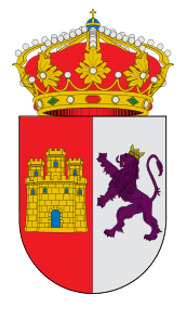
Provincia de Cáceres: Datos fundamentales:
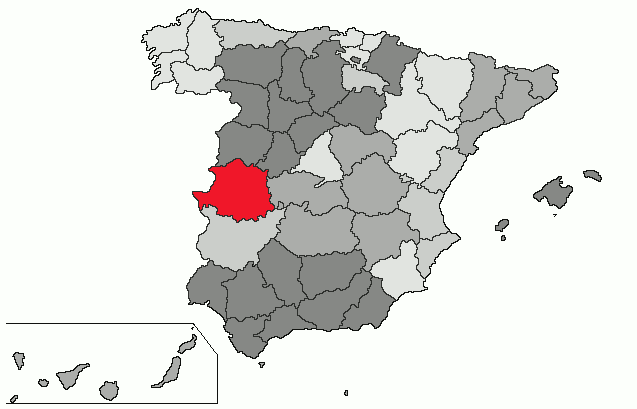
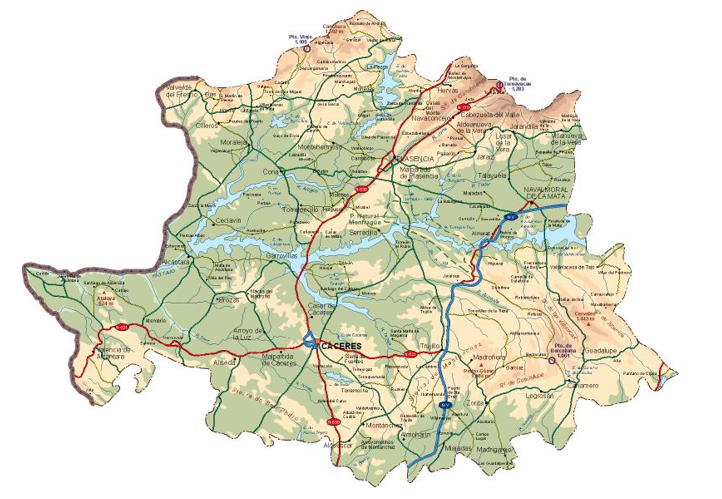
Cáceres es una provincia situada al oeste de España, al norte de la comunidad autónoma de Extremadura. Tiene una población de 406 267 habitantes (INE 2015). Su capital y la ciudad más poblada es la ciudad de Cáceres, seguida de Plasencia y de Navalmoral de la Mata. Es la segunda provincia más extensa de España, después de Badajoz. Limita con Castilla y León a través de las provincias de Salamanca y Ávila y con Castilla-La Mancha por Toledo. Al sur se encuentra Badajoz, y al oeste la frontera con Portugal.
Respecto a su Red de carreteras, la provincia de Cáceres cuenta en 2011 con cinco autovías: la A-5, la A-58, la A-66, la EX-A1 y la EX-A2, siendo las tres primeras nacionales y las otras dos autonómicas. Dentro de las autovías nacionales, la A-5 o autovía de Extremadura es una autovía que une Madrid y Badajoz, pasando en la provincia de Cáceres por Navalmoral de la Mata, Almaraz, Jaraicejo, Trujillo, Puerto de Santa Cruz, Villamesías y Miajadas. La A-58 conecta Cáceres con la A-5 a la altura de Trujillo. La A-66 o autovía Ruta de la Plata une Sevilla con Asturias pasando en la provincia de Cáceres por Casas de Don Antonio, Aldea del Cano, Cáceres, Casar de Cáceres, Cañaveral, Plasencia, Villar de Plasencia, Aldeanueva del Camino y Baños de Montemayor. El objetivo futuro de la A-58 es unir Trujillo con Portugal a la altura de Valencia de Alcántara, sustituyendo a la carretera N-521.
Cáceres es muy frecuentada por los aficionados a la ornitología, debido a su entorno natural. Además, vale la pena la visita al Valle del Jerte durante la primavera para disfrutar la floración de los cerezos. En la provincia de Cáceres podemos encontrar cientos de lugares que el viajero no puede dejar de visitar. Al patrimonio histórico y cultural hay que añadir espacios naturales impresionantes, como el Parque Nacional de Monfragüe, una oferta gastronómica rica y variada, y muchas opciones de ocio y diversión.
Su capital:
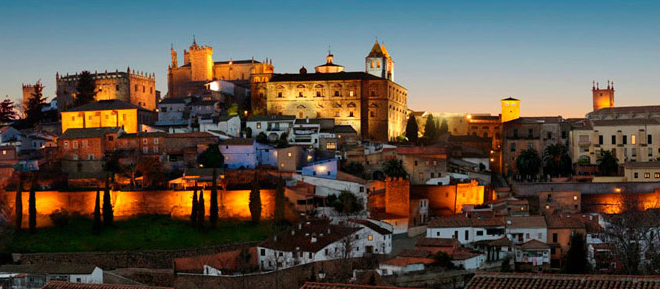
Cáceres es una ciudad y municipio español situado en el centro de la comunidad autónoma de Extremadura. La ciudad es capital de la provincia homónima desde 1822 y capital judicial de Extremadura desde 1790. Con 95 855 habitantes en 2016, es el municipio más grande y poblado de la provincia, con el 22,69% de la población total de la misma. Es además el municipio más extenso de España con una superficie de 1750,33 km².
El origen de la ciudad de Cáceres se sitúa en torno al año 25 a.C., cuando Lucio Cornelio Balbo funda la colonia romana de Norbensis Caesarina. Pero no es hasta el siglo XII cuando la ciudad (llamada Hizn Qazris por los almorávides) comienza a tener relevancia debido a su posición estratégica en las luchas entre árabes y cristianos. En 1169, Fernando II de León conquista Cáceres y deja la villa en manos de un grupo de caballeros que, poco después, crean la orden militar y religiosa de los Frates de Cáceres. Pero poco después, en 1173, el caudillo almoárabe Abú Ya'qub arrebató la ciudad a los cristianos. La ciudad de Cáceres fue conquistada definitivamente por Alfonso IX de León el 23 de Abril de 1229 (día de San Jorge), más de medio siglo después de la derrota de los Frates. La importancia de la ciudad fue en aumento y se construyeron numerosos palacios y casas solariegas. Con los Reyes Católicos alcanza Cáceres su época de mayor esplendor.
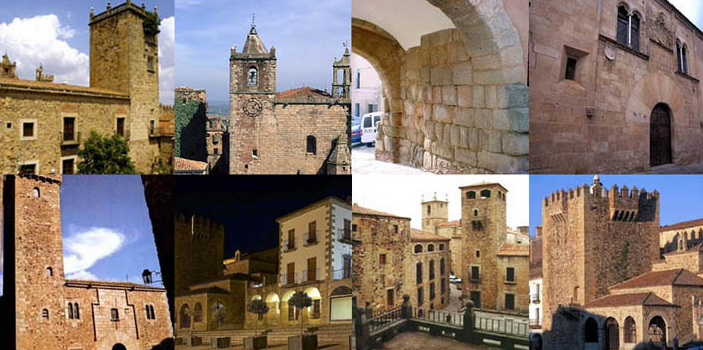
Para dejarse conquistar por esta ciudad simplemente hay que pasear sin prisas por la ciudad monumental y contemplar la belleza de sus monumentos y sus calles. La ciudad vieja de Cáceres fue declarada Patrimonio de la Humanidad por la Unesco en 1986, ya que es uno de los conjuntos urbanos de la Edad Media y del Renacimiento más completos del mundo. La Concatedral de Santa María, el Palacio de las Veletas (Museo provincial de Cáceres), los palacios de los Golfines (de Arriba y Abajo), la Casa del Sol, la Torre de Bujaco o el Arco de la Estrella son algunos de sus monumentos más bellos y admirables. Asimismo, destaca por ser la sede del Campus de Cáceres y por su dinámica vida cultural en el conjunto de la comunidad autónoma.
De acuerdo con la clasificación climática de Köppen el clima de Cáceres es mediterráneo (Csa), pudiéndose considerar mediterráneo continentalizado de acuerdo con otras fuentes, por tener una amplitud térmica notablemente mayor que en la costa mediterránea. La temperatura media en el observatorio de Cáceres en el periodo 1982-2010 es de 16,3 °C, alcanzándose el máximo en el mes de julio con 26.2 °C y el mínimo en enero con 7,8 °C. La temperatura media en invierno supera los 10 °C de máxima todos los meses, siendo el más frío enero con 11,8 °C, llegando a 4 °C de mínima con algunas heladas ocasionales. En verano es julio el mes más cálido donde la temperatura media es 33,0 °C de máxima y 18,7 °C de mínima, con máximas que superan en ocasiones los 40 °C. Los principales ríos y arroyos del municipio son afluentes del Tajo, del Guadiana o de afluentes suyos. El río Almonte, afluente del Tajo, marca el límite norte del término y su afluente el río Tamuja marca el límite este.
La ciudad es el principal centro comercial, administrativo y eje económico de la provincia de Cáceres. Su economía se basa principalmente en el sector servicios, en el turismo y la construcción, con una limitada aportación del sector industrial centrado en industrias alimenticias, textiles, cerámicas y productos derivados del caucho.En la ciudad de Cáceres pueden obtenerse piezas de artesanía de toda la provincia de Cáceres y del resto de Extremadura, en lugares como el Centro Provincial de Artesanía en la Casa de los Moraga situada en la plaza de Santa María, donde también puede obtenerse información sobre los artesanos y datos de contacto. También se vende artesanía en tiendas situadas en la Plaza de San Jorge y los alrededores de la Plaza de San Juan. Entre la artesanía más requerida destacan cerámica, orfebrería, bordados, encajes, ebanistería, cestería, carpintería, objetos de mármol, alabastro, cobre y latón, corcho, piel y cuero.
La ciudad cuenta actualmente con más de 3.500 plazas hoteleras y, con 660.668 visitantes registrados por los centros turísticos municipales durante 2009, se convierte en el primer centro turístico de la región en número de visitantes.
Cáceres cuenta con autobuses, con líneas de transporte que dan enlace a los pueblos de alrededor y con líneas de gran recorrido que enlazan capitales de provincia. Tiene ferrocarril y un aeródromo empleado actualmente para el vuelo de ultraligeros y pequeñas avionetas, el Aeródromo de la Cervera y situado en la carretera de Mérida. La estación de Cáceres se encuentra en una situación estratégica entre las dos capitales políticas de la Península, por lo que allí pasa el tren que va de Madrid a Lisboa pasando por Extremadura. Está en marcha la construcción de una línea del AVE, cuya estación, una de las cinco que habrá en Extremadura, está en fase de construcción.
Los 10 lugares que no debes dejar de visitar en Cáceres:
1.- CASCO ANTIGUO DE CÁCERES
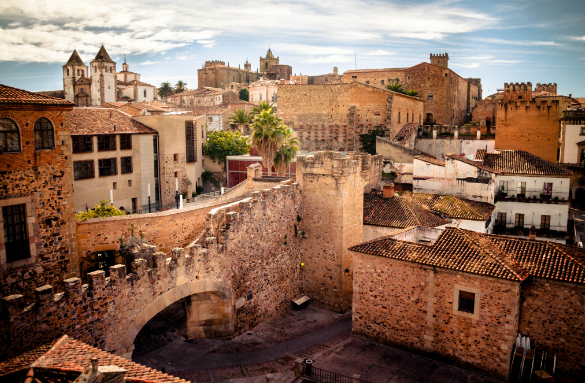
Cáceres, Ciudad Patriomonio de la Humanidad, es una de las ciudades españolas, que mejor conservado tiene su casco antiguo. Desde la Plaza Mayor se accede a la antigua ciudad amurallada donde se respira aún hoy día aire medieval. Además del excelente estado de conservación lo más significativo es que no hay edificios modernos que desvirtuen el trazado y el paisaje visual. Este homogeneidad es la que hace de Cáceres una ciudad diferente. Un lugar que necesariamente hay que visitar si se viaja a Extremadura ya que es, probablemente y junto con Mérida, la ciudad que dispone del mayor legado patrimonial de la Comunidad.
2.- PLAZA MAYOR
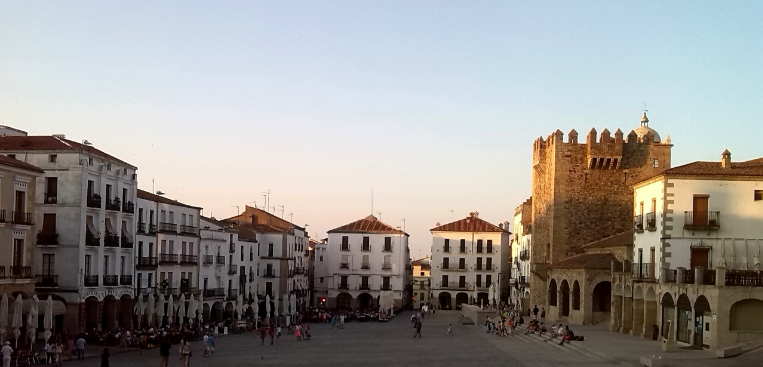
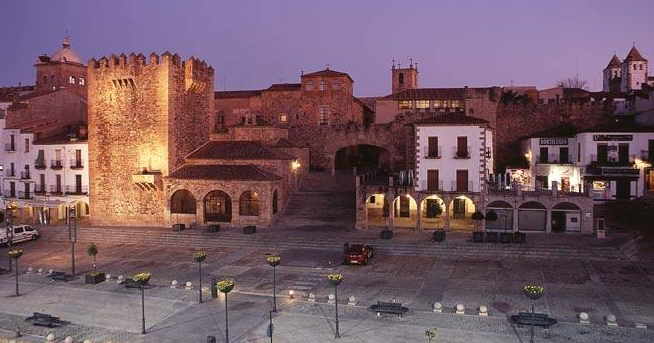
Esta plaza surgió en el siglo XII, con motivo de una feria anual que aglutinaba a una importante multitud de gentes. Durante el siglo XV se rodeó de soportales apoyados en pilares de piedra y arcos de medio punto. Es una de las plazas más amplias de España. Una de las puertas más importantes de acceso es el Arco de la Estrella, construido por Manuel de Lara y Churriguera.
3.- CATEDRAL
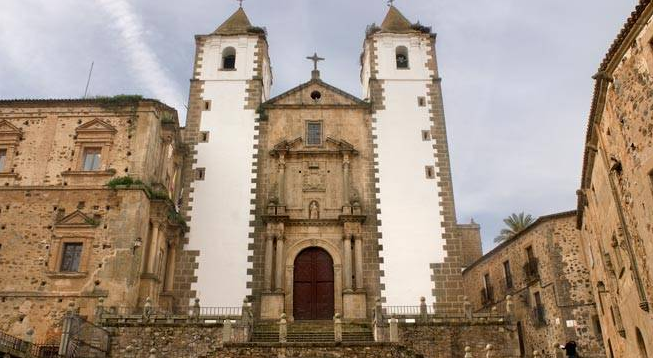
Fue construida en estilo gótico entre los siglos XV y XVI sobre otra románica del siglo XIII, y está declarada Monumento Histórico Artístico. Sus portadas son góticas, aunque alguna está decorada con canecillos románicos. Lo más destacable de su exterior es su alta torre campanario de 3 cuerpos, visible desde varios puntos de la ciudad, y a la que puede subirse mediante una escalera desde el interior de la iglesia (muy recomendable pues las vistas son impresionantes). Junto a la torre, en la Plaza de Santa María, se halla la estatua de bronce de San Pedro de Alcántara, obra del escultor Pérez Comendador. El interior de la iglesia es muy espacioso, con techos de gran altura y planta rectangular de tres naves, con arcos apuntados y bóvedas de crucería. Lo más destacable es el retablo mayor, dedicado a la Asunción de la Virgen. Fue realizado por Roque Balduque y Guillen Ferrant en el siglo XVI, en madera de cedro y pino sin policromar.
4.- TORRE DE BUJACO
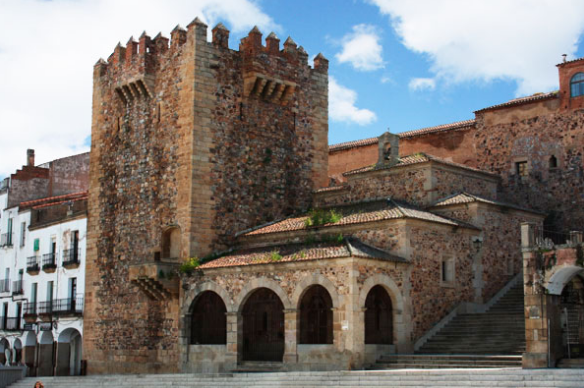
Símbolo por excelencia de la ciudad, la Torre de Bujaco es una torre albarrana perteneciente a la muralla almohade de Cáceres, con la que se conecta por medio de un pequeño puente. Fue edificada por los árabes en el siglo XII sobre sillares romanos, con una altura de 25 metros y planta cuadrada. Está defendida por 3 matacanes con almenas y arpilleras, y está rematada con almenas piramidales de estilo musulmán. Llama la atención el balcón renacentista, que fue añadido en el siglo XVI y es conocido como el "balcón de los fueros".
5.- HERVÁS Y SU BARRIO JUDÍO
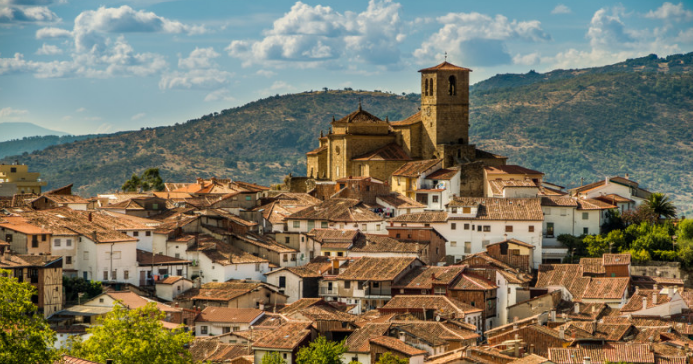
De los que enamoran a primera vista. Situado en un entorno natural mágico, tiene algo que lo convierte en un pueblecito mágico. Pasear por sus alrededores, cruzar el puente por donde antes pasaba el tren, conocer su larga historia, perderse por su judería o imaginarse a los peregrinos de paso para ir por la Vía de la Plata hacia el camino de Santiago convierten la estancia en especial. Se encuentra a muy poquito del Valle del Jerte y debe de ser un paso obligado si estás realizando una visita por la zona. Seguramente sea uno de los pueblos con un entorno natural más bonito de España.
6.- GUADALUPE Y SU MONASTERIO
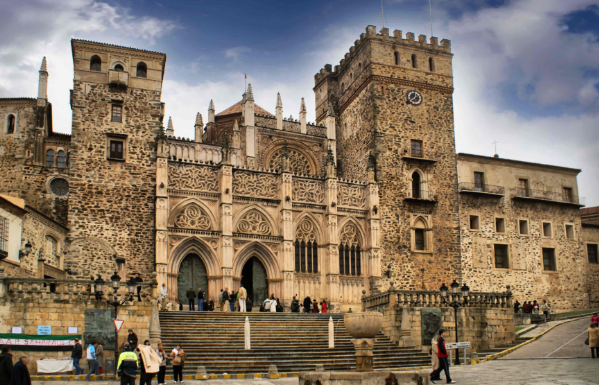
Un recorrido por el casco histórico de Guadalupe envuelve muchas cosas. Para empezar, el Monasterio de Guadalupe, una construcción impresionante que constituye el centro del pueblo en la Plaza de Santa María, y junto a la cual está la calle nueva de los capellanes. Siguiendo nuestro paseo llegaremos hasta la plazuela del hospital de la pasión, donde nuestro guía nos hizo una pequeña demostración de reclamos ornitológicos sorprendente, la mayoría hechos a mano. Cerca del final de nuestra visita atravesamos el Arco de San Pedro que encierra una porción de la historia de Guadalupe.
7.- TRUJILLO
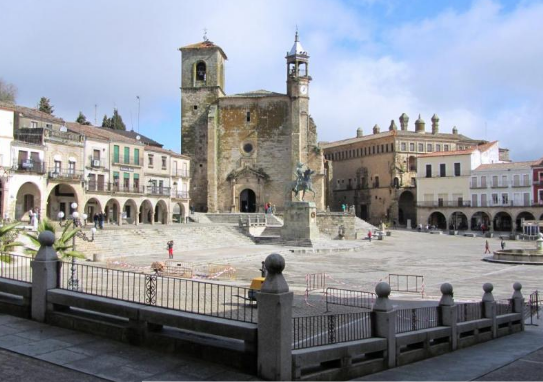
Trujillo, situada entre las vegas de los ríos Tajo y Guadiana, alberga un importante conjunto de iglesias, castillos y casonas solariegas que se estructuran en torno a su Plaza Mayor. Pero, además, esta ciudad cacereña ha dejado una importante huella en la historia, ya que en el siglo XVI fue cuna de ilustres personajes vinculados al Descubrimiento de América. Por esta razón, Trujillo queda enmarcada en plena Ruta de los Conquistadores, que recorre otras localidades extremeñas como Medellín, Villanueva de la Serena o Jerez de los Caballeros. Al pasear por el casco histórico de Trujillo tienes una sensación similar a la de pasear por Toledo o por Roma: Toda esquina alberga algún monumento histórico importantísimo y cualquier callejón es perfecto para perderse y retroceder en el tiempo. Además de importantes edificios góticos, Trujillo destaca por su arquitectura de la época de los Reyes Católicos (siglo XV-XVI). Durante estos siglos este pueblo fue uno de los enclaves más importantes de España tanto en el ámbito político como en el económico y cultural.
8.- PARQUE NACIONAL DEL MONFRAGÜE
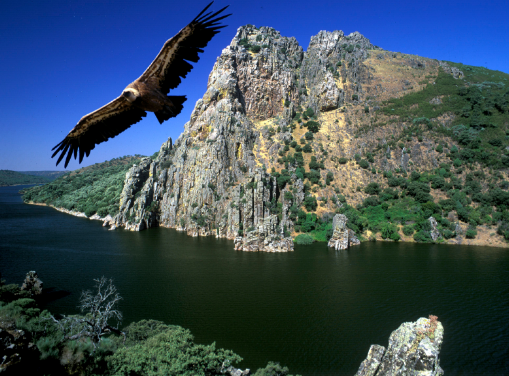
El Parque Nacional de Monfragüe es un Completo Exponente de lo que es un Ecosistema Mediterráneo.Situado en la Provincia de Cáceres y en las cercanías de Trujillo y Plasencia es además de una gran representación del Bosque Mediterráneo principalmente del Encinar pero sin olvidar especies tan Poco Comunes por aquí como el Acebo o el Abedul además del todo el Cortejo Botánico que corresponde a esta Privilegiada Zona.En cuanto a Fauna Monfragüe tiene 290 especies de Vertebrados de ellas 180 especies de Aves 53 de Mamíferos,15 de Anfibios y 26 de peces. Este espacio Protegido fué declarado Parque Natural en 1979 y posteriormente Parque Nacional en el año 2007 cuenta con 17852 hectáreas,está Surcado por los Ríos Tajo y Tiétar y es un verdadero Paraíso para los Ornitólogos que acuden aquí de Múltiples Paises para Contemplar una Avifauna tan Escasa como Interesante.
9.- VALLE DEL JERTE
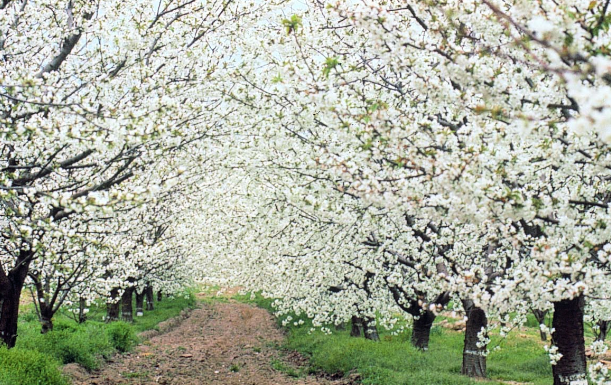
Es una de las comarcas más conocidas de Extremadura. En el Valle del Jerte podemos encontrar numerosas gargantas, caídas de agua y piscinas naturales. Pero si por algo es mundialmente conocido, es por el espectáculo único de sus miles y miles de cerezos en floración. Todos los habitantes del Valle del Jerte, esperan con anhelo que llegue esas fechas a las que seguirán su floración, todo un espectáculo y la posterior recogida del maravilloso fruto, las cerezas . La floración de estos árboles de un millón y medio de frutales, convierten estos valles, pues no es el único en un auténtico y espectacular manto blanco, tras la retirada de la nieve en sus cumbres. En sus colinas se asoma una vez al año este momento, un milagro de la naturaleza.
10.- MONASTERIO DE YUSTE
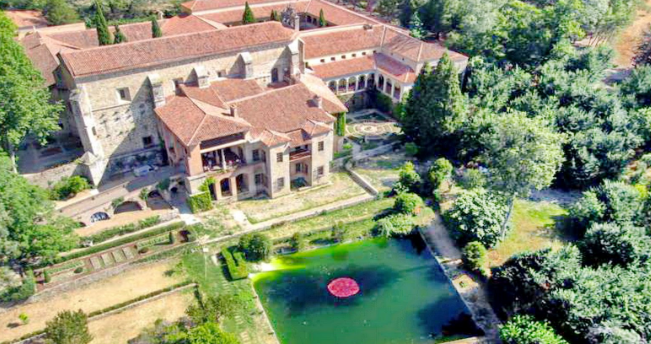
El Monasterio de Yuste tiene su origen en un pequeño eremitorio, que vio aumentar su tamaño gracias a la donación de unos terrenos a principios del siglo XV. Se trata de un Monasterio de Jerónimos fundado en 1408. Su fama internacional se debe a que en él, desde 1557, pasó sus últimos meses el emperador Carlos V una vez que dejó la corona a su hijo Felipe II. Para él se erigió un pequeño y austero palacio en el flanco meridional del convento. Posee una interesante iglesia gótica, con un retablo de Juan de Herrera y un coro gótico tallado.
Algo sobre su gastronomía
La gastronomía tradicional extremeña es fundamentalmente una cocina sencilla, de carácter rural, practicada durante siglos por pastores y campesinos a partir, eso sí, de unas materias primas excelentes. Muchos platos tradicionales surgen de la necesidad de aprovechar al máximo los recursos que ofrecía la naturaleza en cada momento. Hasta nuestros días ha llegado una cocina tradicional que une estas influencias, con infinitos matices.. cada comarca, cada pueblo, aporta ese toque particular a su cocina que la hace diferente, aun compartiendo las mismas raíces.
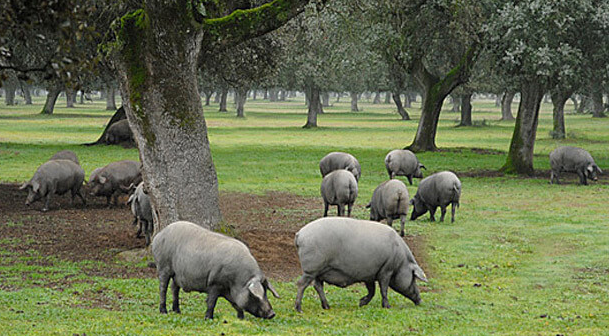
El culto al cerdo y a sus derivados es algo fundamental en la cocina cacereña. Y hay una buena razón para ello: la gran calidad de las carnes de los cerdos alimentados exclusivamente con bellotas y criados al aire libre, que dan como resultado excelentes productos, carnes y embutidos. Y como rey indiscutible dentro de estos productos, se alza el insuperable jamón de pata negra que se elabora en Extremadura, concretamente en la vecina provincia de Badajoz. Este jamón, único en su género en todo el mundo, es tan delicioso como saludable, un auténtico manjar que ningún viajero de dentro y fuera de nuestras fronteras se resiste a catar.
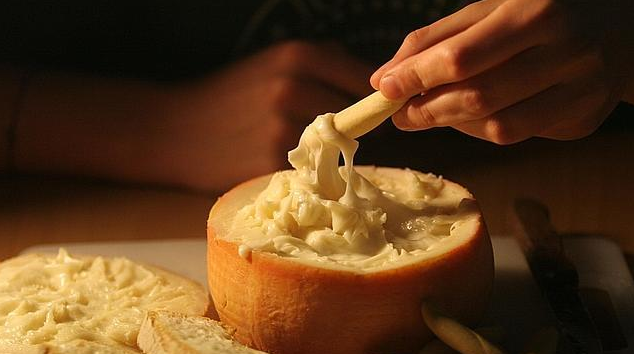
Además del jamón y de excelentes embutidos como el chorizo blanco o las morcillas frescas, en Cáceres también es posible degustar uno de los quesos más exquisitos y particulares de nuestra geografía: la Torta del Casar. Se trata de un queso elaborado exclusivamente con leche de oveja, de forma ancha y plana y cuya corteza exterior alberga un interior cremoso e intenso. Este queso se suele calentar para consumirlo; después se recorta la tapa y ya es posible untar su delicioso corazón.
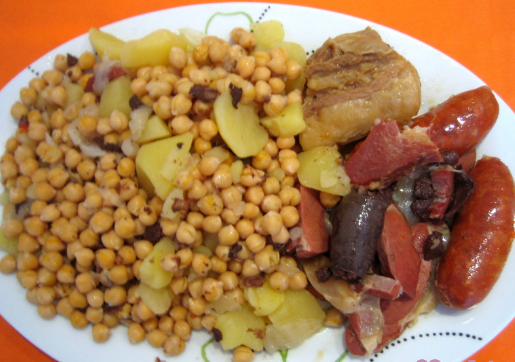
Un ingrediente que suele aparecer por doquier en las recetas cacereñas es el excelente pimentón de la Vera, una especia de hermoso color rojo intenso que aporta un sabor indiscutible a los embutidos, sopas y guisos. Y si de sopas y pucheros se trata, la gastronomía de Cáceres ofrece un completo recetario, en el cual destacan preparaciones como la sopa de cachuela, a base de hígado de cerdo, la sopa de tomate, las sopas de ajo o el popular sopicaldo. Las migas extremeñas se elaboran con pan del día anterior, tocino, ajo, pimentón, chorizo y aceite de oliva; sobre esta base existen múltiples variantes. Un plato de origen humilde que ha alcanzado la excelencia gracias a su exquisito sabor. Además de las migas, en Cáceres también es posible probar estupendos guisos y pucheros: el cocido extremeño, con garbanzos, repollo y carne; las patatas guisadas de muchas maneras...
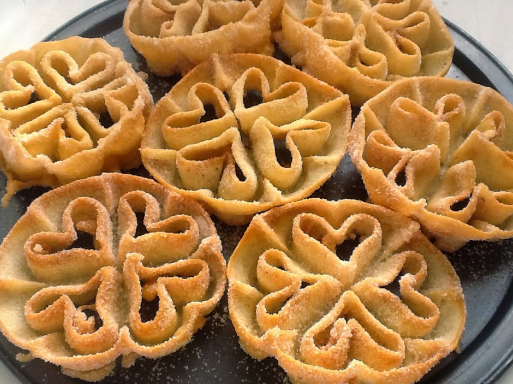
En el apartado de postres no terminaríamos nunca. Como sucede en el resto de España, hay cientos de recetas de repostería con muchas variantes propias de cada zona. Las perrunillas son dulces caseros similares a pastas de café, pero más grandes, elaboradas con manteca de cerdo, harina, huevos, anís, azúcar. Destacan los Mantecados extremeños. También con manteca de cerdo, harina, vino blanco, canela y azúcar. Van cubiertos de azúcar. Flores extremeñas. Son dulces fritos típicos de Semana Santa. Se hace una masa líquida con harina y huevo. El molde con forma de flor se introduce en la masa, que queda pegada a sus paredes de hierro, y se lleva a la sartén con aceite muy caliente. Se fríen las flores y se dejan enfriar (queda un dulce crujiente con forma de flor en tres dimensiones). Finalmente se bañan en miel. Es un dulce delicioso con una textura crujiente y suave.
SOBRE EL CACHÉ
El caché NO SE ENCUENTRA EN LAS COORDENADAS LISTADAS. Para obtenerlas,DEBERÁS ANTES HABER ENCONTRADO LOS 11 CACHÉS RESTANTES QUE COMPONEN ESTA SERIE Y ANOTAR EL NUMERO QUE ENCONTRARÁS JUNTO A LA LETRA CORRESPONDIENTE.
Debes sustituir las letras por los numeros equivalentes en la siguiente formula:
N 38º 03, A B C W 000º 42, D E F
Pero esto no será suficiente... Además necesitarás las cinco cifras de la combinación que abre el caché y que debes encontrar en los 11 cachés de la serie. La formula de la combinación es:
G H I J K
Se trata de un caché mimético, integrado en los elementos urbanísticos de la zona. Aunque el lugar es relativamente tranquilo, se ruega la maxima discrección a la hora de buscar y devolver a su sitio el caché, pues es una serie costosa y dificil de reponer.
Para mantener la esencia de los cachés y su dificultad, no se incluye ningún tipo de pista salvo en el caso de requerir alguna operación especial con alguna herramienta. Cualquier texto o foto que supongan desvelar algún elemento del caché será borrado sin previo aviso.
Gracias por buscar esta serie y esperamos que la disfrutéis tanto como nosotros escondiéndola
 Se requiere herramienta especial para abrir el acceso al contenedor. La herramienta está escondida cerca del contenedor. Busca las coordenadas del escondite de la herramienta en el lugar adecuado, o mira la FOTO SPOILER. POR FAVOR DEJA DESPUES LA HERRAMIENTA EN SU SITIO PARA SER USADA POR OTROS JUGADORES
ES MUY DE DESEAR Y DE AGRADECER UN REGISTRO DE VUESTRAS VISITAS QUE SEA ALGO MAS QUE UN SIMPLE :
"TFTC ;)" o "EASY FOUND"
COLOCAR UNA SERIE DE ESTE ESTILO REQUIERE MUCHO TIEMPO, DEDICACIÓN Y DINERO, MUCHO MAS QUE EL QUE SE TARDA EN HACER UN BUEN LOG.


The Municipality of Rojales has dedicated some of its streets, to the different Spanish provinces. Serve this series to make known and invite to visit them especially the large number of foreign visitors we receive. And we want to dedicate the series precisely to those that are usually less known and deserve to be valued. It is not a question of giving an exhaustive information of each province that forms this series, for that is already the Wikipedia, but to offer a few brushstrokes that allow to whom does not know it, to obtain some useful information about the same ones.
Province of Cáceres: Key facts:
Cáceres is a province located to the west of Spain, to the north of the autonomous community of Extremadura. It has a population of 406 267 inhabitants (INE 2015). Its capital and the most populated city is the city of Cáceres, followed by Plasencia and Navalmoral de la Mata. It is the second largest province in Spain, after Badajoz. It limits with Castile and Leon through the provinces of Salamanca and Avila and with Castile-La Mancha by Toledo. To the south is Badajoz, and to the west the border with Portugal.
With regard to its road network, the province of Cáceres has five highways in 2011: the A-5, the A-58, the A-66, the EX-A1 and the EX-A2, being the first three national and Other two autonomous. Within the national motorways, the A-5 or Extremadura motorway is a motorway connecting Madrid and Badajoz, passing in the province of Cáceres through Navalmoral de la Mata, Almaraz, Jaraicejo, Trujillo, Puerto de Santa Cruz, Villamesías and Miajadas. The A-58 connects Cáceres with the A-5 at the height of Trujillo. The A-66 or Ruta de la Plata dual carriageway connects Seville with Asturias passing in the province of Cáceres by Casas de Don Antonio, Aldea del Cano, Cáceres, Casar de Cáceres, Cañaveral, Plasencia, Villar de Plasencia, Aldeanueva del Camino and Baños de Montemayor. The future objective of the A-58 is to unite Trujillo with Portugal at the height of Valencia de Alcántara, replacing the N-521 road.
Cáceres is very frequented by fans of ornithology, due to its natural environment. In addition, it is worth the visit to the Valley of the Jerte during the spring to enjoy the flowering of the cherry trees. In the province of Cáceres we can find hundreds of places that the traveler can not miss. To the historical and cultural heritage you have to add impressive natural spaces, such as the Monfragüe National Park, a rich and varied gastronomic offer, and many leisure and fun options.
The city of Caceres
Cáceres is a city and Spanish municipality located in the center of the Autonomous Community of Extremadura. The city is the capital of the homonymous province since 1822 and judicial capital of Extremadura since 1790. With 95 855 inhabitants in 2016, it is the largest and most populous municipality of the province, with 22.69% of the total population of the same. It is also the largest municipality in Spain with an area of 1750.33 km².
The origin of the city of Caceres is around 25 BC, when Lucio Cornelio Balbo founds the Roman colony of Norbensis Caesarina. But it is not until the twelfth century when the city (called Hizn Qazris by the Almoravids) begins to have relevance because of its strategic position in the struggles between Arabs and Christians. In 1169, Fernando II de León conquered Caceres and left the village in the hands of a group of knights who, shortly after, created the military and religious order of the Frates de Cáceres. But shortly afterwards, in 1173, the Almohad caudillo Abu Ya'qub snatched the city from the Christians. The city of Cáceres was conquered definitively by Alfonso IX of Leon the 23 of April of 1229 (day of San Jorge), more than half a century after the defeat of the Frates. The importance of the city was increasing and numerous palaces and manor houses were built. With the Catholic Monarchs Caceres reaches its time of greatest splendor.
To be conquered by this city you simply have to walk slowly through the monumental city and contemplate the beauty of its monuments and its streets. The old town of Cáceres was declared a World Heritage Site by Unesco in 1986, as it is one of the most complete urban sets of the Middle Ages and Renaissance in the world. The Cathedral of Santa María, the Palace of Veletas (Provincial Museum of Cáceres), the Palaces of the Golfines (Up and Down), the House of the Sun, the Bujaco Tower or the Arc de la Estrella are some of its monuments More beautiful and admirable. Also, it stands out as the headquarters of the Campus of Cáceres and for its dynamic cultural life in the whole of the autonomous community.
According to the climatic classification of Köppen the climate of Caceres is Mediterranean (Csa), being considered continental Mediterranean in agreement with other sources, to have a thermal amplitude remarkably greater than in the Mediterranean coast. The average temperature in the observatory of Cáceres in the period 1982-2010 is of 16.3 ° C, reaching the maximum in the month of July with 26.2 ° C and the minimum in January with 7.8 ° C. The average temperature in winter exceeds 10 ° C of maximum every month, being the coldest January with 11.8 ° C, reaching 4 ° C minimum with some occasional frost. In summer is July the warmest month where the average temperature is 33.0 ° C of maximum and 18.7 ° C of minimum, with maximums that sometimes exceed 40 ° C. The main rivers and streams of the municipality are tributaries of the Tagus, the Guadiana or its tributaries. The river Almonte, affluent of the Tagus, marks the northern limit of the term and its tributary the river Tamuja marks the east limit.
The city is the main commercial center, administrative and economic axis of the province of Cáceres. Its economy is mainly based on the services sector, tourism and construction, with a limited contribution of the industrial sector focused on food industries, textiles, ceramics and rubber products. In the city of Cáceres can be obtained handicraft pieces from all over The province of Cáceres and the rest of Extremadura, in places such as the Provincial Center of Crafts in the House of the Moraga located in the square of Santa Maria, where you can also get information on the craftsmen and contact details. Handicrafts are also sold in stores located in the Plaza de San Jorge and the surrounding area of San Juan Square. Among the most required handicrafts are ceramics, goldsmiths, embroidery, lace, carpentry, basketwork, carpentry, marble, alabaster, copper and brass, cork, leather and leather.
The city currently has more than 3,500 hotel beds and, with 660,668 visitors registered by the municipal tourist centers during 2009, it becomes the first tourist center in the region in terms of number of visitors.
Cáceres has buses, with transport lines that link to the surrounding villages and with long lines that link provincial capitals. It has a railroad and an aerodrome currently used for the flight of ultralights and small airplanes, the Aerodrome of Cervera and located in the road of Mérida. The station of Cáceres is in a strategic situation between the two political capitals of the Peninsula, reason why there passes the train that goes from Madrid to Lisbon passing through Extremadura. The construction of an AVE line is underway, whose station, one of the five in Extremadura, is under construction.
The 10 places that you should not miss in Cáceres:
1.- OLD TOWN
Cáceres, the World Heritage city of Spain, is one of the best preserved Spanish cities in the old town. From the Plaza Mayor you can access the old walled city where you still breathe today medieval air. In addition to the excellent state of conservation, the most significant is that there are no modern buildings that detract from the layout and the visual landscape. This homogeneity is what makes Caceres a different city. A place that must necessarily be visited if you travel to Extremadura as it is probably and together with Mérida, the city that has the largest heritage legacy of the Community.
2.- PLAZA MAYOR
This square appeared in the twelfth century, on the occasion of an annual fair that brought together a large crowd of people. During the 15th century, it was surrounded by arcades supported by stone pillars and arches. It is one of the largest squares in Spain. One of the most important access doors is the Arc de la Estrella, built by Manuel de Lara and Churriguera.
3.- CHATEDRAL
It was built in Gothic style between the XV and XVI centuries on another Romanesque of the XIII century, and is declared Historic Artistic Monument. Its covers are Gothic, although some are decorated with Romanesque canecillos. The most notable of its exterior is its high bell tower of 3 bodies, visible from several points of the city, and which can be climbed by a staircase from inside the church (highly recommended as the views are impressive). Next to the tower, in the Plaza de Santa María, there is the bronze statue of San Pedro de Alcántara, the work of the sculptor Perez Comendador. The interior of the church is very spacious, with high ceilings and rectangular floor plan of three naves, with pointed arches and ribbed vaults. The most notable is the main altarpiece, dedicated to the Assumption of the Virgin. It was made by Roque Balduque and Guillen Ferrant in the sixteenth century, in cedar wood and pine without polychrome.
4.- TOWER OF BUJACO
Symbol par excellence of the city, the Tower of Bujaco is an albarrana tower pertaining to the wall almohade of Caceres, with which it is connected by means of a small bridge. It was built by the Arabs in the 12th century on Roman sillares, with a height of 25 meters and square plan. It is defended by 3 matacanes with battlements and arpilleras, and is topped with pyramidal battlements of Muslim style. The Renaissance balcony, which was added in the 16th century and is known as the "balcony of the fueros", is noteworthy.
5.- HERVAS AND ITS JEWISH NEIGHBORHOOD
Of those who fall in love at first sight. Set in a magical natural environment, it has something that makes it a magical little town. Stroll around, cross the bridge where the train used to pass, know its long history, get lost in its Jewish quarter or imagine the pilgrims passing through the Via de la Plata towards the road to Santiago make the stay special. It is very close to the Jerte Valley and should be a must if you are visiting the area. It is surely one of the most beautiful natural villages in Spain.
6.- GUADALUPE AND ITS MONASTERY
A tour of the historical center of Guadalupe involves many things. To begin with, the Monastery of Guadalupe, an impressive construction that constitutes the center of the town in the Plaza de Santa María, and next to which is the new street of the chaplains. Following our walk we will reach the square of the hospital of passion, where our guide gave us a small demonstration of amazing ornithological claims, mostly handmade. Near the end of our visit we cross the Arch of St. Peter enclosing a portion of the history of Guadalupe.
7.- TRUJILLO
Trujillo, located between the banks of the Tajo and Guadiana rivers, houses an important set of churches, castles and manor houses that are structured around its Plaza Mayor. But, in addition, this city of Caceres has left an important mark in the history, since in century XVI was cradle of illustrious personages linked to the Discovery of America. For this reason, Trujillo is framed in the middle of the Conquistadores Route, which runs through other towns in Extremadura such as Medellín, Villanueva de la Serena or Jerez de los Caballeros. When walking in the historical center of Trujillo you have a sensation similar to that of walking around Toledo or Rome: Every corner houses some important historical monument and any alley is perfect to get lost and go back in time. In addition to important Gothic buildings, Trujillo stands out for its architecture from the time of the Catholic Monarchs (XV-XVI century). During these centuries this town was one of the most important enclaves of Spain in the political as in the economic and cultural.
8.- NATIONAL PARK OF MONFRAGÜE
The Monfragüe National Park is a complete Exponent of what is a Mediterranean Ecosystem. Located in the province of Cáceres and in the vicinity of Trujillo and Plasencia is also a great representation of the Mediterranean Forest mainly Encinar but not forgetting such rare species Here as the Holly or the Birch in addition to the entire Botanical Court corresponding to this Privileged Zone. As for Monfragüe Fauna has 290 species of Vertebrates of them 180 species of Birds 53 of Mammals, 15 of Amphibians and 26 of fish. This Protected area was declared Natural Park in 1979 and later National Park in 2007 has 17852 hectares, is Surco by the Tajo and Tiétar Rivers and is a true Paradise for Ornithologists who come here from Multiple Countries to Contemplate a Bird so Scarce As interesting
9.- VALLE DEL JERTE
It is one of the most known regions of Extremadura. In the Valley of the Jerte we can find numerous gorges, waterfalls and natural pools. But if something is known worldwide, it is for the unique spectacle of its thousands and thousands of cherry trees in bloom. All the inhabitants of the Valley of the Jerte, they wait with longing that those dates arrive that will follow their flowering, a whole spectacle and the later collection of the wonderful fruit, the cherries. The flowering of these trees of a million and a half fruit trees make these valleys, for it is not the only one in a real and spectacular white mantle, after the withdrawal of snow on its peaks. On its hills once a year this moment, a miracle of nature.
10.- MONASTERY OF YUSTE
The Monastery of Yuste has its origin in a small hermitage, that saw to increase its size thanks to the donation of some lands at the beginning of century XV. It is a Monastery of Jerónimos founded in 1408. Its international reputation is due to that in him, since 1557, spent his last months the emperor Carlos V once it left the crown to his son Felipe II. For him was erected a small and austere palace on the southern flank of the convent. It has an interesting Gothic church, with an altarpiece by Juan de Herrera and a carved Gothic choir.
Something about your gastronomy
The traditional Extremaduran cuisine is basically a simple, rural cuisine, practiced for centuries by pastors and peasants, starting with excellent raw materials. Many traditional dishes arise from the need to take full advantage of the resources offered by nature at all times. Until nowadays, a traditional cuisine has arrived that unites these influences, with infinite nuances. Each region, each village, brings that particular touch to its cuisine that makes it different, even sharing the same roots.
The cult of pork and its derivatives is fundamental in Cacereña cuisine. And there is a good reason for this: the great quality of the meat of pigs fed exclusively with acorns and bred outdoors, which result in excellent products, meats and sausages. And as an indisputable king within these products, stands the unsurpassed black leg ham that is made in Extremadura, specifically in the neighboring province of Badajoz. This ham, unique in its kind throughout the world, is as delicious as healthy, a true delicacy that no traveler from inside and outside our borders is resistant to taste.
In addition to the ham and excellent sausages such as white sausage or fresh sausages, in Cáceres it is also possible to taste one of the most exquisite and particular cheeses in our geography: Torta del Casar. It is a cheese made exclusively with sheep's milk, wide and flat and whose outer crust shelters a creamy and intense interior. This cheese is usually heated to consume it; Then cut the lid and it is possible to spread your delicious heart.
An ingredient that usually appears everywhere in the cacereñas recipes is the excellent paprika of the Vera, a spice of beautiful intense red color that contributes an indisputable flavor to sausages, soups and stews. And if it comes to soups and stews, the gastronomy of Cáceres offers a complete recipe book, which includes preparations such as soup of cachuela, based on pork liver, tomato soup, garlic soups or the popular soup. Extremadura migas are made with bread from the previous day, bacon, garlic, paprika, chorizo and olive oil; On this basis there are multiple variants. A dish of humble origin that has achieved excellence thanks to its exquisite taste. In addition to the crumbs, in Cáceres it is also possible to try great stews and pucheros: cooked Extremadura, with chickpeas, cabbage and meat; Potatoes stewed in many ways ...
In the dessert section we would never end. As in the rest of Spain, there are hundreds of recipes with many variants of each zone. The perrunillas are homemade sweets similar to coffee pastes, but larger, made with lard, flour, eggs, anise, sugar. Outstanding are the Extremadura Mantecados. Also with lard, flour, white wine, cinnamon and sugar. They are covered with sugar. Flowers Extremadura. They are fried sweets typical of Easter. It makes a liquid mass with flour and egg. The flower-shaped mold is introduced into the dough, which is attached to its iron walls, and is brought to the pan with very hot oil. The flowers are fried and allowed to cool (a crunchy sweet with a flower shape remains in three dimensions). Finally they bathe in honey. It is a delicious sweet with a crunchy and soft texture.
ABOUT THE CACHÉ
The cache is NOT IN LISTED COORDINATES. To obtain them, YOU SHOULD HAVE BEEN FINDED THE 11 REMAINING CACHES THAT COMPOSE THIS SERIES AND ENTER THE NUMBER THAT YOU WILL FIND WITH THE CORRESPONDING LETTER.
You must replace the letters with the equivalent numbers in the following formula:
N 38º 03, A B C W 000º 42, D E F
But this will not be enough ... In addition you will need the five figures of the combination that opens the cache and that you must find in the 11 caches of the series. The formula of the combination is:
G H I J K
It is a mimetic cache, integrated in the urban elements of the area. Although the place is relatively quiet, please do not hesitate to search and return the cache to your site, because it is an expensive series and difficult to replace.
To keep the essence of caches and their difficulty, does not include any type of track except in the case of requiring any special operation with any tool. Any text or photo that suppose to unveil some element of the cache will be deleted without previous warning.
Thanks for looking for this series and hope you enjoy it as much as we hiding it
Special tool is required to open access to the container. The tool is hidden near the container. Find the coordinates of the tool's hiding place in the right place, or look at the PHOTO SPOILER. PLEASE LEAVE THE TOOL ON YOUR SITE TO BE USED BY OTHER PLAYERS
ITS TO WISH AND THANK A REGISTRY OF YOUR VISITS THAT IS SOMETHING MORE THAN A SIMPLE:
"TFTC ;)" o "EASY FOUND"
PLACING A SERIES OF THIS STYLE REQUIRES A LONG TIME, DEDICATION AND MONEY, MUCH MORE THAN THE ONE THAT IT TAKES TO MAKE A GOOD LOG.