
Zapraszam na spacer lub rowerową wycieczkę, podczas której zobaczycie rozległe wyrobisko. Możliwe by w jego pobliże, podjechać samochodem, ale co to za atrakcja?
Nie wchodź tam gdzie zakazy! Tam gdzie pracują maszyny. Poszukaj dróg leśnych
Piasek – skała osadowa, luźna, złożona z niezwiązanych spoiwem ziaren mineralnych, przede wszystkim kwarcu. Wielkość ziaren waha się zależnie od przyjętej klasyfikacji od 0,05 lub 0,063 do 2 mm, gęstość ziaren piasku kwarcowego wynosi około 2,62 g/cm3.
Piaski są najczęściej występującą luźną skałą osadową. Jego złoża znajdują się na znacznym obszarze Polski. Wraz z innymi składnikami tworzą gleby. Pod wpływem oddziaływania wody i wiatru piasek tworzy formy akumulacyjne takie jak wydmy, wały piaszczyste, rewy, odsypy boczne, łachy, zmarszczki, fale piaszczyste, wstęgi piaszczyste i inne.
Czekaja certyfikaty, geocoiny i rzeczy na wymianę.
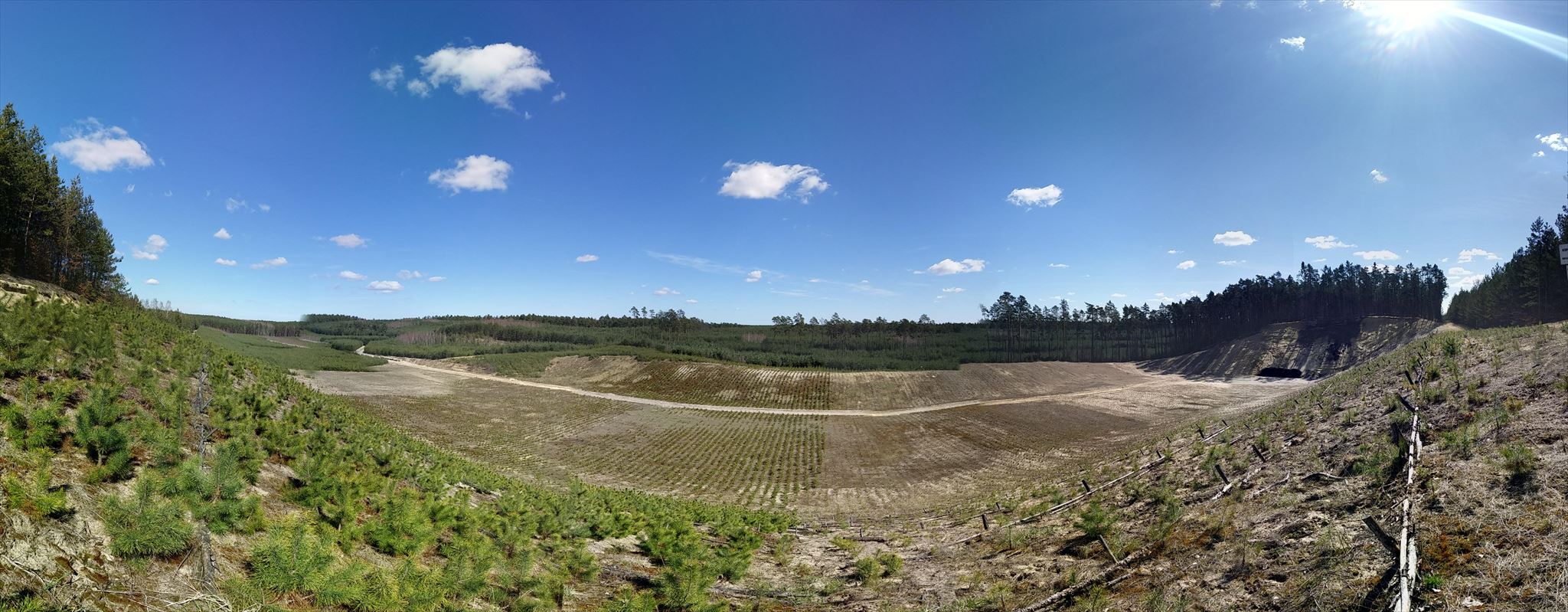

Sand is encountered almost everywhere. It is played by the children. We use it on a building site and in glass industry. What is it and how is it extracted? See it the Mielec mine "Łuże"surrounded by a beautiful forest.
I invite you to have a walk or cycling tour, during which you will see the extensive mine workings. In nearby areas you can you drive by car, however what is that attraction?
Do not enter where bans are ! Where the machines operate. Search for the forest roads.
Sand - sedimentary rock, loose, composed of finely unrelated binder and mineral particles, espeically quartz. The composition of sand varies, depending on the determined classification of 0.05 or 0,063 to 2 mm, the density of grains of silica sand is approximately 2.62 g / cm3.
Sands are the most common sedimentary rock loose. Its reserves are are located across a wide geographical area of Poland.
Together with other components, they form the soils. Under the influence of water and wind, the sand creates accumulative forms such as dunes, sand ridges, shoals, lateral alluviums, sandy patches, sandy folds, sandy waves, sandy ribbons and others.
Explorers will get: certificates, geocoins and things to exchange.

