In June 1873, Colonel Sherman Stevens built a sawmill and flume on Cottonwood Creek, high in the Sierra's directly west of this spot. Timber was cut in the mountains and sent down Cottonwood Creek and the flume to be used for buildings at the Cerro Gordo. Wood was also used at the Cottonwood Charcoal Kilns to be turned into coal for use in the silver smelters. Barges would then cross the Owens Lake bringing coal and lumber for the mines and silver bullion back. The bullion was hauled to Los Angeles on Remi Nadeau’s 14, 16, 18 animal freight wagons and played a major part in the building of that little pueblo into the city of today. A couple charcoal kilns still stand nearby and are worth making a stop to see before time erodes them away-there's even a cache there! GC11TA8 Charcoal kilns
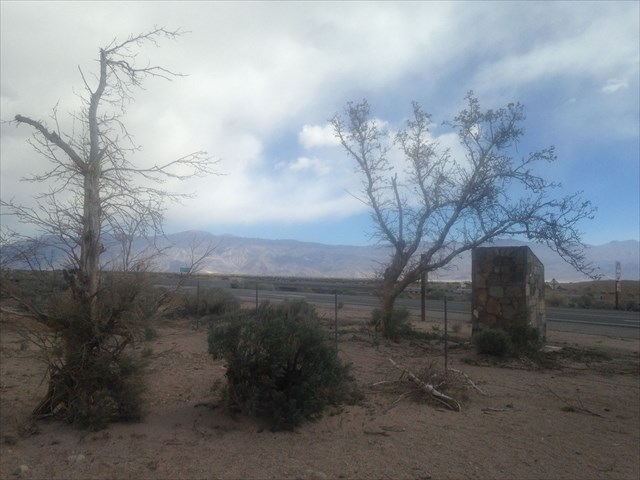
With the construction of the Los Angeles Aqueduct in 1908, many of the waterways that fed water into Owens Lake were redirected causing the creeks to run dry and Owens Lake to become a desert dust bowl. In 1924 Owens Valley ranchers and farmers rebelled and started "The California Water Wars" by seizing the Alabama Gates and dynamiting the aqueduct at Jawbone Canyon. The water war continued for 4 years.
The cache is accessible easiest if travelling SOUTH on Highway 395 but can be reached if travelling North by turning onto the crossroad. The cache is NOT on the highway near the stone structure. Always use caution when re-entering the highway regardless of the direction of travel. There is a large parking area near the cache and enough room to turn around. Many LADWP workers also stop in the area as the dirt road leads up to the aqueduct. Keep a watchful eye out for free range cattle and other wildlife in the area.