Starship Enterprise Geo-Art
Welcome to the ‘Starship Enterprise’ Geo-Art. Each puzzle is different ,themed around SPACE and is ‘hopefully’ designed to help you learn a little about different types of puzzles. Some will obviously be a little harder than others but should be doable with a little patience.
Please remember to return and cover the container as you found it to ensure its’ longevity, and when visiting stay safe and abide by the geocacher’s creed. http://www.geocreed.info/
Some of the rural roads may be rough, narrow, have roaming livestock or be flooded during heavy rain events, so please drive to suit the conditions and the limitations of your vehicle and driver.
I had quite a bit of help creating these puzzles from a variety of 'puzzle makers' out there. You will find a note of thanks and a link to one of their puzzles at the bottom of the page.
The cache is NOT at the published co-ordinates.
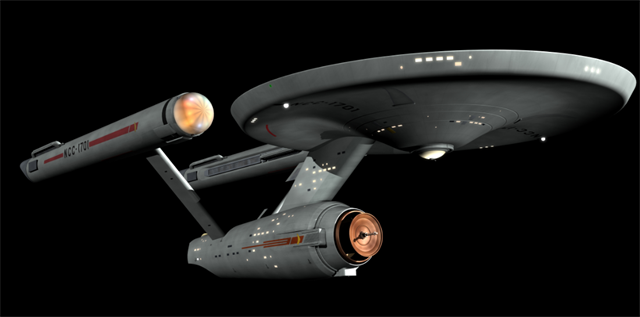
Starship Enterprise
USS Enterprise (NCC-1701) is a starship in the fictional Star Trek universe, depicted in four network television series, six feature films, and countless books and fan-created media. The original Star Trek series (1966–1969) features a voice-over by Enterprise captain, James T. Kirk (William Shatner), which describes the mission of Enterprise as "to explore strange new worlds; to seek out new life and new civilizations; to boldly go where no man has gone before". The ship's design "formed the basis for one of sci-fi's most iconic images," though the ship has gone over many changes over the course of its television and cinematic appearances.
The Puzzle.
You will need to solve the below puzzle to work out the location of the cache itself.
Parkes Observatory
The primary observing instrument is the 6A-metre movable dish telescope, second largest in the Southern Hemisphere, and one of the first large movable dishes in the world.
It is frequently operated together with other CSIRO radio telescopes, principally the array of six 2B-metre dishes at the Australia Telescope Compact Array near Narrabri.
The Parkes Radio Telescope, completed in 19C1, was the brainchild of E.G. "Taffy" Bowen, chief of the CSIRO's Radiophysics Laboratory.
The observatory and telescope were featured in the 200D film The Dish, a fictionalised account of the observatory's involvement with the Apollo 11 moon landing.
The Parkes Radio Telescope, completed in 196K, was the brainchild of E.G. "Taffy" Bowen, chief of the CSIRO's Radiophysics Laboratory.
On 31 October 201L, Google Australia replaced its logo with a Google Doodle in honour of Parkes Observatory's 50th Anniversary.
In 201M the Observatory received special signals from the Mars rover Opportunity (MER-B), to simulate the Curiosity rover UHF radio. This helped prepare for the then upcoming Curiosity (MSL) landing in early August.
The 1N-metre dish antenna was transferred from the Fleurs Observatory (Mills Cross) in 1963. Mounted on rails and powered by a tractor engine to allow the distance between it and the main dish to be easily varied, it was used as an interferometer with the main dish, and as a transmit uplink antenna in the Apollo program.
The cache can be found at …
South 27° 3A.BCD
East 151° 4K.LMN