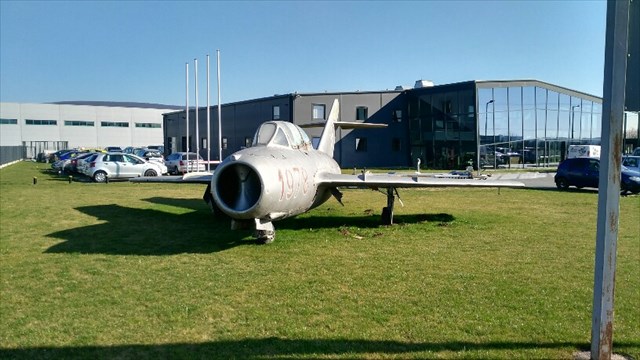
A MiG–15 (NATO-kódja: Fagot) a Mikojan–Gurjevics-tervezőirodában (OKB–155) kifejlesztett szovjet első generációs sugárhajtású vadászrepülőgép. Első harci alkalmazására a koreai háborúban került sor, majd később részt vett a vietnami háború légi harcaiban is, valamint több más regionális konfliktus szereplője volt. Licenc alapján Csehszlovákiában, Kínában (J–2 elnevezéssel) és Lengyelországban is gyártották. A Szovjetunióban több mint 12 ezer darabot gyártottak belőle, a külföldi licenc-változatokkal együtt a teljes gyártási darabszám eléri a 18 ezret.
Bővebben: Wikipedia
EN:
The Mikoyan-Gurevich MiG-15 (Russian: Микоян и Гуревич МиГ-15; NATO reporting name: "Fagot") was a jetfighter aircraft developed by Mikoyan-Gurevich OKB for the Soviet Union. The MiG-15 was one of the first successful jet fighters to incorporate swept wings to achieve high transonic speeds. In combat over Korea, it outclassed straight-winged jet day fighters, which were largely relegated to ground attack roles, and was quickly countered by the similar American swept-wing North American F-86 Sabre. The MiG-15 is often mentioned, along with the F-86 Sabre, as the best fighter aircraft of the Korean War.
When refined into the more advanced MiG-17, the basic design would again surprise the West when it proved effective against supersonic fighters such as the F-105 Thunderchief and McDonnell Douglas F-4 Phantom II in the Vietnam War of the 1960s.
The MiG-15 is believed to have been one of the most widely produced jet aircraft ever made; in excess of 12,000 were manufactured. Licensed foreign production may have raised the production total to over 18,000. The MiG-15 remains in service with the North Korean Air Force as an advanced trainer.
More: Wikipedia