Tallgrass Prairie
The tallgrass prairie is an ecosystem native to central North America. Natural and anthropogenic fire, as well as grazing by large mammals (primarily bison), were historically agents of periodic disturbance, which regulates tree encroachment, recycles nutrients to the soil, and catalyzes some seed dispersal and germination processes.
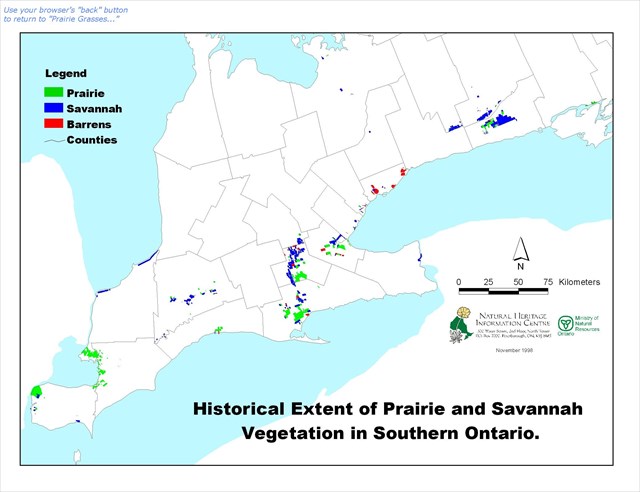
Brant is one of the last strongholds of Ontario’s original rare grassland habitats. These are the most endangered ecological communities in southern Ontario with only 3% of their original extent remaining mostly as small, isolated patches.
City of Brantford Greenway
The Brantford Greenway, also called the Gordon Glaves Memorial Parkway, was established in 1990 on an abandoned Canadian Pacific rail line on the banks of the Grand River. A 500 metre section of trail from Hardy Road to Dufferin Avenue is flanked by Tallgrass Prairie, totaling 5 ha.
Prairie or Savanna Community
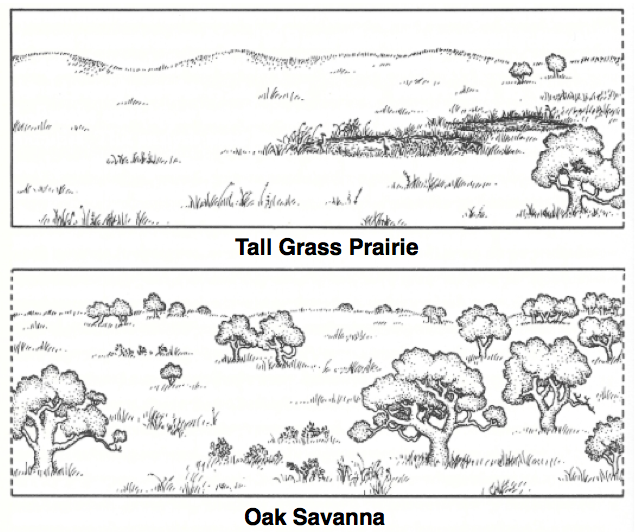
Prairie is a natural community that is dominated by grasses rather than trees. Growing with the grasses are many other kinds of non-grassy herbaceous (non-woody) plants known by the collective name of "forbs". On moist soils, prairie blends into marshlands dominated by sedges rather than grasses. Scattered shrubs may be present, however trees are absent.
The term "savanna" is applied to places where prairie-type vegetation grows within widely spaced trees. The term "prairie" is usually associated with the central part of North America and many people are surprised to learn that prairie areas exist in southern Ontario. These sites are scattered sporadically across the landscape from Windsor to the eastern part of the province. However, it is in the southwest, the Carolinian life zone where the largest areas of prairie remain.
Technically, prairies have less than 5-11 % tree cover. A grass-dominated plant community with 10–49% tree cover is referred to as a savanna.
The Importance of Fire
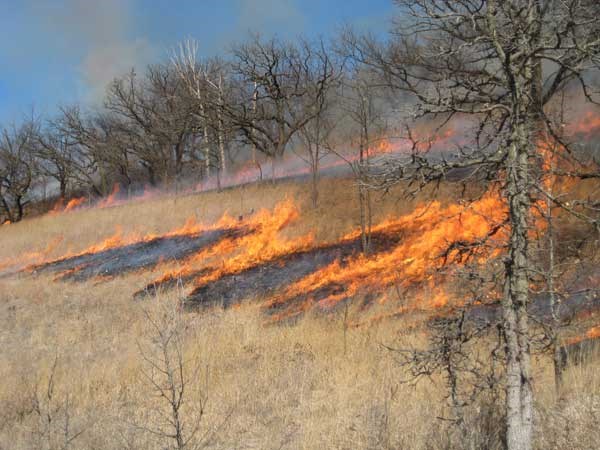
Fire is a key component of maintaining prairie vegetation. The tied-up nutrients in a prairie, that take months or years to decay, are within seconds turned to ash, by fire, and into a form usable to plants. Sunlight warms the blackened ground and stimulates dormant plants to sprout and grow. Trees and shrubs, with the stems and branches exposed to the intense heat, are killed allowing the ground under them to receive full sunlight once again. In order to mimic this formerly natural process, controlled fires are applied as a management tool at many Ontario prairie sites owned by conservation agencies. The last controlled burn in this area was in 1988.
Where are they? Where have they gone?
Prior to pioneer settlement, grasslands covered about 243 square kilometres in an egg-shaped area between Brantford and Cambridge. Throughout the rest of Southern Ontario, tallgrass prairie covered a further 750 km2 (South to Windsor), while today less than 3% remains. Most tallgrass communities have been lost over the last 200 years to farming and urbanization.
Prairie Soils
Prairie Soils form a type of grassland. It is too dry to be a forest, and too wet to be a desert, so a very diverse species of grasslands developed. At the end of the year, grassland plants die back, but their leaves and roots remain, acting like a MULCH adding organics, and much needed recycled nutrients to the soil.
Soil Components
Sand: Sand is a very basic soil, made of particles of rock and hard minerals, such as silicon dioxide. The largest of the different types of soil particles, one grain of sand is visible to the naked eye. Sand supports very few plant life forms in comparison with other soil types, but is a valuable component of an optimal soil mixture. Being a larger grain size, sand increases soil aeration and improves drainage.
Silt: Silt is a sediment material with an intermediate size between sand and clay. Carried by water during flood it forms a fertile deposit on valleys floor. Silt is easily compacted.
Clay: Clay is the tiniest soil particle, expanding when wet, and shrinking when dry. Compared to sand particles, which are generally round, clay particles are thin, flat and covered with tiny plates. Clay tends to hold moisture, improving water retention, but reduces drainage potential.
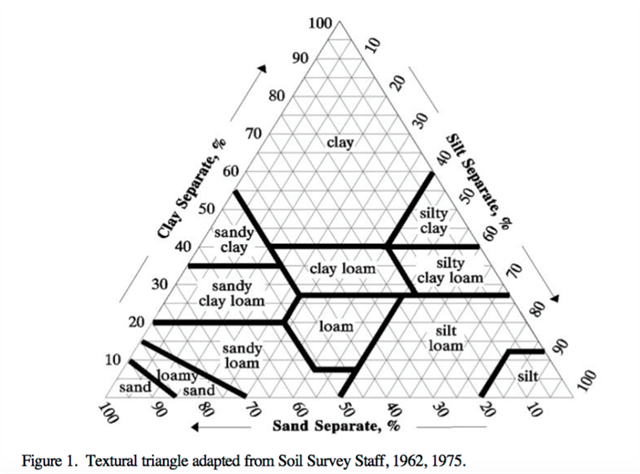
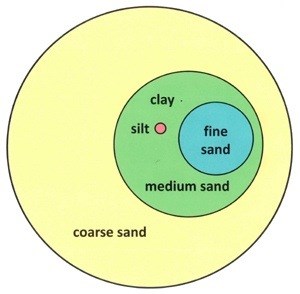
Clay, sand and silt are definitions of textures. The following picture show respective sizes of these 3 different particles;
Humus: Decomposed organic matter that resists further decomposition is called humus.
To log this EarthCache, please submit answers to the following question to the CO at the top of the cache listing:
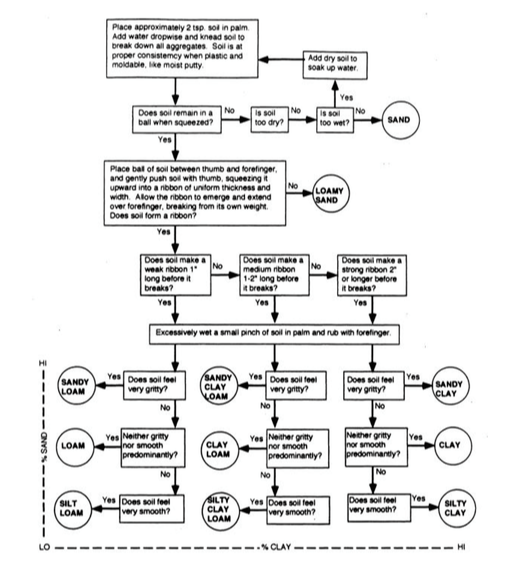
1) Pick up a handful of soil at GZ, and take a close look, (please do not disturb the vegetation to reach the soil). Using the “Soil Textural Triangle” and the “Soil Flow Chart”, determine what type of soil is found at GZ, and is indicative of the Brant Prairie soil type. There are a number of resources to help you on the cache page. Explain why you feel you are correct in your choice of soil.
2) Based on your analysis while completing question 1, what do you believe is the most common “Component of the Soil” found in this environment (coarse, medium, fine sand, silt, clay or humus).
3) Would you describe the area around you as a Prairie or Savanna environment. Explain the reason for your answer.
4) Why do you feel that the soil at GZ, is ideal for a Prairie or Savanna environment.
5) According to the signage at GZ, what are some of the plants one might expect to see in the Prairie on the SC Johnson Trail.
6) Describe some of the “forbs” (Name them if you can) you witnessed during your visit today. [Photos are a great way to provide proof, but of course are optional]