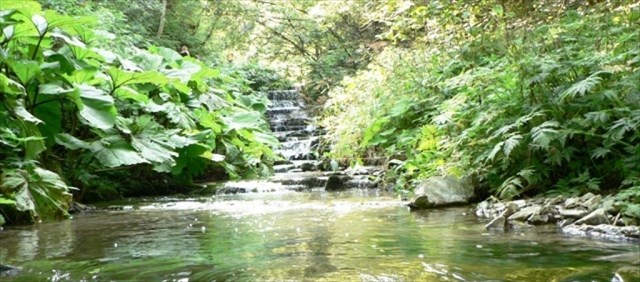
Gli opifici della Valle della Covola
Il territorio di Gallio, a differenza di altre zone dell'Altopiano, è ricco di sorgenti d'acqua perenne. La loro abbondanza assieme all'estensione dei boschi, ha fatto sì che nel corso dei secoli si sviluppassero attività artigianali o paleoindustriali, prima fra tutte la concia delle pelli. Vi era infatti sia l'acqua per muovere le ruote degli opifici che la corteccia d'abete dalla quale ricavare il tannino, utilizzato per rendere imputrescibili le pelli. L'arte della concia rappresentava un ramo dell'industria dell'Altopiano e costituiva "uno dei capi di qualche importanza nel loro commercio col di fuori".
Tra le principali sorgenti vi è la Covola, che sgorga proprio sotto l'abitato di Gallio, dando il nome alla Valle. Essa scende lungo la Val Ghiaia fino al Buso e al canyon che da qui prende il nome di Val Frenzela, termine comunemente usato per indicare l'intero susseguirsi delle tre valli. L'esistenza degli opifici è documentata fin dal '500. Per secoli, fino allo scoppio della 1 Guerra Mondiale, gli edifici a più piani erano in parte ad uso produttivo e in parte abitazioni. Nel loro insieme diedero quindi luogo ad una vera e propria Contrada fornita anche di lavatoi, usati dalle donne di Gallio fino agli anni '50.
Nel 1892, su un totale di 26 concerie esistenti nella provincia di Vicenza, Gallio ne contava 8. Le vasche e i tini per la concia erano 50, gli addetti 44. Nel 1916 l'edificio localizzato nei pressi della sorgente venne utilizzato dall'esercito italiano e trasformato in centrale idroelettrica e stazione di pompaggio dell'acquedotto che portava l'acqua fino a ridosso delle linee dello Zebio. Durante il conflitto gli edifici vennero distrutti, tranne la centrale.
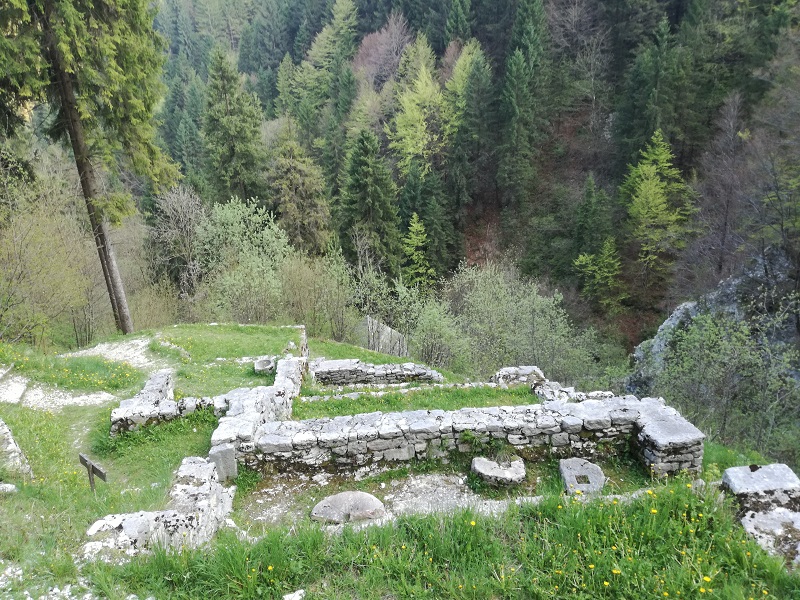
La funzione degli opifici
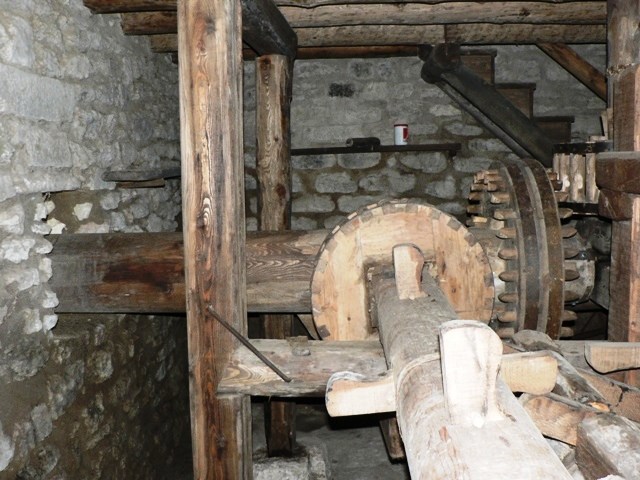
Numerosi storici e viaggiatori hanno ricordato gli opifici della Covola accennandone l'attività, ma è attraverso i Catasti storici che si può risalire al tipo di lavorazione che venivano effettuate. L'acqua della sorgente, convogliata in una canaletta in pietra, muoveva otto ruote di opifici, di cui sei localizzate in linea retta lungo il ripido pendio. Le attività documentate sono:
- PISTA DA SCORZA. L'attività principale era quella di "pestar scorze" ed era strettamente legata alla concia delle pelli, in quanto permetteva di ottenere il tannino. La corteccia d'albero, posta in recipienti di sostanza dura (mortai o pile), veniva sottoposta ripetutamente ad una serie di colpi per mezzo di pestello o mazza. Dalla corteccia così frantumata veniva estratto il tannino, impiegato nella concia delle pelli per le sue proprietà di rendere insolubili e imputrescibili le sostanze con cui si combina.
- MULINO DA GRANO E PILA D'ORZO. Alcuni opifici svolgevano l'attività di macinazione del grano e dell'orzo. Esistevano due metodi: frantumazione dei grani in mortai a mezzo di percussione con pestelli; loro stritolamento fra due pietre monolitiche, dette palmeti, una più o meno incavata che serviva da supporto fisso, l'altra mobile, manovrata secondo determinate regole (da cui deriva il detto "mangiare a quattro palmenti" ovvero con voracità). La pilatura è un procedimento per eliminare dai grani il loro rivestimento rendendoli commestibili.
- FOLLATOJO DA PANNI. La follatura, detta anche gualca o feltratura, è un trattamento meccanico che ha lo scopo di conferire compattezza, leggerezza e morbidezza ai tessuti di lana e ai feltri. Si attua per mezzo del follo o follone, ovvero una macchina a martelli o mazze. I folloni più antichi, in cui le mazze erano mosse dalla ruota che girava con l'acqua, sono detti anche gualchiere (dal longobardo walkan "rotolare").

The opials of the Covola Valley
Gallio's territory, unlike other areas of the Plateau, is full of perennial water springs. Their abundance along with the extension of the forests has led to the development of craftsmen or paleo-industrial activities over the centuries, first of all the tanning of skins. There was in fact both water to move the wheels of the optibles and the bark of fir from which to obtain the tannins, used to make the skins unbreakable. The art of tanning was a branch of the Highland industry and was "one of the leaders of some importance in their trade with the outside".
Among the main springs there is the Covola, which flows directly under Gallio's dwelling, giving its name to the Valley. It goes through Val Ghiaia down to Buso and the canyon, which is named after Val Frenzela, a term commonly used to indicate the entire succession of the three valleys. The existence of the opials has been documented since the '500. For centuries, until the outbreak of World War I, multi-storey buildings were partially used for productive use and partly for housing. As a whole, they created a true street, equipped also with wash-stands, used by Gallio's women until the 1950s.
In 1892, a total of 26 tanneries existed in the province of Vicenza, Gallio counted it 8. The tanks and tinings for tanning were 50, the workers 44. In 1916 the building located near the source was used by the Italian army And transformed into a hydroelectric power station and pumping station of the aqueduct that carried the water up to the Zebio lines. During the conflict the buildings were destroyed, except for the power plant.
The function of the opials
Numerous historians and travelers have recalled the Covola factories, citing their activity, but it is through the Historical documents that can be traced back to the type of work they were doing. The water of the spring, conveyed in a stone canal, moved eight wheels of opials, of which you are located in a straight line along the steep slope. The documented activities are:
- JACKET. The main activity was that of "pestar scorze" and was closely related to the tanning of skins, as it allowed to obtain the tannin. The tree bark, placed in hard-shell containers (mortars or piles), was subjected repeatedly to a series of shots by pestle or bat. From the bark so crushed, tannin was extracted, used in tanning the skins for its properties to make the substances with which it is combined is insoluble and impervious.
- GRINDING MOLLUS AND BARLEY. Some of the buildings used to grind grain and barley. There were two methods: crushing grains in mortars by percussion with pestles; They crumpled between two monolithic stones, called palmettes, one more or less hollowed out that served as a fixed support, the other movable, maneuvered according to certain rules. Piling is a process for removing the coating from grains by making them edible.
- FULLING OF CLOTHES. Tailoring, also known as gualca or felting, is a mechanical treatment that is designed to give compactness, lightness and softness to wool and felt fabrics. It is carried out by means of a spindle or a spindle, or a hammers or ramps. The oldest spools, in which the cups were moved by the wheel that swirled with water.