The Bull Gully Aboriginal Rockwells are a wonderful part of our Australian cultural heritage.
These wells, dug in to sandstone which was present from the Ordovician period, is regarded as the best example of such wells in Victoria. The wells were constructed by the Jaara people (now referred to as Dja Dja Wurrung) prior to European settlement. Aborigines relied on these wells for drinking water when passing through the region.
Three of the holes are joined together within the rock, creating one large cavity.
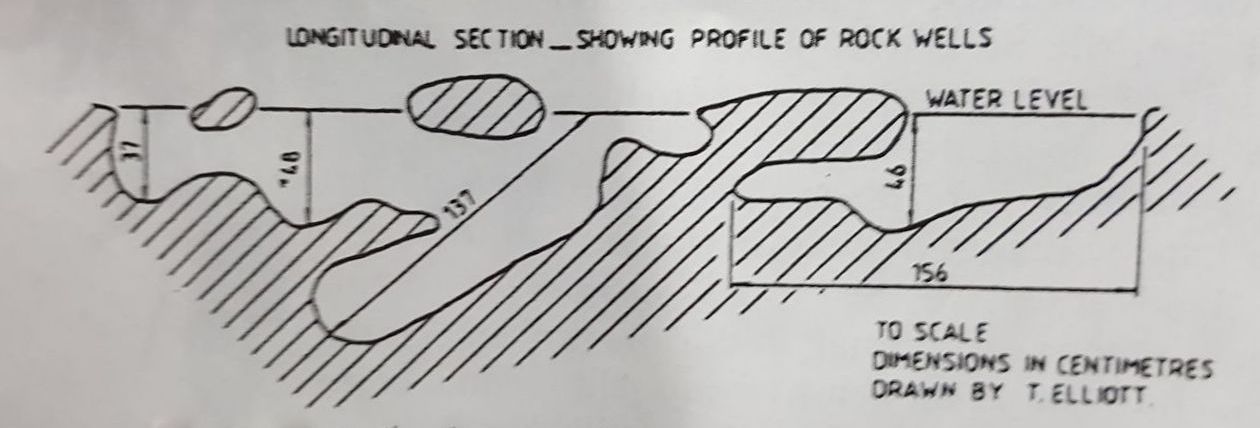
The wells have a maximum depth of 137cm (on the incline) with a total holding capacity of 168 litres. It is noted by locals that they have never been known to dry up.
In previous times, the openings to the wells were covered with flat rocks during Summer to further preserve the water quality and quantity - minimising evaporation and pollution.
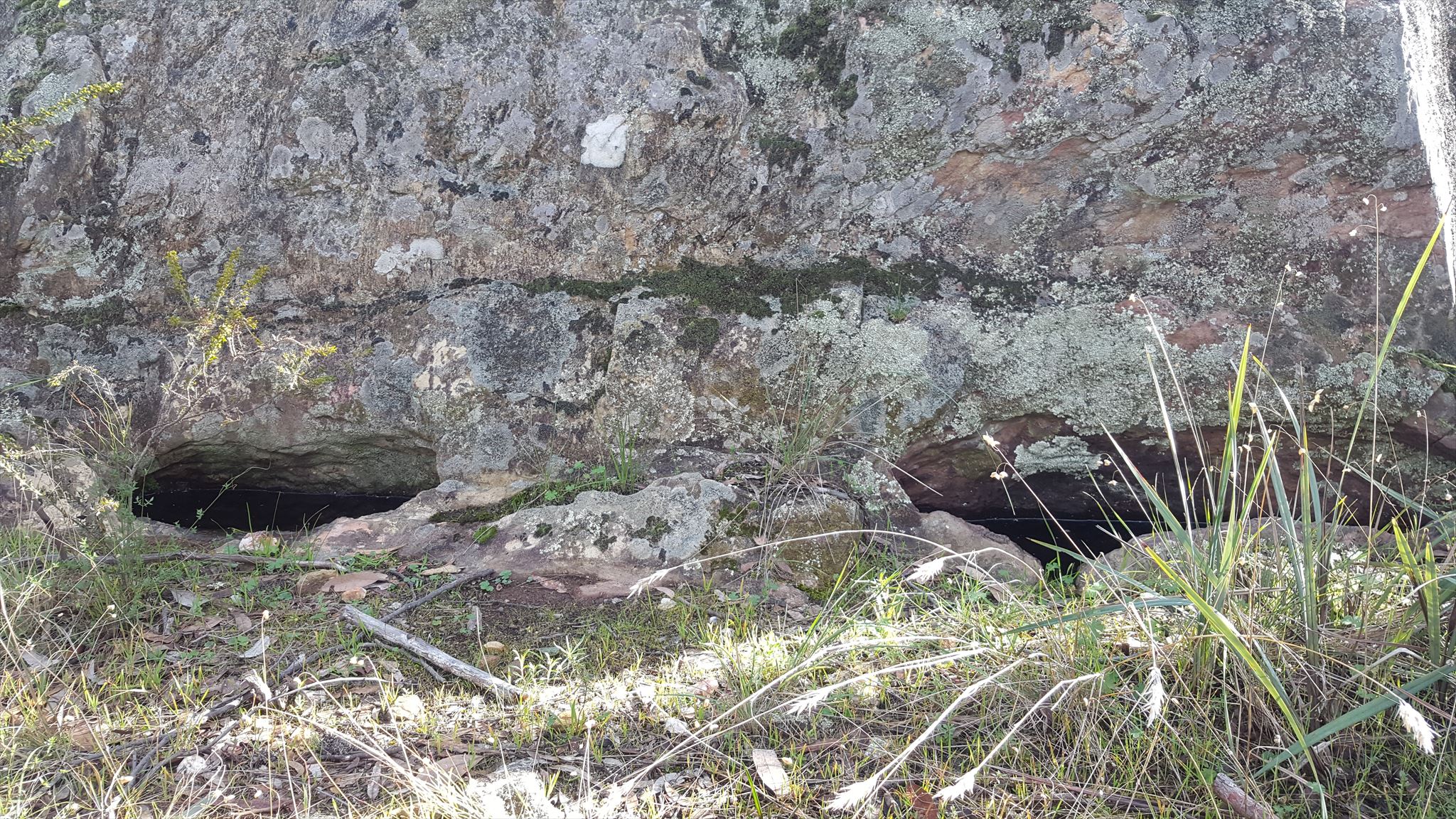
The wells can be viewed but are now blocked off physically via a protective mesh fence.
Sandstone, as the name implies, contains sand-sized grains of rock fragments and individual minerals broken down from other, older rocks. Sandstone is a clastic sedimentary rock. The formation of sandstone involves two principal stages. First a layer or layers of sand accumulate as a result of sedimentation, either from water (eg. steam, lake, or sea) or from air ( eg. desert). After it has accumulated it becomes sandstone when it is compacted by pressure of overlaying deposits and cemented by the precipitation of minerals within the sore spaces and grains. Most sandstone is composed of quartz or feldspar because they are the most resistant minerals to weathering processes at the Earth's surface. Other more common minerals include calcite, micas and clay. Sandstone also contains a cementing material that binds the sand grains together and may contain a matrix of silt or clay-size particles that fill the spaces between the sand grains.
It is often mined for use as a construction material or as a raw material used in manufacturing. Mined sandstone can be cut, carved and polished so it is commonly used for decorative purposes also. Sandstone is the ideal rock for ground water and will house substantial aquifers such as these rockwells.
Sandstone can be found in a variation of colours due to different elements present and the impurities within the minerals. The most common colours are tan, brown, yellow, red, grey, pink, white and black. As sandstone beds often form highly visible cliffs and other topographic features, certain colours of sandstone have been strongly identified with certain regions. A blend of clear quartz and dark amber feldspar in the sand is responsible for tan or yellow hues while small amounts of iron give the particles the reddish/brownish tint that will give us from light pink to dark red. Manganese will give the particles a purplish hue. A fresh surface is, as a rule, nearly pure white, to light brown in spots. The hardness is also variable, soft to hard, dependent on clast and cement composition.
To log this Earthcache:
1. What colours can you see exposed in the sandstone?
2. Why does sandstone form with such a variance in colours?
3. What is it about the geology here that prompted the native land owners to select this rock & positioning?
(Blind guesses, educated guesses or fully researched answers are all acceptable)
While not obligatory for logging, a team pic is encouraged. :)
Once you complete the Earthcache requirements you may post your find without delay, as per the guidelines. You will also need to verify your find by sending me an email providing answers to the questions via the messenging centre.
Thanks for visiting. Enjoy!
Sources:
'Exploring the Central Goldfields Shire' - Maryborough Field Naturalists' Club Inc.
Bendigo Koori Cooperative
Central Goldfields Shire tourist publications
www.galleries.com/rocks/sandstone.htm
en.wikipedia.org/wiki/Sandstone