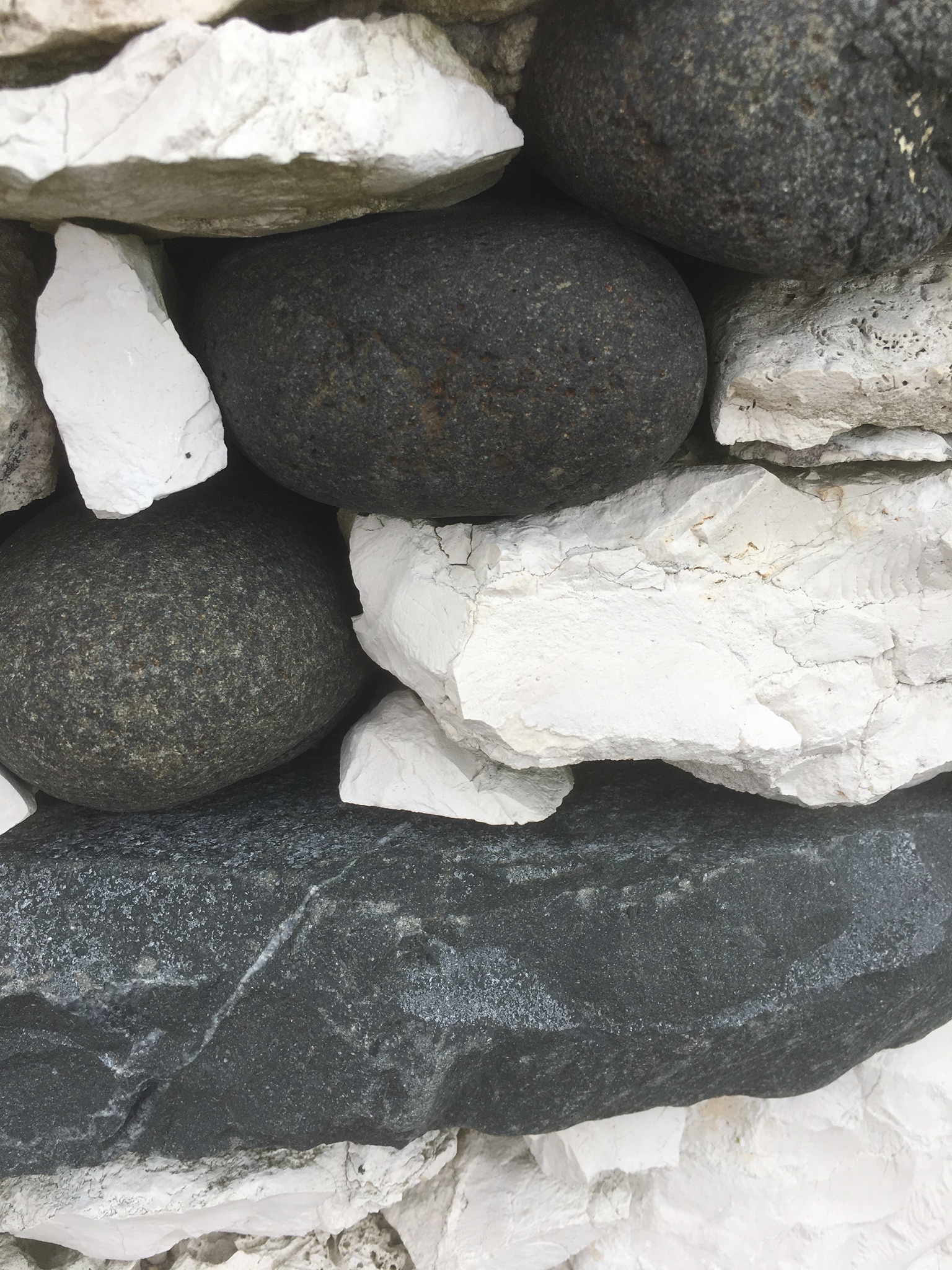
Basalt
Basalt is a fine-grained dark coloured volcanic rock. The crystals in it are so small that they cannot be seen with the naked eye. These crystals are small because the rock has cooled down quickly from molten lava and the crystals did not get time to grow.
Basalt is often found in volcanic cones or in lava plateaus . Volcanic cones are formed above vents, or pipes, which go down into the earth's crust. Plateaus were formed above fissures or enormous cracks in the earth's crust. In this case the fissures opened up when the North American plate started to move away from the Eurasian plate and the Atlantic Ocean began to open up in the Tertiary Period.
Some basalt, especially in the top of an eruption, had small air bubbles called amygdales. These little bubbles eventually had other crystals deposited in them to give white speckles in the basalt. This is called amygdaloidal basalt.
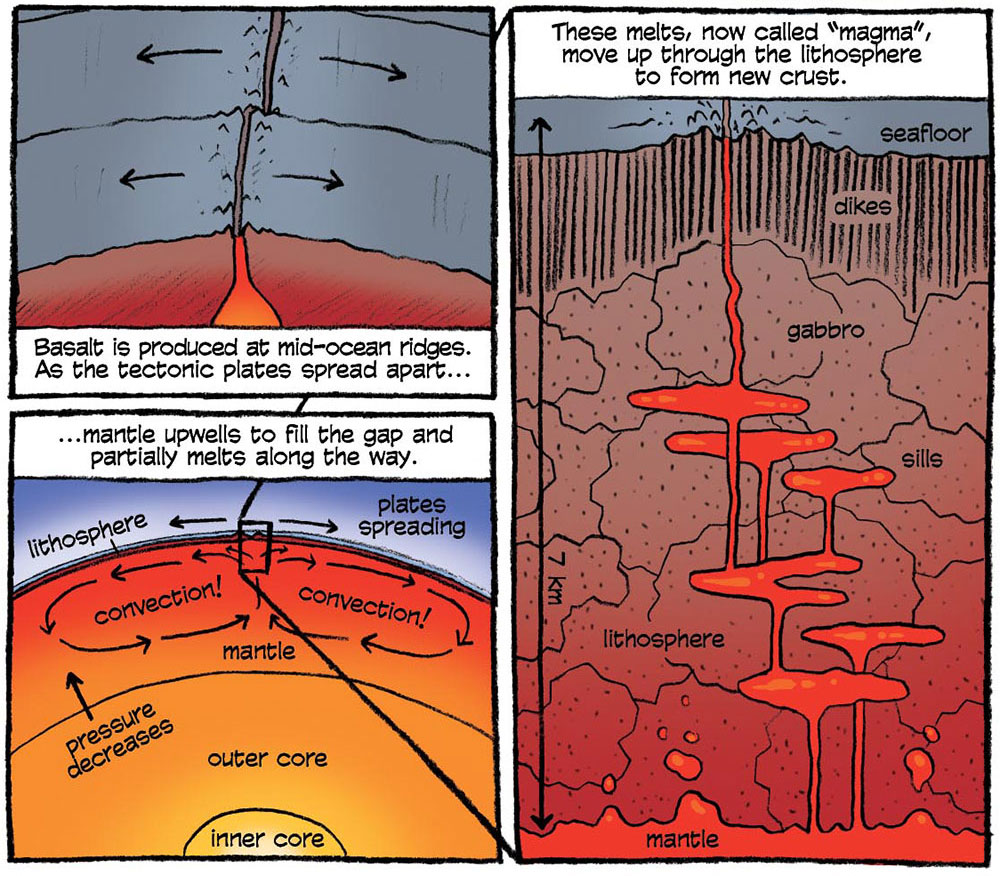
Chalk
The chalk in Northern Ireland was laid down in the Cretaceous Period. Towards the end of the Cretaceous Period all of the British Isles was under water, except for the highest parts of Scotland.
This sea had many algae living in the warm waters. As these algae died their skeletons accumulated on the sea bed. The skeletons, or coccoliths, were made of calcite and it is this accumulation that has formed the chalk rock.
Because there was so little land nearby, the coccoliths were not contaminated with rock fragments eroded from the land and have produced a very pure form of limestone. The only outcrops of chalk in Northern Ireland are where those Basalts have protected it.
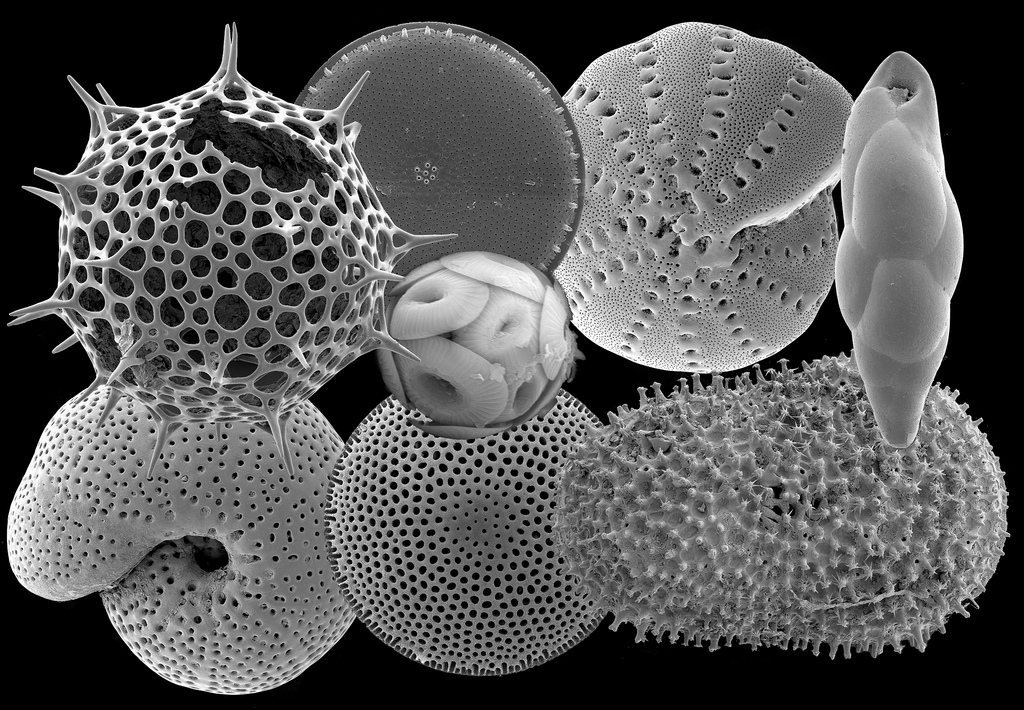 Coccoliths- the building blocks of chalk
To log this geocache
Please send your answers to the following questions to me through my profile BEFORE you log your find. You don't need to wait for me to reply, I will contact you if there is a problem.
1. How old is the chalk here. How old is the basalt
2. Which Of the three types of rock, (igneous, sedimentary and metamorphic) is the chalk and which is the basalt.
3. Can you see any evidence of amygdales in the basalt at either location?
4. At the posted coordinates you will see a throne with a poem by Seamus Heaney engraved on it mentioning a Basalt throne. The throne is not made of basalt but there are several large items near it that are. What are they.
5. At stage 2 tell me the number in the basalt.