Valkininkai – miestelis Varėnos rajone, šalia kelių A4 Vilnius–Varėna–Gardinas ir 5004 Varėna–Matuizos–Valkininkai sankryžos, prie Merkio, Šalčios ir Gelužos upių santakos, vienodai nutolęs nuo Vilniaus ir Alytaus – per 55 km. Seniūnijos ir seniūnaitijos centras. Urbanistikos paminklas. Mokslininkų teigimu, Valkininkai – vienas ryškiausių lietuvių liaudies medinės architektūros paminklinių urbanistikos kompleksų. Aikštės planas (tūrinė erdvinė kompozicija, pastatų išdėstymas, jų mastelis, grindinys) susidarė XVI a., o dabartinę formą įgavo XIX a. tai raiškaus radialinio plano miestelis. Genetiniu požiūriu Valkininkų planas yra archajiškas, reliktinis, autentiškas. Jis yra panašus į Vilniaus senamiesčio aikštės planą.
Valkininkų gyvenvietė atsirado XIV a. Tuo metu buvo ir didžiųjų kunigaikščių medžioklės pilis. 1418 m. Vytautas Didysis dovanojo miesteliu vadinamą gyvenvietę su Valkininkų dvaru savo žmonai Julijonai. Valkininkų vietovė minima nuo XIV a. (manoma, kad 1387 m. Jogailos rašte Skirgailai). 1418 m. minimas Valkininkų dvaras (karališkasis) ir miestelis, 1503 m. Valkininkų valsčius, 1516 m. miestas, nors Magdeburgo teises gavo tik 1571 metais. 1551 m. netoli Valkininkų, prie Spenglos upelio įkurta šaunamųjų ginklų kalykla, kurioje buvo gaminamos patrankos, sviediniai, parakas. Ji veikė apie 100 metų, gamybai naudojo ir vietinę balų rūdą, ir atvežtines žaliavas. Prieš 1601 m. pastatyta nauja bažnyčia. 1608 m. ir 1609 m. patvirtinus ir išplėtus senąsias privilegijas. Valkininkų bažnyčia menkai teišsiskyrė miestelyje, todėl 1635–1650 m. pastatytas pranciškonų vienuolynas.
Prie Valkininkų 1700 m. vyko Sapiegų ir prieš juos susivienijusių Lietuvos bajorų, vadovaujamų Oginskių, mūšis – Valkininkų mūšis. Sapiegos šį mūšį pralaimėjo ir prarado Lietuvoje turėtą hegemoninę padėtį. Miestelyje ėmė kurtis žydai, todėl Valkininkuose XVIII a. buvo pastatyta medinė sinagoga. 1792 m. birželio 26 d. Stanislovas Augustas Poniatovskis Valkininkams pakartotinai suteikė laisvojo miesto teises ir herbą. Tačiau carinė Rusija jas panaikino, ir nors gyventojai dar XIX a. pradžioje kovojo dėl savivaldos, bet nesėkmingai. Valkininkai gerokai nukentėjo 1812 m. prancūzų invazijos į Rusiją metu. Pasekmės buvo sunkios. Po prancūzmečio žmonės badavo iki pat 1822 m. 1832 m. panaikintas Pranciškonų vienuolynas, jame įkurdintas kariuomenės dalinys.
XIX a. pabaigoje Valkininkuose veikė popieriaus fabrikas. 1913 m. inžinieriaus Prano Jodelės iniciatyva Valkininkuose pradėta statyti pirmoji Lietuvoje cemento gamykla. Tačiau darbai nebaigti – P. Jodelė mobilizuotas, fabrikas per karą apgriautas, vėliau nebeatstatytas, kadangi Valkininkai nuo 1920 m. priklausė lenkams. Sovietmečiu buvo Valkininkų kolūkio centrinė gyvenvietė.
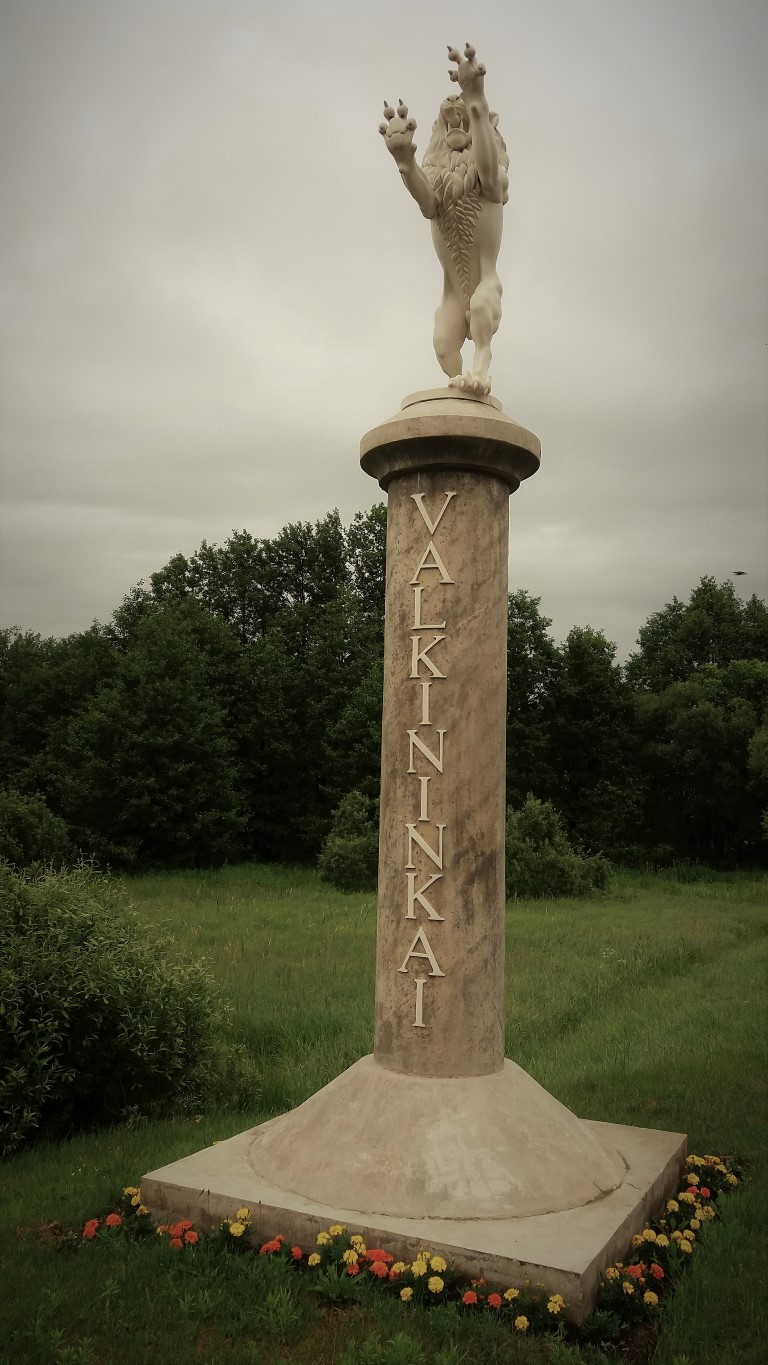
Valkininkai is a historic town in Valkininkai eldership, Varėna district municipality, Alytus County, Lithuania, located about 22 km northeast from Varėna and about 55 km southwest from Vilnius. At the 2001 census its population was 238 and at the 2011 census it was 229. The town is situated on the confluence of Merkys River with its tributaries Šalčia and Geluža. The urban layout, which formed in the 16th century and is preserved to this day, was declared an urban monument and is protected by the state. Most valuable monuments are the street grid and main market square. The market square formed at the crossing of four main roads. It is long (its length is 8 times its width) and irregularly triangle.
It is believed that Valkininkai was first mentioned in a letter from Grand Duke Jogaila to his brother Skirgaila in 1387. The settlement developed on a large island (since then disappeared) in Merkys River. Situated near the Hrodna–Varėna–Vilnius route, the settlement had a royal estate that Grand Dukes used as a hunting lodge. The route further grew in importance after the 1385 Union of Krewo as it connected the Lithuanian capital in Vilnius with the Polish capital in Kraków. In 1418, Grand Duke Vytautas the Great gifted the estate to his wife Juliana Olshanska. In 1503, the town was mentioned as a seat of a volost. In 1516, King Sigismund I the Old accepted envoys of Charles, King of Spain and future Holy Roman Emperor in Valkininkai.
A royal cannon foundry, established in 1551 and powered by a watermill, is credited for the growth of the town. Needed iron ore was collected in local swamps and imported from abroad. During the Wallach reform, craftsmen were given land and relocated from the town to nearby villages, which were often named after their craft. In 1571, Valkininkai was granted city rights under Magdeburg law (the privilege was later renewed in 1723 and 1792). According to 1601 register, the town had 150 families (900–1050 people), 19 butchers, 89 pubs, and 157 craftsmen. The town grew as a trade and craft center and attracted the first Jewish settlers.
Valkininkai suffered from a series of wars. The town was devastated during the Second Northern War (1655–1660) and lost 75–80% of the population. The royal cannon foundry was looted and closed. In 1701, during the Lithuanian Civil War between Sapieha family and other magnates of the Grand Duchy of Lithuania, a major battle was fought near the town. The town somewhat recovered and its population reached about 800 residents in 1749 and 949 residents (including 273 Jews) in 1790. In 1812, the town was ravaged by Napoleon I armies during the French invasion of Russia. Instances of famine, caused by the war, were recorded as late as 1822. Completion of the Warsaw – Saint Petersburg Railway in 1862 and increased demand for local timber helped the town to recover and grow: the population increased from 1516 in 1841 to 2619 (including 1126 Jews) in 1897. However, industrialization was slow: a large paper and cardboard factory, employing some 100 people, was established in the last decade of the 19th century and a turpentine factory (10–14 employees) was established in 1923. The population decreased to 1244 in 1919. Around 400 Jews from Valkininkai were executed in Eišiškės in September 1941 by Rollkommando Hamann and only five Jews (four of them hidden by friendly Lithuanians) survived World War II. After the war the population decreased to 769 in 1959, 410 in 1970, and 277 in 1987.
The first church was built in the early 16th century. In 1581, Queen Bona Sforza built a new Church of the Visitation of the Blessed Virgin Mary and established a parish with the seat in Valkininkai. The wooden church burned down in 1655 and 1772, and was wrecked by a storm in 1818. In 1635 or 1636, Franciscan monks established a monastery, which became the most prominent structure in the town. It was closed in 1832 after the failed November Uprising against the Russian Empire and turned into military barracks. After the January Uprising of 1863, the former monastery church was turned into a parish church of the Eastern Orthodox, even the new parish had only 75 Orthodox believers, mostly Russian officials