
Limestone, found throughout Tennessee, was declared the official state rock in 1979. Tennessee marble (the metamorphic version of limestone) is widely used in public and private buildings. Tennessee marble is mined in east Tennessee and a beautiful and decorative stone that graces exteriors, floors, counters, elevators and walls with the warm tones of this unique American "rock."
Limestone is most abundant through middle Tennessee and is found in scattered areas through eastern Tennessee. Historically, Tennessee limestone was used for building stone. All of the early government buildings, including the state capitol, in Nashville were built of local stone. Limestone was also for smelting (extracting) iron from iron ore in the iron mining operations in western Tennessee.
Limestone is a sedimentary rock, composed mainly of skeletal fragments of marine organisms such as coral and mollusks. Its major materials are the minerals calcite and aragonite, which are different crystal forms of calcium carbonate. About 10% of sedimentary rocks are limestones. The solubility of limestone in water and weak acid solutions leads to karst landscapes, in which water erodes the limestone over thousands to millions of years. Most cave systems are through limestone bedrock.
Limestone has numerous uses: as a building material, an essential component of concrete (Portland cement), as aggregate for the base of roads, as white pigment or filler in products such as toothpaste or paints, as a chemical feedstock for the production of lime, as a soil conditioner, or as a popular decorative addition to rock gardens.
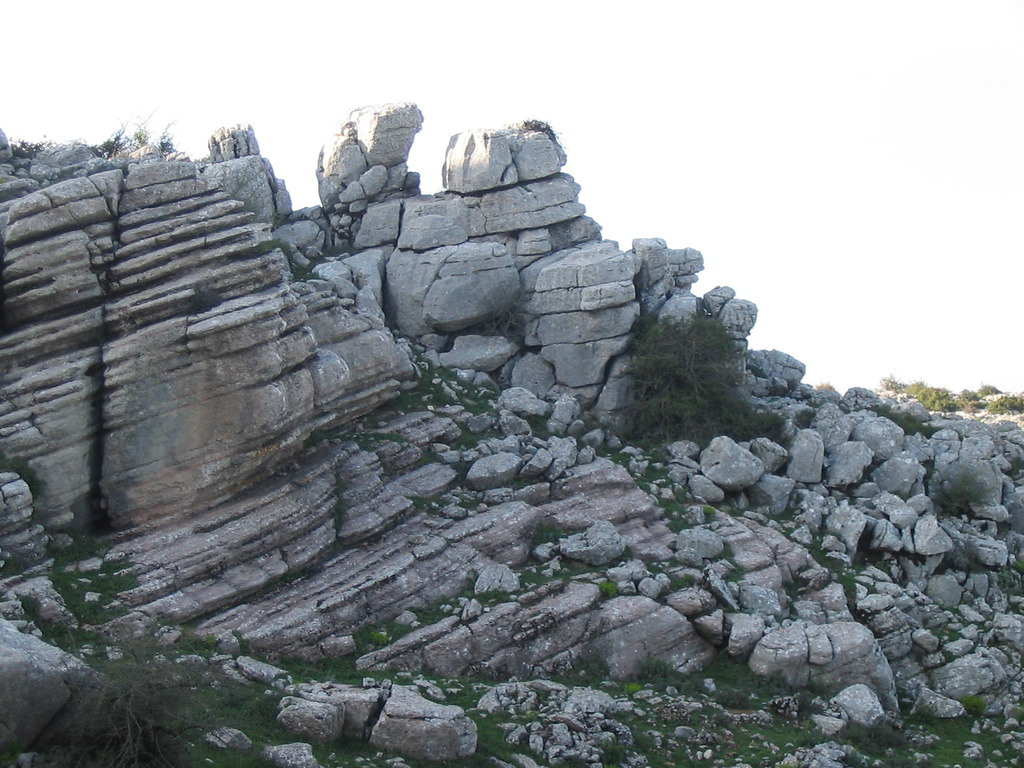
Shelbyville’s park system, and most of Bedford County, is formed from many layers of limestone. Over the years, the limestone has been formed through many weathering processes, be it chemical, physical or biological. Chemical weathering is caused from water or oxidation changing the composition of the rocks. Acid in rainwater is an example of chemical weathering. Physical weathering is caused by changing temperatures on rocks causing them to break apart. Biological weathering is caused from animal and plant life breaking down the rocks over time. Vegetation and animal feces are some examples of biological weathering.
This earthcache will take you to two stages of limestone examples. Your job will be to compare the two different areas of limestone and decide what type of weathering is taking place and why you believe this is happening. Please message your answers to the questions and take a picture at one of the locations (optional).
- At stage one, please explain what processes are in play here.
- At stage two, please explain what processes are in play here.
- Compare the two stages, why do you think there are different processes in play at each one? What examples can you give to explain this?
- (optional) Take a picture at one of the stages.
| We have earned GSA's highest level: |
 |