Bergamot (Black Diamond) Traditional Cache
Please note Use of geocaching.com services is subject to the terms and conditions
in our disclaimer.
Bergamot comes with many names and in many shades of red, purple and pink. I was pleased to see these, along the Black Diamond trail between Trumansburg and Ithaca.
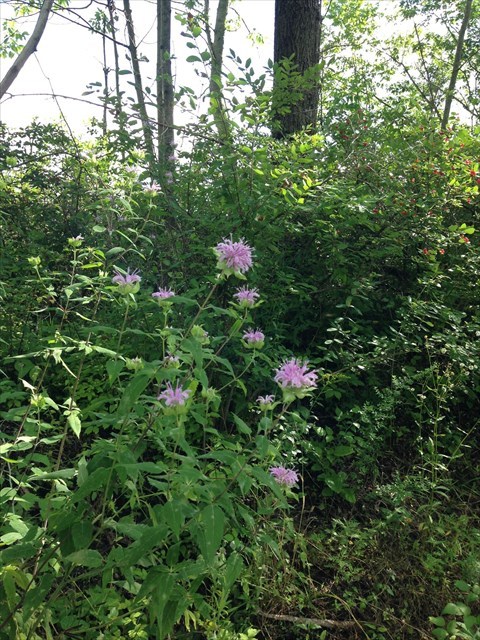
Bergamot
Monarda is a genus of flowering plants in the mint family, Lamiaceae. The genus is endemic to North America. Common names include bee balm, horsemint, oswego tea, and bergamot, the latter inspired by the fragrance of the leaves, which is reminiscent of bergamot orange(Citrus bergamia). The genus was named for the Spanish botanist Nicolás Monardes, who wrote a book in 1574 describing plants of the New World.
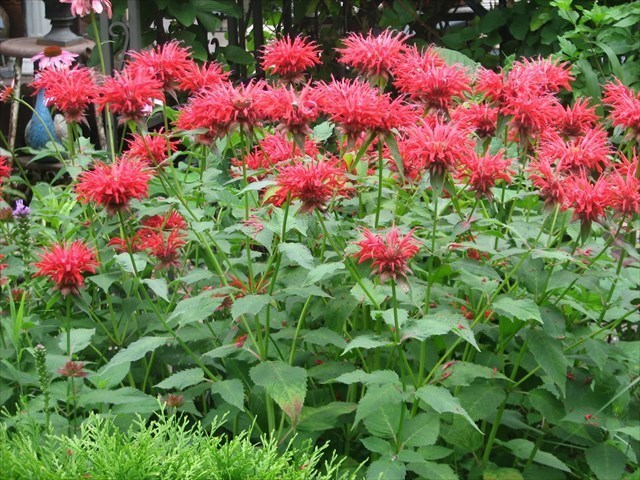
Monarda species include annual and perennial herbaceous plants. They grow erect to heights of 20–90 cm (8–35 in). The slender, serrated, lnceolate leaves are oppositely arranged, on the hairless or sparsely hairy, and about 7 to 14 centimeters long.
The flowers are tubular and bilaterally symmetric, with a narrow upper lip and a wider lower lip. The wild flowers are single, but some cultivated forms have double flowers. They are hermaphroditic, with male and female structures in each flower. There are two stamens. Inflorescences occur at the top of the stem or emerge from the axils. They are typically crowded head-like clusters of flowers with leafy bracts. Flower color varies, with wild species bearing red, pink, and light purple flowers. M. didyma has bright carmine red flowers, M. fistulosa has pink, and M. citriodora and M. pectinata have pale purple. Hybrids occur in the wild, and they are common in cultivation. Seed collected from hybrids does not yield plants identical to the parent.
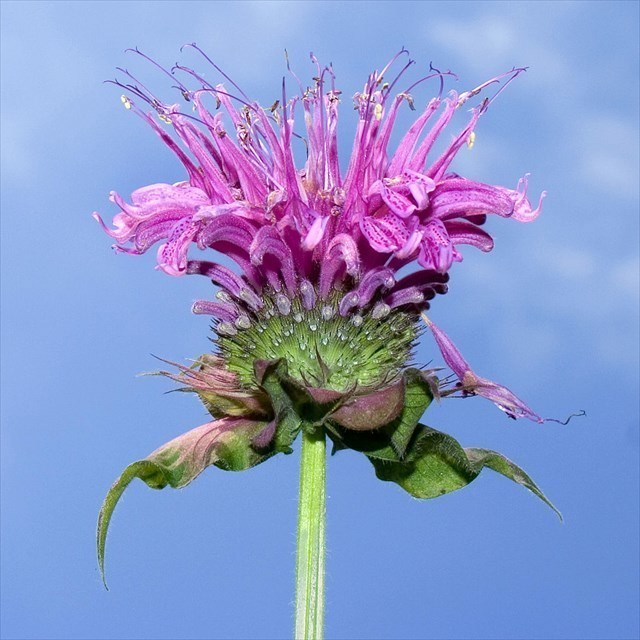
The crushed leaves of all species exude a spicy, fragrant essential oil.
Several species, including Monarda fistulosa and M. didyma, have a long history of use as medicinal plants by many Native Americans, such as the Blackfoot, Menominee, Ojibwa and Winnebago. The Blackfoot recognized the strong antiseptic action of the plants, and used them in poultices for skin infections and minor wounds. North American Indians, and later settlers, also used it to alleviate stomach and bronchial ailments. A tisane made from the plant was also used to treat mouth and throat infections caused by dental caries and gingivitis. Bee balm is a natural source of the antiseptic compound thymol, the primary active ingredient in some modern commercial mouthwash formulas. The Winnebago used a bee balm tisane as a general stimulant. Bee balm was also used as a carminative herb by Native Americans to prevent excessive flatulence. An infusion of crushed, boiled Monarda has been used to treat headache and fever.
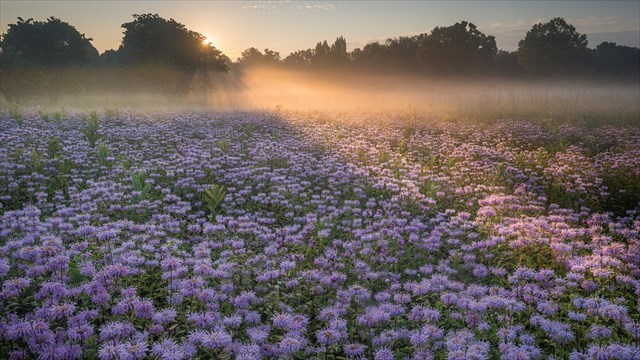
Although somewhat bitter due to the thymol content in the leaves and buds, the plant tastes like a mix of spearmint and peppermint with oregano. Bee balm was traditionally used by Native Americans as a seasoning for wild game, particularly birds. The plants are widespread across North America and can be found in moist meadows, hillsides, and forest clearings up to 5,000 feet (1,500 m) in elevation.
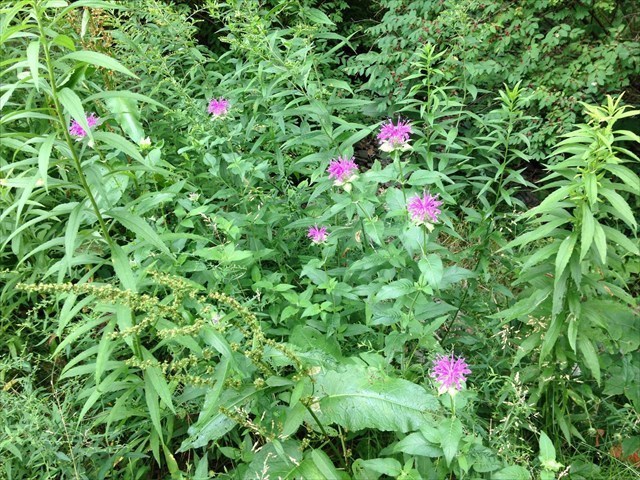
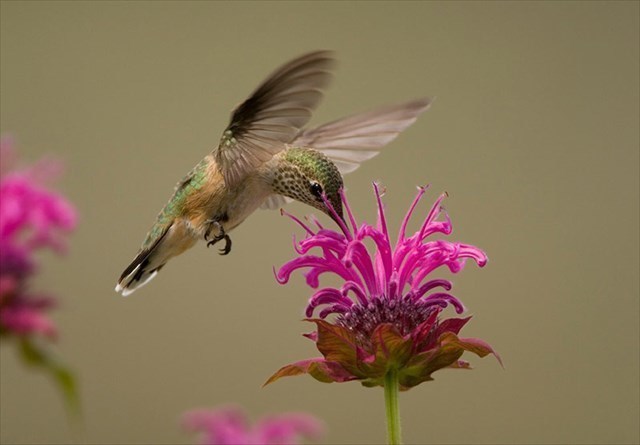
Monarda plants thrive in sun and moist but well-drained soil. Plants growing in partial shade spread horizontally and produce fewer flowers. Monarda are used in beds and borders to attract hummingbirds, pollinating insects, and insects that control garden pests.
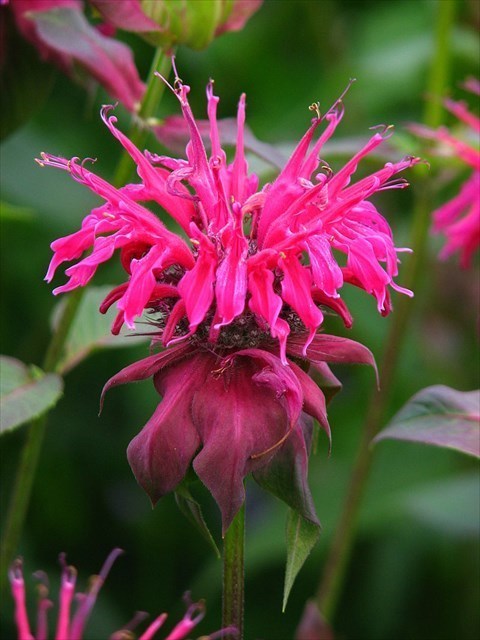
There are over 50 commercial cultivars whose hybrid colors range from dark red mahogany to bluish lilac to multiple shades of pink. These are generally not as robust as wild species. Some hybrids have been developed to produce high levels of essential oil for use as flavoring or medicine.
The cache is a camoed "small" pill bottle, that is tied in. It's the kind you have to push hard, both to open and close. It contains a rolled log, held together with a rubber band, so it fits easily in the tiny plastic zip lock bag. Please keep track of it all, so you can put it back the way you found it. BYOP and no tweezers, please. They kill the plastic.
The cache is between Gorge Rd and Willow Creek Rd, closer to the latter. I parked and walked from the parking off Jacksonville Rd., near the bridge over the falls.
Additional Hints
(Decrypt)
Ubarlfhpxyr
Treasures
You'll collect a digital Treasure from one of these collections when you find and log this geocache:

Loading Treasures