The posted coordinates will take you to Waterloo Park and many square-like stones bordering the entrance road from the park area. These particular cap rock slabs were quarried 60 kilometres away from the Beachville quarry near Ingersol Ontario from a highly fossiliferous limestone band that stretches across Southern Ontario. This particular band near Beachville was once the shoreline of an ancient sea. The rocks consist of very fine grained, light brown to grey high-calcium limestone containing numerous corals and stromatoporoids. Your goal today will be to search around the numerous rocks and locate any fossil specimen and identify the type and develop an understanding of how it formed, and how fossils of Tropical Creatures came to be in Southern Ontario. But first, let's step back....way back...like 400 million years back!
Southern Ontario during the Devonian
The Devonian was a geologic period of the Paleozoic era, spanning 60 million years from 412-354 million years ago. North America at the time straddled the Equator as part of the supercontinent of Euramerica and the climate was tropical, warm, and moderately humid. Sea levels were high worldwide, and much of the land lay under shallow seas. Within these shallow seas life abounded, dominated by brachiopods and corals, which built large reefs in shallow waters. Bivalves and trilobites were all present and along the shorelines the first ammonites, species of molluscs, appeared. This was the age of the sea creatures and extensive reef building.
Southern Ontario was the shoreline of a shallow sea centred in Michigan (The Michigan Basin) which was one of many seas covering most of North America.
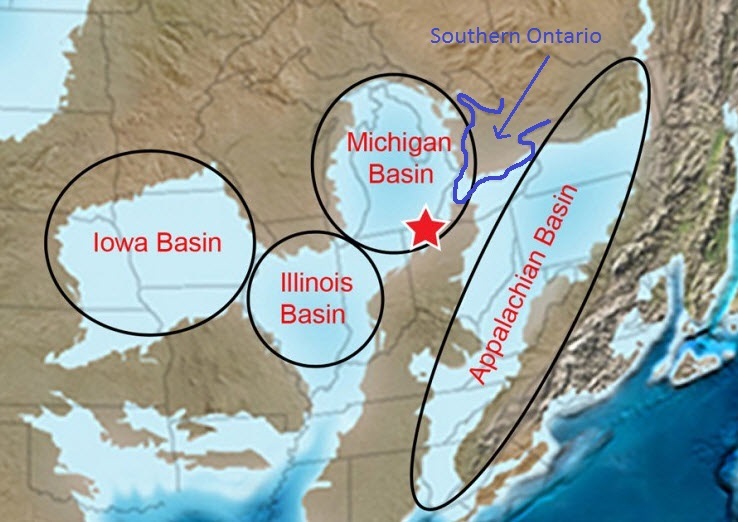
The shoreline of the Michigan Basin is representative in many fossiliferous bands across Southern Ontario as it moved and built up over millions of years. The rocks you are looking at were quarried from a 10 kilometre wide, 300 foot thick, band of limestone known as the "Detroit River Group" that extends from Norwich through Beachville, Stratford, Wingham, to Kincardine on Lake Huron.
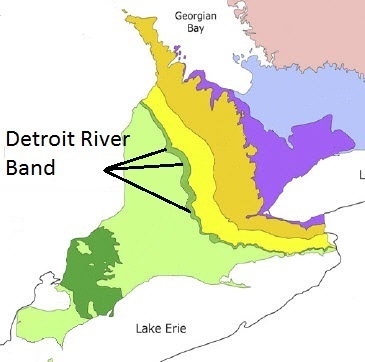
Limestone Fossil Formation
During the Devonian a shallow sea covered most of North America. The sea was full of early life which lived on the muddy bottom and coral reefs in the shallows. As these early creatures died, their bodies settled to the bottom of the sea. Dirt and mud and sand called “sediment” would be washed into the sea and cover the remains of these creatures. This sediment came from the Appalachian mountains to the east and Canadian Shield from the north and the shallow seas acted as settling basins for thousands of meters of sand, mud, and clay. Over time, these layers of deposited sediments and remains were compressed under great pressure and turned to rock by lithification*. Rocks formed this way are called “sedimentary” rock. Mud and silt would form layers of shale; sand into sandstone; and corals, calcium-rich exoskeletons and lime mud into limestone. The remains of the many species of sea creatures became fossils within the layers of sediment that are frequently visible to the unaided eye on close examination of the stone surface. Some varieties of limestone have an extremely fine grain and sometimes soft and easily scratched.
* Lithification - The process in which sediments compact under pressure and gradually become solid rock.
Devonian Fossils of Southern Ontario
Fossils of the once abundant Devonian sea-creatures in this area can be seen in some of these weathered surfaces of these rocks. Some common fossils which may be found in these rocks include: Trilobites, Brachiopods, Bryozoa, Gastropods, and Corals including Favosites and Rugosa. Below is a brief description of each with some photos of fossilized remains.
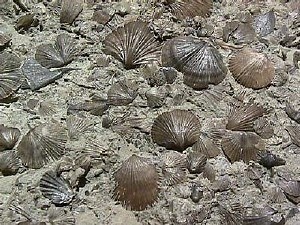 Branchiopod - A brachiopod is a hard-shelled marine animal. It attached itself to rocks and fed by opening the two halves of its shell with complex muscle systems or a toothed hinge. Brachiopods have a very long history of life on Earth and are often the most common fossils in rock of this age.
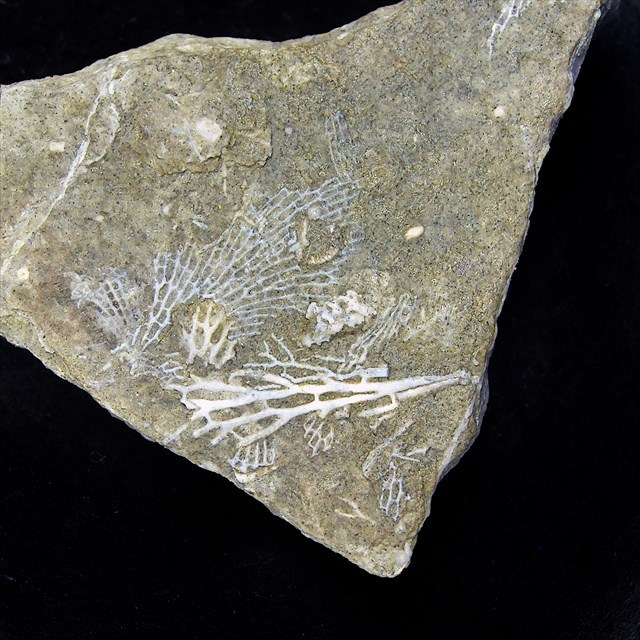 Bryozoa - Commonly known as moss animals, bryozoa are aquatic invertebrate animals that collect food particles from the water using tentacles lined with cilia. They grow in large colonies and are still found in relative abundance today.
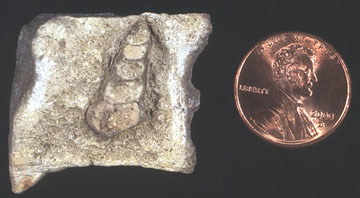 Gastropod - Known more commonly as snails. They have a calcareous, coiling shell and glide along the sea bottom grazing or scavenging for food. Gastropods are less common during the Palaeozoic era than bivalve Branchiopods making them rarer finds.
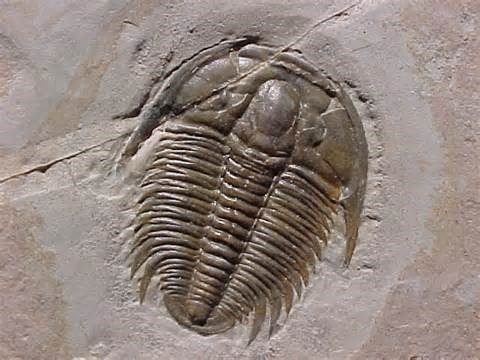 Trilobite - An invertebrate named for the 3 lobes that run lengthwise down their exoskeletons. Trilobite fossils are common because they shed their hard exoskeletons to grow leaving potential fossil material behind many times in their life cycle.
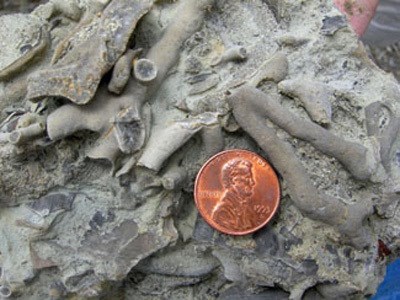 Coral - Marine animals that grow in compact colonies and are still important reef builders today. They form hard shells by secreting calcium carbonate. Corals from this period can be broken down into two types, Rugosa coral and Favosite coral.
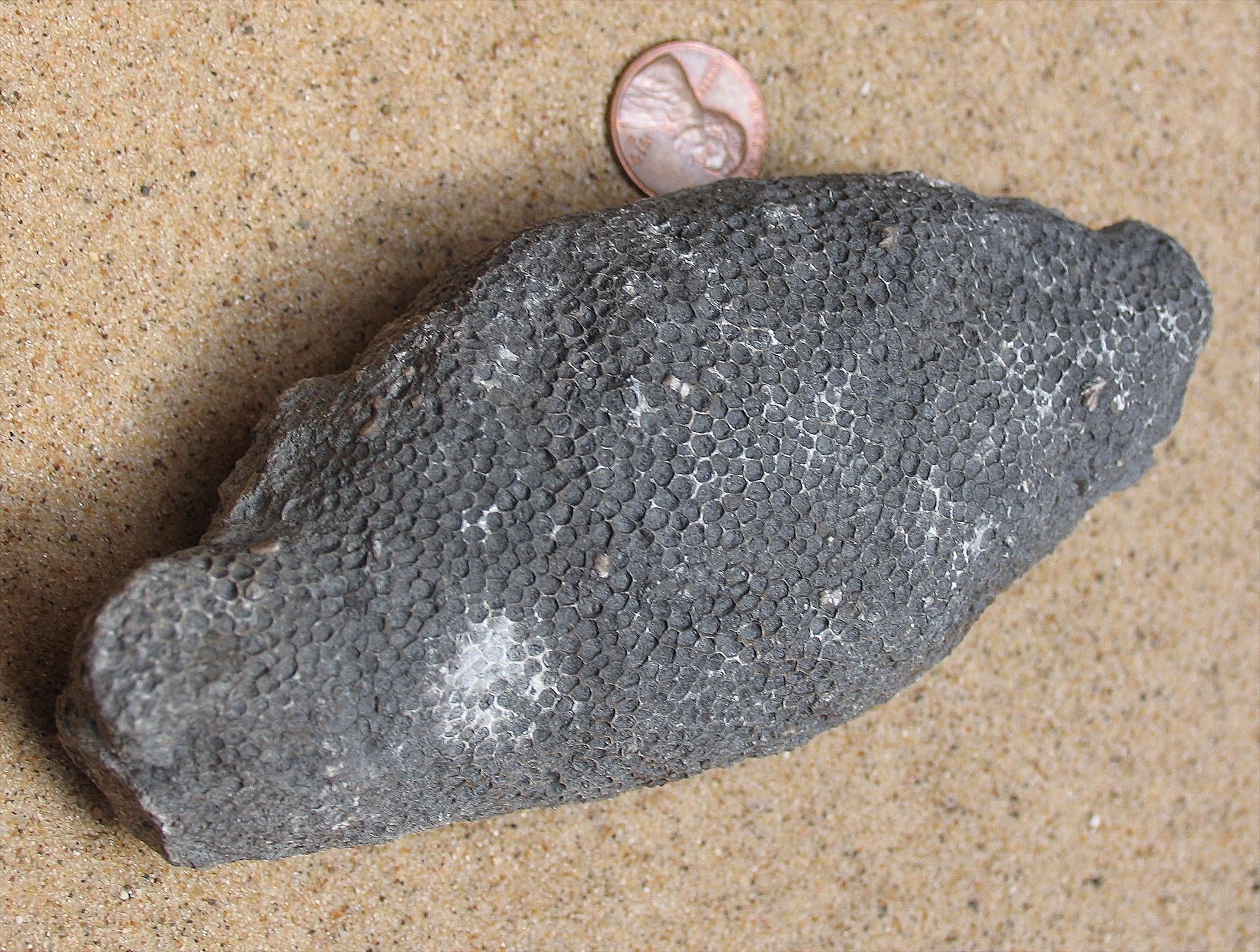 Favosites - An extinct variety of coral with polygonal, closely packed corallites that transfer nutrients between polyps with holes, known as mural pores, in the walls of the polyps. These fossils closely resemble modern day sponges but are actually quite different. Characterized by polygonal closely packed corallites giving it the common name "honeycomb coral".
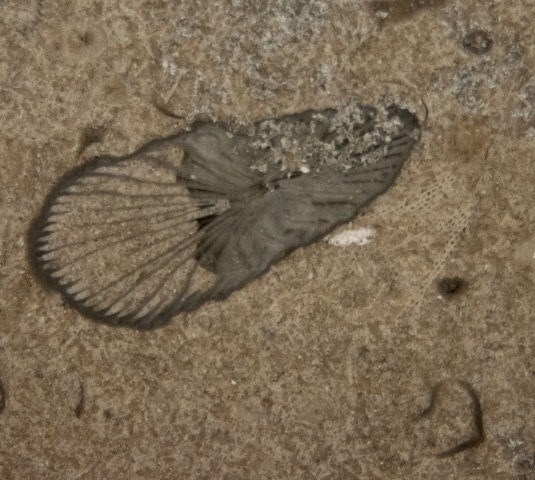 Rugosa - An extinct variety of coral that is also known as horn coral due to its shape. Unlike most corals, rugosa coral grows as individual corallites rather than in grouped colonies. Often referred to as horn corals because of a unique horn-shaped chamber.
Tasks and logging
To log this cache you will need to study a few of the rocks, I'd suggest 5 to 10. Plenty to choose from as there are over 100 rocks! Go up and down the rows to find the ones with lots of fossils. Once you have studied a few of the rocks answer the following questions. You may log your "find" right away but please follow with the answers within a few days through my Geocaching.com profile. I'm only expecting one line answers so no need to go into a graduate study response.
Question 1 - Limestone is known as "soft" rock. Take a hard-edged item like a coin or another rock and scratch the surface of these rocks. Did it leave a mark? What colour was the mark left if it did leave one?
Question 2 - After studying a few of the rocks what is the most common of the 2 types of fossil you see, marine animals (Brachiopods, Trilobites, Bryozoas and Gastropods), or corals (Favosite, Corals and Rugosa)? *Just looking for either "Marine animals" or "Coral", not specific fossil species.
Question 3 - What is the average size of the fossils you can see. Bigger than a Loonie or smaller?
Question 4 - If you were able to cut these rocks into several pieces would you expect to see more fossils inside? Explain why or why not.
Question 5 (Optional but encouraged) - Take a picture of your favourite specimen along with a size reference like you're GPSr, a pen, a finger, a coin, or a park squirrel and attach it to your log. This way we can see how many different types of fossils can be identified over time and the difference in sizes.

| I am a proud |
 |