Coming here took me back to a year 8 project on Esperance, back in those days you wrote to the local tourist information place (if you were lucky your mum would ring them up) and then you hoped like hell they would send you some nice glossy tourist brochures that you could cut up and use for your project! Anyway, coming to Twilight beach had been on my to do list for a long time, arriving here after a long day driving I was taken back to that year 8 project and my fascination with that Turtle looking rock, I stepped out of the car and just stood and looked and looked and looked, it was just beautiful and every impression I had of the area from those brochures was right!

Having not spent enough time in town on each of my visits I have been unable to establish if the rock has a name, I’ve appreciated A LOT of rocks in my time and I’m sure this one must have a name, I’m almost equally as sure that if it does have a name that it would be called Turtle rock or alike. Don’t you agree? Anyway for the sake of todays Earth Science lesson we are referring to it as a turtle!
I spent quiet some time looking at the rocks along the coast here and I must admit it took some time to get a positive ID on the Turtle; I had a theory that it was Granite but on the other hand it looked different!
A quick run down on Granite for those who are not familiar with it:
Granite it is the most common igneous rock found at Earth's surface. It is one of the most commonly recognised igneous rocks because it is used to make so many objects that we encounter in daily life. These include counter tops, floor tiles, paving stone, curbing, stair treads, building veneer, monuments and cooking utensils. Many natural landmarks are also made of granite.
Granite is a light-colored igneous rock with grains large enough to be visible with the unaided eye. It forms from the slow crystallization of magma below Earth’s surface. Granite is composed mainly of quartz and feldspar with minor amounts of mica, amphiboles and other minerals. This mineral composition usually gives granite a red, pink, grey or white colour with dark mineral grains visible throughout the rock.
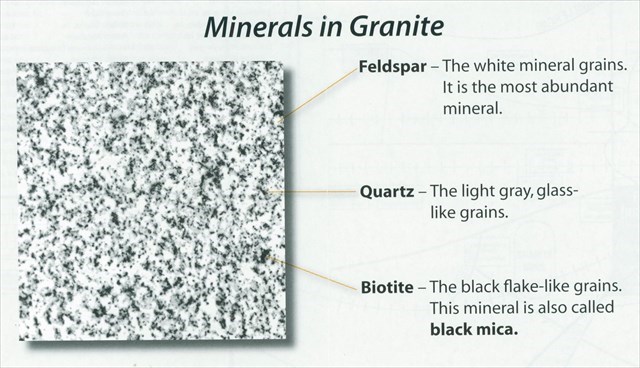
Granite is nearly always massive and very hard. The average density of granite is between 2.65 and 2.75 g/cm, its compressive strength usually lies above 200 MPa, and its viscosity near STP is 3–6 • 10 Pa·s.
The melting temperature of dry granite at ambient pressure is 1215–1260 °C it is strongly reduced in the presence of water, down to 650 °C at a few kBar pressure.
Granite has poor primary permeability, but strong secondary permeability.
Is it actually Granite that is here?
In layman’s terms direct from our Geologist friend “ Yup, granite or more precisely severely mangled granite - gneisses of the Albany Fraser Province, formed by granites and similar being heated, squished and bent severely 1200 to 1800 million years ago !”
So what is Gneiss? Gneiss is a foliated metamorphic rock identified by its bands and lenses of varying composition, while other bands contain granular minerals with an interlocking texture. Other bands contain platy or elongate minerals with evidence of preferred orientation. It is this banded appearance and texture - rather than composition - that define a gneiss.
How Does Gneiss Form?Gneiss usually forms by regional metamorphism at convergent plate boundaries. It is a high-grade metamorphic rock in which mineral grains recrystallized under intense heat and pressure. This alteration increased the size of the mineral grains and segregated them into bands, a transformation which made the rock and its minerals more stable in their metamorphic environment.
Gneiss can form in several different ways. The most common path begins with shale, which is a sedimentary rock. Regional metamorphism can transform shale into slate, then phyllite, then schist, and finally into gneiss. During this transformation, clay particles in shale transform into micas and increase in size. Finally, the platy micas begin to recrystallize into granular minerals. The appearance of granular minerals is what marks the transition into gneiss.
Intense heat and pressure can also metamorphose granite into a banded rock known as "granite gneiss." This transformation is usually more of a structural change than a mineralogical transformation. Granite gneiss can also form through the metamorphism of sedimentary rocks. The end product of their metamorphism is a banded rock with a mineralogical composition like granite.
To log this Earth Cache we require you to take in the view and appreciate the Turtle! Consider the information given and then message us with the following answers to the best of your ability;
1. What does the position of the Turtle here compared to the other large rocks around suggest about the area over time?
2. Is Gneiss just a type of Granite or another type of rock entirely?
3. Look at the eye socket of the turtle, what has caused this socket to appear? Consider the direction of the waves here and the possibility of them being a factor in the sockets wear. This question actually had our team divided!
4. A photo of your team or GPS near GZ. (Optional)
You are welcome to log your find straight away to keep your TB's and Stats in order but please message us with your answers within 1 week. Cachers who do not fulfil the Earth Cache requirement will have their logs deleted.
Most of all we hope you enjoy the area, we spent a lot of time here and it was virtually impossible to get our geochildren off the beach!
Source: Dr. Roger Hockings, Geology.com, Wikipedia
