Cliff & Sea EarthCache
Please note Use of geocaching.com services is subject to the terms and conditions
in our disclaimer.
En Galicia, al noroeste de España, se encuentran los acantilados más altos de Europa continental, que alcanzan altitudes de más de 600 metros en la zona de la Garita Herbeira.
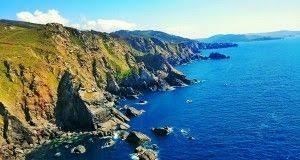
Casi siempre los acantilados se encuentran conformados por rocas muy resistentes a la erosión y a la acción atmosférica, rocas ígneas, como el basalto y el granito no se excluyen de este tipo de formación.
Rocas básicas, ultrabásicas, gneis o eclogitas (piedras de gran dureza y muy resistentes a la erosión) abundan en el entorno.
Estamos ante las rocas más antiguas de Galicia, muy resistentes a la erosión, cuyo origen se remonta 1.160 millones de años, según las últimas investigaciones del Museo de Historia Natural de Londres y de la Universidad Complutense de Madrid.
¿ QUE ANTIGUEDAD TIENE LAS ROCAS QUE FORMAN EL ACANTILADO?
¿QUE ALTURA TIENE EL ACANTILADO?
¿HAY PLAYA AL FINAL DE ESTE ACANTILADO?
SE AGRADECE UNA FOTO EN EL LUGAR.
In Galicia, to the northwest of Spain, there are the highest cliffs in continental Europe, reaching altitudes of more than 600 meters in the Garita Herbeira area. A cliff is a geographical accident that consists of a slope or abrupt vertical. Normally alludes to cliff when it is on the coast, but also they can be considered like such that exist in mountains, faults and borders of the rivers. Almost always the cliffs are formed by rocks that are very resistant to erosion and to atmospheric action, igneous rocks such as basalt and granite are not excluded from this type of formation. Basic rocks, ultrabasics, gneiss or eclogites (stones of great hardness and very resistant to the erosion) abound in the surroundings. We are facing the oldest rocks in Galicia, very resistant to erosion, whose origin dates back 1.160 million years, according to the latest research from the Natural History Museum in London and the Universidad Complutense de Madrid.
WHAT ANTIGUEDAD DOES THE ROCKS THAT FORM THE CLIFF?
WHAT HEIGHT MEASURES THIS CLIFF?
IS THERE A BEACH AT THE END OF THIS CLIFF?
THANKS A PHOTO IN THE PLACE.

Additional Hints
(No hints available.)
Treasures
You'll collect a digital Treasure from one of these collections when you find and log this geocache:

Loading Treasures