 |
POLISH DESCRIPTION
|
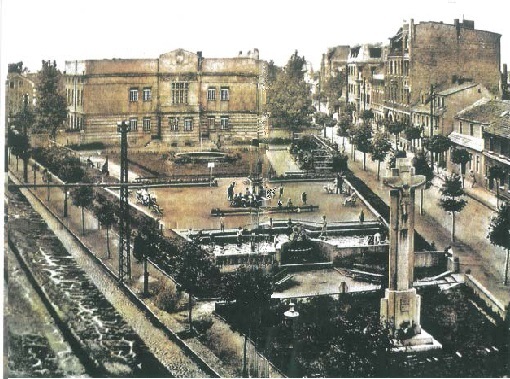
Przez ponad 50 lat XX w. przy zbiegu ulic Orlej i Ks. Skorupki funkcjonowała bydgoska łaźnia miejska. Powstała z prozaicznych przyczyn: w okresie międzywojennym tylko część kamienic i willi w Śródmieściu miała bieżącą wodę, większość natomiast musiała radzić sobie bez kanalizacji. Działało wprawdzie pięć małych łaźni miejskich, ale nie zaspokajały one potrzeb wszystkich mieszkańców. Dlatego rada miasta postanowiła wybudować bydgoszczanom duży nowoczesny zakład kąpielowy. Nieprzypadkowo padło na Szwederowo. Dzielnica w tamtych czasach było wyjątkowo zaniedbana, a kamienice i parterowe domy zamieszkiwali przede wszystkim robotnicy i rzemieślnicy.
Łaźnia została oddana do użytku 10 listopada 1928 roku. Skwer wokół budynku został wówczas obsadzony zielenią, w centrum stanęła fontanna. Ustawiono także ławki i wyznaczono alejki. Rozmach inwestycji opłacał się: bydgoszczanie tłumnie korzystali z zakładu kąpielowego. Szczególnie, że wnętrze jak na tamte czasy było bardzo nowoczesne i bogato wyposażone. Na parterze i piętrze znajdowały się natryski i wanny (osobno dla pań i panów), a także przebieralnie. W budynku mieściły się też trzy mieszkania - jedno z nich zajmował lekarz, który czuwał nad bezpieczeństwem kąpiących się.
Zakład działał jeszcze podczas okupacji, ale po wojnie zainteresowanie łaźnią zaczęło spadać - w latach 50. XX wieku miasto rozpoczęło systematyczną kanalizację Bydgoszczy i ludzie zaczęli kąpać się we własnych łazienkach.
W 1980 r. łaźnia została ostatecznie zamknięta. Przez blisko 30 lat świeciła pustkami.
Kilka lat temu historyczny gmach odkupił od miasta znany bydgoski lekarz psychiatra wraz z żoną. Stworzyli w nim Centrum Kultury, Higieny i Zdrowia Psychicznego - miejsce, które łączy w sobie funkcję przychodni, galerii sztuki i centrum kulturalnego. Wnętrza budynku urządzone zostały w stylu art deco, a ściany ozdobione obrazami namalowanymi przez osoby chore psychicznie.
JAK ODNALEŹĆ KESZA?
Odpowiedz na kilka pytań dotyczących łaźni i jej okolic, a następnie udaj się pod współrzędne
N 53 0A.B[B-C][C-A]
E 017 59.DAB
A – po ilu latach od wybudowania łaźni na Skwerze Nowakowskiego umieszczono rzeźbę “Dzieci z Rybą”
B – cyfra najczęściej pojawiająca się na krzyżu z figurą Chrystusa, znajdującym się nieopodal łaźni
C – różnica 2-giej i 3-ciej cyfry z roku wybudowania łaźni
D – cyfra, która pojawia się 3-krotnie na krzyżu z figurą Chrystusa, znajdującym się naprzeciw łaźni
X – rok wybudowania łaźni
Uważaj na mugoli. Zamknij skrytkę starannie, tak jak ją zastałeś.
UWAGA! Lokalizacja finałowa jest dostępna w godzinach: pn-pt 8-20, sob 8-16, ndz 8-14.
 |
ENGLISH DESCRIPTION
|
For over 50 years of the 20th century there used to be Bydgoszcz's city batthouse in this place. It was built for prosaic reasons: in the interwar period only some townhouses and villas in the city centre were equipped with running water. Most of the people had to cope without a sewage system. There were in fact 5 small public baths but they were not enough for the whole city. Therefore the City Council decided to build a big modern bathhouse. It was not a coincidence that Szwederowo was chosen. The district in these years was sloppy, inhabited by the working class.
The baths were put into operation on the 10th of November 1928. The square around the building was planted with trees and in the middle the fountain was installed. There were also benches set and beautiful lanes marked out. The range of the investment paid off. The baths were regularly crowded with citizens - unsurprisingly, as the place was really modern and well equipped. On the 1st and 2nd floors there were showers and baths (separate for men and women) as well as changing rooms. There were also 3 flats in the building, including 1 owned by the doctor responsible for health and safety of the users.
The bathhouse used to operate also during the war but after its end the interest in the services started to decrease. In the 50s the process of installing city sewer was started in Bydgoszcz and more and more people were able to take the bath in their own bathrooms.
In 1980 the baths were finally closed and the building stayed empty for over 30 years.
A few years ago it was bought by Bydgoszcz's famous psychiatrist and his wife. They created The Centre of Culture, Hygene and Sanity here - a clinic, an art gallery and a cultural centre at the same time. The interior was decorated in Art Deco style and the walls adorned with the pictures painted by the mentally ill.
HOW TO FIND THE CACHE?
Answer a few questions about the bathhouse and its surroundings and go to the coordinates
N 53 0A.B[B-C][C-A]
E 017 59.DAB
A – how many years passed since the bathhouse had been built till the sculpture “Children and a Fish” was placed at Nowakowskiego square
B – the digit most often appearing on the cross with the figure of Christ, located nearby the baths
C – 2nd minus 3rd digits of the year when the bathhouse was built
D – the digit appearing 3 times on the cross with the figure of Christ, located nearby the baths
X – the year when the bathhouse was built
Watch out the muggles and close the cache carefully.
WARNING! The final location is available: Monday – Friday 8 a.m. – 8 p.m., Saturday 8 a.m – 4 p.m., Sunday 8 a.m. – 2 p.m.
