Zincs’ major uses:
Zinc is the fourth most widely used alternative element/metal after iron, aluminum, and copper. Zincs major use is for corrosion protection coatings on steel (galvanized metal); as die castings, as an alloying metal added to countless other metals, as chemical compounds in rubber, ceramics, paints, and agriculture, and in pharmaceuticals and cosmetics. It's also a necessary for proper growth and development of humans, animals, and plants.
Zinc (Zn) is brittle, but it becomes malleable at 100° C or 212° F. Zinc, a blue-gray, metallic element, is a moderately good conductor of electricity. The most common alloy is brass, which is a mixture of zinc and copper. Zinc is a workhorse element and important in many industry processes.
Note: Todays U.S. one cent coin is 97.5% zinc, with the remaining metal being the copper plating.
Zinc’s Uses
Zinc alloys well with other metals resulting in stronger, harder metals. Brass, for example, is a mixture of copper and 20%-45% zinc.
Zinc is relatively non-reactive in air or water. Consequently, it is applied in thin layers to iron and steel products that need to be protected from rusting. This process is called galvanizing. Galvanizing is done in a number of ways. Generally, the metal is dipped in molten zinc. It can also be done by electroplating or by painting on a layer of zinc compound.
Zinc is used in making rubber and paint, chemicals, agricultural applications, in the rubber industry, in TV screens, fluorescent lights and for dry cell batteries. Pennies are made of zinc – with a thin coating of copper on top.
Zinc dust is used in the removal of impurities from solution in zinc electrowinning.
Zinc Durability
Oxidation of steel, which results in rust, is a commonly known process. Persistent rust will progressively deteriorate steel through corrosion eventually rendering it weakened and unusable. Zinc, on the other hand, has the ability to resist continued corrosion due to a very unique reaction. When zinc is exposed to the moisture and carbon dioxide that is present in our atmosphere, a protective layer of zinc carbonate forms on its surface, prohibiting the corrosion process that steel experiences. The resulting zinc-carbonate layer creates a beautiful bluish patina for a very desirable appearance. The physical properties of zinc make it a very unique and useful material for many building and finishing projects.
The protective barrier that is formed from zincs’ corrosive process gives it a beautiful finish. This corrosive process protects the exterior of the product zinc is used upon. Whether a building facing or a cemetery monument, this protective barrier provides longevity that outlasts many other metals. Zinc also has an ability to fill in imperfections on its surface over time. Zinc will patina over its lifespan; which is a film that develops on the surface of metals produced by oxidation of long periods of time. Due to this process, minor scratches and imperfections that were once present on the surface of a zinc covered exterior will virtually disappear.
Zinc does has some limitations to this naturally occurring protective mechanism. Submersion in water will cause zinc to corrode with a white rust. This is primarily due to a lack of carbon dioxide. This white rust will corrode and diminish the strength and resiliency of zinc similar to rust on steel. High condensation from humidity can also cause this to occur but at a slower rate than water submersion. Eliminating these conditions can dramatically effect the life and quality of a zinc covered surface.
Zinc Durability and Cost Savings
Zinc became an alternative to stone and marble grave markers and monuments due to its ability to withstand the naturally occurring elements for long periods of time. Additionally, it was dramatically cheaper to refine and utilize than its stone or marble counterparts. While stone and marble grave markers and monument can lose their finitely chiseled appearance over time, zinc grave markers and monuments did not lose their original finish. Wording on stone and marble along with details etched would weather and in some cause become completely indistinguishable. Zinc boasts a natural resilience to this problem which made it a popular and less expensive option as a building material.
Zinc is Environmentally Friendly
Zinc is a 100% recyclable metal that can be reused over and over again. Additionally, zinc is a fungistat, which makes it highly resistant to mold, mildew and fungus. When rain water drains from a zinc covered surface, the runoff is clean and free of toxins. Metals that produce runoff water laden with toxins during periods of weathering from water, snow, ice and wind, could negatively impact the local vegetation. So zinc, unlike copper and other metals, could be used in areas where vegetation is present, as it will not damage or compromise plant growth.
“Converse White Bronze"
The monument before you is a perfect example of cost savings and durability. It has all of the above characteristics described for zinc and clearly shows its lasting power through review of nearby stone monuments. This monuments description looks almost brand new while stone counterparts from the same time-frame are very weathered and hard to read - some indecipherable. This monument is unique as it is the only monument made of zinc within this cemetery - A Independent Order of Odd Fellows cemetery.
“The History of White Bronze"
Monumental Bronze Company, of Bridgeport, Ct; made zinc cemetery markers along with large monuments and statues from 1874 to 1914. The term "White Bronze" was used only to make the monuments sound more appealing. Truth be told – these monuments were not bronze but rather zinc in its purest form. The Monumental Bronze Company (and its subsidiaries) was the only company to have ever manufactured monuments and cemetery markers with zinc. All the casting was done in Bridgeport, although most assembly of the final product was done by the subsidiaries.
The company’s original records show that its zinc monument soldiers and sailors statues are standing on village and city greens in 31 states. Ranging in size from .5 to 5 meters in height, grave markers were sold and shipped nationwide. These monuments have lived up to the sales agents promises of durability, and superiority to their stone counterparts (sandstones and marbles), and have remained in excellent condition for over a century. After 100 to 135 years, every word, name, and date is as clear and legible as the day it was cast.
One weakness that has damaged these zinc monuments is caused by the pressure from their own weight. Zinc has a tendency to bend when it's exposed to pressure over time. Although white bronze monuments weathered well, they did have one flaw; the bending is known as ‘creep.’ This occurs when the weight of the top of the monument bears down onto the base and it begins to bow or bulge – very slowly, over the years. The only way to rectify this is to place a stainless steel armature inside the base to help support the upper weight. This creeping action may also cause tiny cracks on some of the monuments. Obviously, smaller markers do not exhibit this problem. Proper seating/mounting on concrete bases was important to reduce creep & corrosion from prolonged contact with the soils.
In an attempt to boost sales, in 1879, Monumental Bronze Company changed the "finish" on the metal so it would more closely resemble stone. Sandblasting roughened the surface and speeded up the natural formation of protective oxide coating. Also, on many styles, the base was cast to resemble cut stone. Now, pre 1879 monuments are smooth with a grayish color. Post 1879 monuments have a rough surface and are bluish-silver in color.
The company ceased to cast memorials in 1914 when the plant was taken over by the U.S. Government for the wartime manufacture of gun mounts and munitions, and from 1930-1939, failed to even advertise anything about their company. Although Monumental Bronze formally ceased to exist in 1939, company secretary C.A. Baldwin continued to cast the interchangeable name plates for the existing memorials under the new name of Memorial Bronze Company.
The "heyday" for these unique grave markers was short-lived. 1880-1900 were the peak years for production. Having withstood the elements for over a century, it appears these rare zinc monuments will be with us for another one, and likely beyond.
To log this Earthcache, please provide the following information via an email or through the message center on the geocaching.com website to the cache listing owner:
Locate the zinc memorial with this wording on its east base facing:
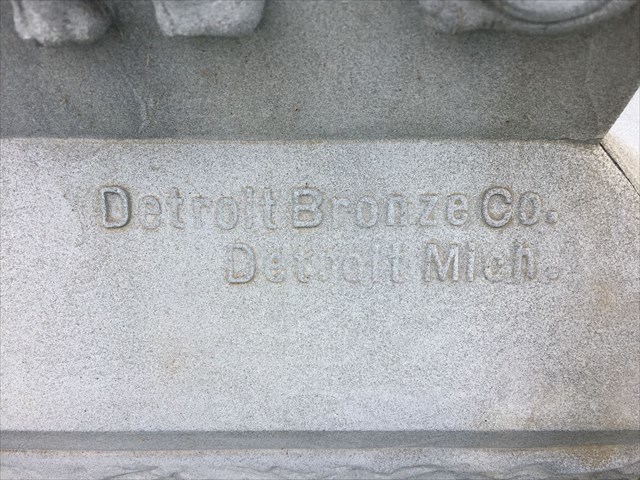
Once located, answer the following questions:
1. What does the surface of the monument feel like?
2. Knock on the monument as you would a door - What sound or impression do you get from the response of your knock?
3. Do you see any signs of “creep” at the monuments base? Vertically or horizontally?
4. What color is this monument? From the color, when (year) was this monument likely produced (see the above description for help with the answer)?
Failure to send the required information within three days of a posted “Found It” log will result in log deletion. Please do not post photos that may disclose the requested information. I hope your visit provides a geologic lesson and you have fun!