Miller's Green is a small area set behind Gloucester Cathedralwhich may be familiar as a setting for a Dr Who episode
The area is enclosed by very varied but beautiful private residences. (complete with equally varying and beautiful cats)
There was once a mill here. Hence the name.
The area is largely paved with setts of lias limestone but the workmen would have used any handy hard stone to complete the paving.
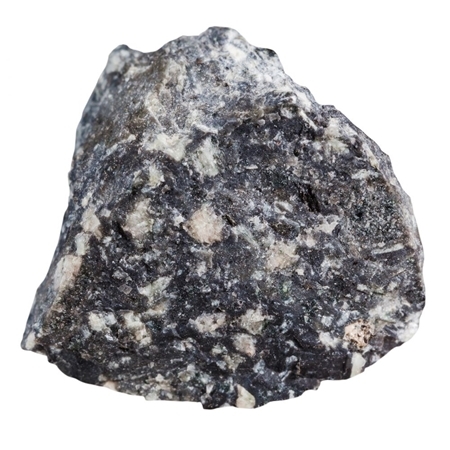
In amongst this there is ONE LONE BLOCK OF ANDESITE - a fragment of igneous rock that probably originated fron a volcano in Shropshire.
Along the north side of the green is a rough mill wall built from whatever materials came to hand. This was a working mill not a religious statement of faith.
THE GEOLOGY
There are at least four types of stone in the walls -
JURASSIC OOLITIC LIMESTONE
This is the stone used to build the cathedral. Possibly the stones in the walls here are rejects/offcuts from the building of the cathedral. It is type of limestone made up of small round grains. These formed in shallow, warm waters where calcium carbonate is deposited from sea water due to evaporation. The round grains grow in size as they are gently rolled to and fro by waves, in water only a few metres deep so they form round granules like eggs or ooliths.This happened about 160-180 million years ago in what is called the Jurassic Age. The so-called oolitic limestone used for the cathedral body and the yellower oolitic limestone used around and about are essentially the same but the whiter stone quarried in Painswick has less mineral impurities and was prefered for the more prestigious buildings.
BLUE-GREY LIAS LIMESTONE
Also from the Cotswolds This is commonly muddy and splits easily. A blue-grey lime mudstone, it was used quite widely in older buildings which may have been rendered as the Lias generally weathers poorly when exposed. It is easily recognised by its pale blueish colour, thin tabular blocks and characteristic thin layers of coarse and fine material. It holds lots of fossils, mainly bivalves,and is about 200 million years old.
RED DEVONIAN SANDSTONE
Also called Wildness sandstone from the Forest of Dean where there is an area called The Wilderness.Old Red Sandstone is a large group of rocks of late Silurian and Devonian age. They are formed from wind and weather grinding particles down in a semi-arid desert environment giving them their conspicuous red colouring through the intense weathering of iron-bearing minerals. It is 360 to 420 million years old.
GREEN SILURIAN SANDSTONE
From the Forest of Dean. Green Silurian sandstone is formed in a similar manner to Old Red Sandstone but is even older at 420 to 440 million years. Sandstones occur in many colours as well as the predominant red. It can be red, green purple or brown even within the same geological area. The stones in the wall here are extremely weathered and crumbling.
COTSWOLD RAGSTONE
Ragstone is a very hard type of limestone widely used in the medieval period. It is very difficult to face-up or carve but very durable so often used for foundations. It forms from sediment build up in flowing water so often shows crossbedding and lots of shell fragments Large rough-hewn blocks can be seen in the cathedral foundations.
ANDESITE
Andesite is a fine-grained, extrusive igneous or volcanic rock. It is dark grey and made up of equal amounts of light and dark minerals, although the crystals are too small to be seen without a magnifier.Occasionally andesite may contain some larger crystals of feldspar
THE QUESTIONS
Question 1. Observing the blocks of oolitic limsetone in the walls or in the cathedral walls what is the texture and composition of the stone Why do you think it would be a good building material for an important building?
Q2: During which geological time period do you think this stone has been formed?
Q3 Find some Green Silurian Sandstone in the walls. Why do you think that this stone has only been used in the walls around the cathedral, rather than in the cathedral itself?
Q4 (optional) Can you find the lone piece of Andesite in the Green ? If so please attach a photo