Skip to content

Rumba en la playa - DP/EC 190 EarthCache

Difficulty:
2 out of 5
Terrain:
1.5 out of 5

Size: Size:   other (other)

Join now to view geocache location details. It's free!

Watch

How Geocaching Works

Please note Use of geocaching.com services is subject to the terms and conditions in our disclaimer.

Geocache Description:


Rumba en la Playa


Para registrar esta caché, necesita responder a estas preguntas por e-mail.
Espero que hayáis disfrutado de vuestra visita!


1- ¿Cuántos tipos de sedimentos encuentras?
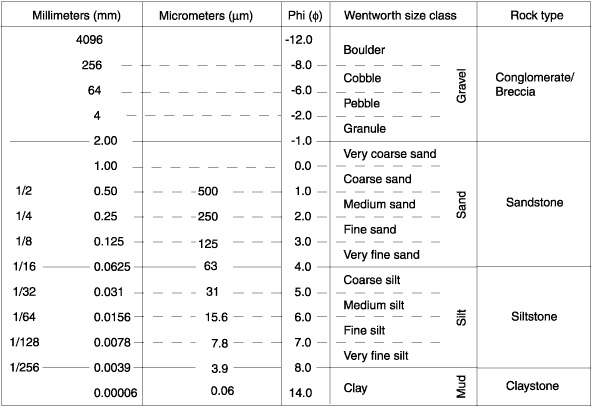
2- ¿El uso de la escala Wentworth proporcionada en la lista clasifica el sedimento?
3- Examinar cuidadosamente todos los sedimentos y comprobar si los sedimentos son monominerals (compuestos por un solo tipo de material) o multimineral (compuesta de más de un tipo de material).
4- ¿De qué color es la arena?

5- Tarea adicional (después de 2019-06-12), cada registro carece de una foto suya en las coordenadas o de su mano sosteniendo un papel con su nick escrito en él. Las fotos que sirven de spoiler serán borradas sin previo aviso.

Para consultar las nuevas Earthcache guidelines

To register this cache, you need to reply to these questions by e-mail.
I hope you enjoy your visit!


1- How many types of sediment do you find?
2- Using the Wentworth scale provided in the listing sorts the sediments.
3- Examine each of the sediments very carefully and check whether the sediments are monominerals (composed of only one type of material) or multiminerals (composed of more than one type of material).
4- What color is the sand?


Clasificación granulométrica


Se denomina clasificación granulométrica o granulometría, a la medición y graduación que se lleva a cabo de los granos de una formación sedimentaria, de los materiales sedimentarios, así como de los suelos, con fines de análisis, tanto de su origen como de sus propiedades mecánicas, y el cálculo de la abundancia de los correspondientes a cada uno de los tamaños previstos por una escala granulométrica.

Método de determinación granulométrico


El tamaño de un grano, clasto o partícula, no siempre fácil de determinar cuando son irregulares, se suele definir como el diámetro de una esfera de su mismo volumen, y se expresa en milímetros. En los cantos de mayor tamaño se suele hacer la media de las tres medidas ortogonales máximas, aunque no se corten en el mismo punto.
El método de determinación granulométrico más sencillo es hacer pasar las partículas por una serie de mallas de distintos anchos de entramado (a modo de coladores) que actúen como filtros de los granos que se llama comúnmente columna de tamices. Pero para una medición más exacta se utiliza un granulómetro láser, cuyo rayo difracta en las partículas para poder determinar su tamaño. O también se pueden utilizar los rayos gamma obs.

Ensayo de tamizado


Para su realización se utiliza una serie de tamices con diferentes diámetros que son ensamblados en una columna. En la parte superior, donde se encuentra el tamiz de mayor diámetro, se agrega el material original (suelo o sedimento mezclado) y la columna de tamices se somete a vibración y movimientos rotatorios intensos en una máquina especial. Luego de algunos minutos, se retiran los tamices y se desensamblan, tomando por separado los pesos de material retenido en cada uno de ellos y que, en su suma, deben corresponder al peso total del material que inicialmente se colocó en la columna de tamices (Conservación de la Masa).

Curva granulométrica


Tomando en cuenta el peso total y los pesos retenidos, se procede a realizar la curva granulométrica, con los valores de porcentaje retenido que cada diámetro ha obtenido. La curva granulométrica permite visualizar la tendencia homogénea o heterogénea que tienen los tamaños de grano (diámetros) de las partículas.

Sedimentología


Desde el punto de vista de la sedimentología, la medida de semejanza del tamaño de las partículas o clastos de un sedimento se expresa con los términos granoselección, selección o sorting (en inglés). Un material heterogéneo, con tamaños de clastos muy variados, se considera mal seleccionado, mientras que un material homogéneo, en el que predomina un único tamaño de grano, se considera bien seleccionado.
Por otro lado, se denomina granoclasificación o graded bedding a la distribución o variación del tamaño medio de los clastos dentro de una capa o estrato. Así, una capa que tiene en la base materiales más finos que a techo se dice que tiene granoclasificación creciente o negativa, y si es a la inversa, los materiales gruesos están en la base y los finos a techo, granoclasificación decreciente o positiva. Los términos granoselección y granoclasificación suelen usarse en ocasiones como sinónimos.
Cuando una sucesión de estratos muestra, desde los más antiguos a los más modernos, un aumento del tamaño medio de los clastos que forman cada capa, se dice que es una secuencia granocreciente, mientras que si va disminuyendo, se denomina secuencia granodecreciente.


Granulometric grading


It is called granulometric classification or granulometry, to the measurement and grading that is carried out of the grains of a sedimentary formation, of the sedimentary materials, as well as of the soils, for purposes of analysis, both of their origin and of their mechanical properties. , and the calculation of the abundance of those corresponding to each one of the sizes provided by a granulometric scale.

Method of granulometric determination


The size of a grain, clasto or particle, not always easy to determine when they are irregular, is usually defined as the diameter of a sphere of its same volume, and is expressed in millimeters. In larger ridges, the average of the three maximum orthogonal measurements is usually made, even if they are not cut at the same point.
The simplest granulometric determination method is to pass the particles through a series of meshes of different lattice widths (like colanders) that act as grain filters, which is commonly called sieve column. But for a more accurate measurement a laser granulometer is used, whose beam diffracts in the particles to determine its size. Or you can also use gamma obs.

Screening test


For its realization a series of sieves with different diameters are used that are assembled in a column. In the upper part, where the larger diameter sieve is found, the original material (mixed soil or sediment) is added and the sieve column is subjected to vibration and intense rotating movements in a special machine. After a few minutes, the sieves are removed and disassembled, taking separately the weights of material retained in each of them and that, in their sum, must correspond to the total weight of the material that was initially placed in the column of sieves ( Conservation of the Mass).

Granulometric curve


Taking into account the total weight and retained weights, we proceed to make the grain size curve, with the retained percentage values that each diameter has obtained. The grain size curve allows visualizing the homogeneous or heterogeneous tendency of grain sizes (diameters) of the particles.

Sedimentology


From the point of view of sedimentology, the measure of resemblance of the size of the particles or clasts of a sediment is expressed by the terms granoselección, seleccion or sorting (in English). A heterogeneous material, with very varied classe sizes, is considered poorly selected, while a homogeneous material, in which a single grain size predominates, is considered well selected.
On the other hand, the distribution or variation of the average size of the clasts within a layer or stratum is called granoclassification or graded bedding. Thus, a layer that has finer than ceiling materials in the base is said to have increasing or negative granoclassification, and if it is the other way around, the thick materials are in the base and the fines to the ceiling, decreasing or positive granulolation. The terms granoselección and granoclasificación often used sometimes like synonyms.
When a succession of strata shows, from the oldest to the most modern, an increase in the average size of the clasts that form each layer, it is said to be a grain-growing sequence, whereas if it decreases, it is called the grain-growing sequence.

Fonte: https://es.wikipedia.org


Additional Hints (No hints available.)