Oxbridge Home Zone
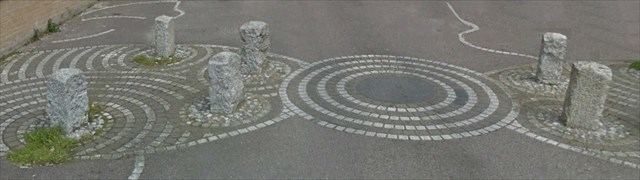
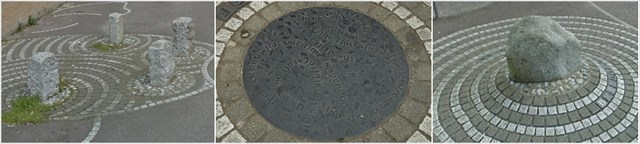
The H-shaped 'streetscape' is divided into twenty areas enhanced using different combinations of: small standing stones- standing stones emerging from stripey traffic islands- elliptical raised pattern areas- and circular stone plaques. All these features (apart from the arrangements of standing stones) incorporate typographic inscriptions - sometimes simple- sometimes very detailed and complex - which reference the vicinity but also create further conceptual possibilities. The textual features are realized as raised lettering in granite created by modern sand-blasting techniques
Many references and allusions are made by the various installations, all of which are entirely site-specific. The aim was 'to ensure that local residents feel safe and have a sense of pride and ownership of their environments'. The Home Zone idea derives from the Netherlands where they are referred to as 'Woonerf' or 'living backyards'
Granite Basics
Granite is the signature rock of the continents. More than that, granite is the signature rock of the planet Earth itself. The other rocky planets Mercury, Venus and Mars are covered with basalt, as is the ocean floor on Earth. But only Earth has this beautiful and interesting rock type in abundance.
Three things distinguish granite.
First, granite is made of large mineral crystals (which is where its name came from) that fit tightly together.
Second, granite always consists of the minerals quartz and feldspar, with or without a wide variety of other minerals (accessory minerals). The quartz and feldspar generally give granite a light color, ranging from pinkish to white. That light background color is punctuated by the darker accessory minerals. Thus classic granite has a "salt-and-pepper" look. The most common accessory minerals are the once you can see as the black and shiny once.
Third, almost all granite is igneous (it solidified from a magma) and plutonic (it did so in a large, deeply buried body or pluton). The random arrangement of crystals in granite—its lack of fabric—is evidence of its plutonic origin. Rock with the same composition as granite can form through long and intense metamorphism of sedimentary rocks. But that kind of rock has a strong fabric and is usually called granite gneiss.
Granite is a strong stone because its mineral crystals have grown tightly together during a very slow cooling period. And the quartz and feldspar that compose it are harder than steel. This makes granite desirable for buildings and for ornamental purposes such as gravestones. Granite takes a good polish and resists weathering and acid rain. But stone dealers use "granite" to refer to any rock with big 'grains' and hard minerals.
Colour: colourless grains, also mottled in white, pink or red, some grey or dark crystals.
Mineralogy: essential quartz, alkali feldspar and plagioclase in variable amounts, usually with hornblende and/or biotite; muscovite may occur.
Classification: acid plutonic igneous rock.
Occurrence: intrusive, most commonly occurring in batholiths.
Texture: coarse to very coarse-grained; usually granular; may be porphyritic with well-shaped phenocrysts (large crystals) of feldspar; sometimes foliated; coarse intergrowths of quartz and feldspars can form a graphic texture.
Structure: commonly contain xenoliths (remains of the older rock the magam was intruded in to), may contain cavities (druses) into which well-formed crystals project; may be associated with much late-stage mineralization.
To log this cache.
To get to log this cache you will have to read the cache text and visit the coordinates given. After that you will have to answer the questions which are related to the text and the coordinates given.
When answers are collected, send them to CO for verification. I will accept answers sent via email or through the Message Centre.
You can log immediately after answers are sent the CO. If there are any questions about your answers CO will contact you.
Logs without answers to CO or with pending questions from CO will be deleted without any further notice.
Please do not include pictures in your log that may answer the questions.
Questions
1. Answer the questions under by visiting the Coordinates.
A. Can you see any of the three mineral materials in the stone at gz , and what are they?
B. Why is granite a common stone used for monuments?
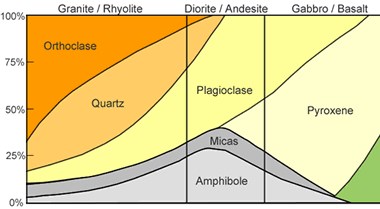
C. Have a look at the stones at gz. How much of the rock in % do the minerals quartz and feldspar make up in granite?
D. Compare the and look at several of the rectangular crystals in the stone at GZ and the given WP. Are there any difference? Measure their length, average their size and then tell if the rock is coarse, medium, or fine grained, by using the following scale:
- coarse crystals over 5mm in length,
- medium crystals between 1-5 mm in length
- fine crystal less than 1mm in length .
2. Take a photo of yourself, the group or your GPS when logging the cache.
Without revealing any answers!
(It’s voluntary to post a photo in your online log)
