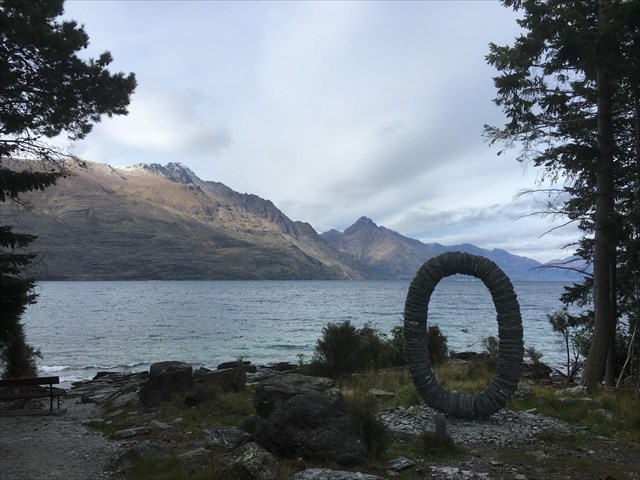
 HOW WANAKA SCHIST STONE FORMED
Otago Schist formed around 200 million years ago during the Jurassic era when plate tectonics forced sandstones and volcanic materials to be buried deep in the earth. The resulting high temperatures melted these rocks and minerals in a process known as metamorphism and realigned them into layers of different composition ( foliation) and formed the platy schist rock that is a distinctive part of the Otago region. This lineation is what makes our Schist so ideal for cutting and also gave it the ability to be split along the layers (schistosity)
Uplift and erosion has removed the softer rocks, leaving the hard and stable rock exposed at the surface.
The distinctive earthy shades of grey and brown has formed through the separation of different minerals, mainly white quartz, feldspar and mica but also traces of other minerals left from the original greywacke and sandstones, into layers creating beautiful variations in tone and shade that is unique to Wanaka Schist.
USES FOR SCHIST
Schist is not a rock with numerous industrial uses. Its abundant mica grains and its schistosity make it a rock of low physical strength even though it is a very hard rock, usually unsuitable for use as a construction aggregate, building stone, or decorative stone. The only exception is for its use as a fill when the physical properties of the material are not critical.
Some types of schist are used as roofing, in ceramic glazes, in insecticides, as dimension stones and in potting soil mixes.
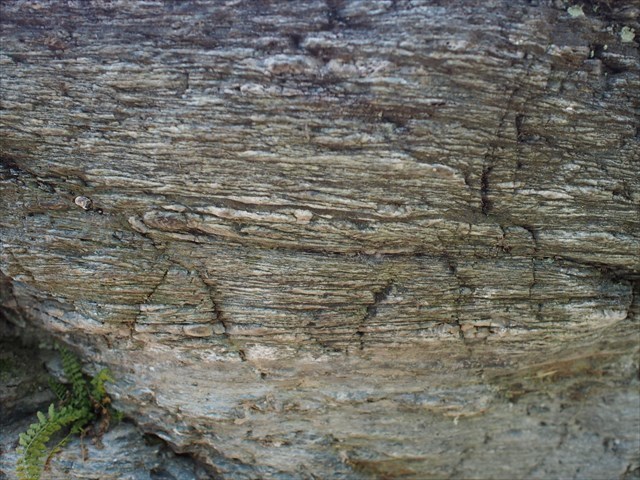
The sheet like structure of schistosity
To log this earthcache as a find
Please send your answers to the following questions to me via my profile. Please send the answers before you log your find. There is no need to wait for my reply before you log.
1.How many rounds of schist in each leg of the bench .
2. Take a look at the sculpture, have these rounds been split apart or cut apart.
3. There are veins of quartz in some of the rounds, do these viens run in the same direction as the schistosity or at right angles to it?
4. Why do you think schist has been used here?