Welcome to the biggest temple complex in the world – Angkor Wat in Cambodia
For this earthcache it is not necessary to enter the temple complex Angkor Wat. You can do the earthcache tasks from outside. You do not need to cross the trench.
This earthcache teaches you detailed information about the materials which have been used for its construction:
-
Wood
-
Sandstone
and
-
Laterite
The sandstone is mostly coming from the nearby quarry „Phom Kulen“ which is a national park today (earthcace GC21N8D). This earthcache pionts your attention towards the most interesting of the materials: Laterite
Laterite – a very important material for Angkor Wat
Laterite is a soil and rock type rich in iron and aluminium, and is commonly considered to have formed in hot and wet tropical areas. Nearly all laterites are of rusty-red coloration, because of high iron oxide content. They develop by intensive and long-lasting weathering of the underlying parent rock. Tropical weathering (laterization) is a prolonged process of chemical weathering which produces a wide variety in the thickness, grade, chemistry and ore mineralogy of the resulting soils. The majority of the land area containing laterites is between the tropics of Cancer and Capricorn. Laterites are a source of aluminium ore; the ore exists largely in clay minerals and the hydroxides, gibbsite, boehmite, and diaspore, which resembles the composition of bauxite.
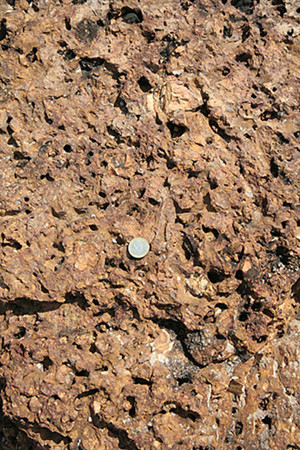
Laterite is important for the construction of Angkor. It has been used for almost all fundaments of the temple complex, platforms and walls. Laterite in Angkor was very easy to gain. From the solid but wet rocks the builders cut blocks of 30-50 cm width, 60-80 cm length and 40 cm of thickness. The air made it dry.
A very important characteristic of laterite is that only by drying in the air it gets as hard as concrete. If it is raining, the stone will not be softened again. Therefore it was not necessary to stove it like bricks. The word „Laterite“ comes from latin „laterus“ which means brick.
The laterite stones in the 25 temples of Angkor can be categorized in two groups:
-
porose laterites
-
pisolithic laterites
Both groups contain goethite, hamatite, kaolinite and quartz.
To log this earthcache, please answer the following questions:
-
You are standing outside of the Angkor Wat temple complex. Please have a look at the status in front of you. Examine the material of the statue and of the platform which it stands on. Please describe the differences in color, hardness and structure. Which one is made of Laterite? What is the other material?
-
Have a look around you. You fill find more status, guardrails and other objects. Why do you think that main structures have been made of laterite while stone cutters have used sandstone for fine and detailed work?
-
If you want, you can upload a picture of you outside or inside the temple complex Angkor Wat.
You do not need to wait for my answer. You can log the earthcache as soon as you have sent me the answers to the questions. Logs without answers will be deleted. Please do not spoil!
Have fun exploring Angkor Wat!
Sources: Wikipedia and www.geo-aktuell.de/homepage2/Kambodscha.html
សូមស្វាគមន៍មកកាន់ប្រាសាទដែលធំជាងគេបំផុតនៅលើពិភពលោក - អង្គរវត្តនៅកម្ពុជា
សម្រាប់ការទុកវានៅទីនេះមិនចាំបាច់បញ្ចូលប្រាសាទអង្គរវត្តទេ។ អ្នកអាចធ្វើកិច្ចការភារកិច្ចក្នុងឃ្លាំងសម្ងាត់ពីខាងក្រៅ។ អ្នកមិនចាំបាច់ឆ្លងកាត់ប្រឡាយ។
សៀវភៅនេះបង្ហាញពីព័ត៌មានលម្អិតអំពីសម្ភារដែលត្រូវបានប្រើប្រាស់សម្រាប់ការសាងសង់។
ឈើ
ថ្មភក់
និង
ក្រោយ
ថ្មភក់ភាគច្រើនមកពីជ្រលងភ្នំ "Phom Kulen" ដែលជាឧទ្យានជាតិសព្វថ្ងៃនេះ (ផែនដី GC21N8D) ។ Earthcache នេះបាននាំអ្នកយកចិត្តទុកដាក់ឆ្ពោះទៅរកការចាប់អារម្មណ៍បំផុតនៃសមា្ភារៈនេះ: ក្រោយ
ដែលជាសម្ភារៈដ៏សំខាន់បំផុតសម្រាប់ប្រាសាទអង្គរវត្ត
គឺជាដីនិងថ្មដែលសំបូរជាតិដែកនិងអាលុយមីញ៉ូមហើយត្រូវបានគេចាត់ទុកថាជាទូទៅត្រូវបានបង្កើតឡើងនៅក្នុងតំបន់ត្រូពិកក្តៅនិងសើម។ ស្ទើរតែគ្រប់ថ្មបាយក្រៀមទាំងអស់សុទ្ធតែមានពណ៌ក្រហមឆ្អៅដោយសារតែជាតិដែកអុកស៊ីដខ្ពស់។ ពួកវាបង្កើតឡើងដោយអាកាសធាតុដែលពឹងផ្អែកខ្លាំងនិងយូរអង្វែងនៃថ្មមេ។ អាកាសធាតុត្រូពិច (ក្រោយមក) គឺជាដំណើរការដែលមានយូរអង្វែងនៃអាកាសធាតុគីមីដែលផលិតនូវពពួកធំទូលាយនៅក្នុងកម្រាស់, ថ្នាក់ទី, គីមីវិទ្យានិងជីរ៉ែនៃដីដែលជាលទ្ធផល។ ភាគច្រើននៃផ្ទៃដីដែលមានថ្មបាយក្រៀមស្ថិតនៅចន្លោះត្រូពិចនៃខួរក្បាលនិងខាត់ណា។ Laterite គឺជាប្រភពនៃអាលុយមីញ៉ូម។ រ៉ែមានភាគច្រើននៅក្នុងដីឥដ្ឋនិង hydroxides, gibbsite, boehmite និង diaspore ដែលមានលក្ខណៈប្រហាក់ប្រហែលនឹងសមាសធាតុនៃបុកស៊ីត។
ក្រោយមកទៀតមានសារៈសំខាន់សម្រាប់ការសាងសង់អង្គរ។ វាត្រូវបានប្រើសម្រាប់ស្ទើរតែគ្រប់ប្រភពនៃប្រាសាទព្រះវិហារវេទិកានិងជញ្ជាំង។ ក្រោយមកទៀតនៅអង្គរមានភាពងាយស្រួលក្នុងការទទួលបាន។ ពីថ្មដ៏រឹងមាំប៉ុន្តែសើមអ្នកសាងសង់បានកាត់ប្លង់ទទឹង 30-50 សង់ទីម៉ែត្រប្រវែង 60-80 សង់ទីម៉ែត្រនិងកម្រាស់ 40 សង់ទីម៉ែត្រ។ ខ្យល់ធ្វើឱ្យវាស្ងួត។
លក្ខណៈពិសេសនៃថ្មបាយក្រៀមដែលមានសារៈសំខាន់បំផុតនោះគឺមានតែដោយការស្ងួតក្នុងខ្យល់ដែលវាមានភាពរឹងដូចនឹងបេតុង។ ប្រសិនបើវាភ្លៀងដុំថ្មនឹងមិនទន់ម្តងទៀតទេ។ ដូច្នេះវាមិនចាំបាច់ធ្វើចង្ក្រានវាដូចឥដ្ឋ។ ពាក្យ "Laterite" មកពីឡាតាំង "laterus" ដែលមានន័យថាឥដ្ឋ។
ថ្មបាយក្រៀមនៅក្នុងប្រាសាទចំនួន 25 នៃអង្គរអាចត្រូវបានបែងចែកជាពីរក្រុម:
ផតថល
ថ្មបាយក្រៀម
ក្រុមទាំងពីរមាន និងរ៉ែថ្មខៀវ។
ដើម្បីចូលទៅក្នុងវចនានុក្រមនេះសូមឆ្លើយនូវសំណួរខាងក្រោម:
1) អ្នកកំពុងឈរនៅខាងក្រៅប្រាសាទអង្គរវត្ត។ សូមមើលស្ថានភាពនៅពីមុខអ្នក។ ពិនិត្យមើលសម្ភារៈរូបសំណាកនិងវេទិកាដែលវាឈរ។ សូមពិពណ៌នាអំពីភាពខុសគ្នានៅក្នុងពណ៌រឹងនិងរចនាសម្ព័ន្ធ។ មួយណាត្រូវបានបង្កើតឡើងពីក្រោយ តើសម្ភារៈផ្សេងទៀតជាអ្វី?
2) រកមើលនៅជុំវិញអ្នក។ អ្នកបំពេញស្វែងរកស្ថានភាពបន្ថែមរនាំងនិងវត្ថុដទៃទៀត។ ហេតុអ្វីបានជាអ្នកគិតថារចនាសម្ព័ន្ធសំខាន់ៗត្រូវបានធ្វើឡើងពីថ្មបាយក្រៀមខណៈដែលអ្នកកាប់ថ្មប្រើថ្មភក់សម្រាប់ការងារល្អនិងលម្អិត?
3) ស្រេចចិត្តអ្នកអាចផ្ទុករូបថតរបស់អ្នកនៅក្រៅឬនៅក្នុងប្រាសាទអង្គរវត្ត។
អ្នកមិនចាំបាច់រង់ចាំចម្លើយរបស់ខ្ញុំទេ។ អ្នកអាចចូលទៅក្នុងវចនានុក្រមនេះភ្លាមៗនៅពេលដែលអ្នកផ្ញើចម្លើយមកខ្ញុំ។ កំណត់ត្រាដោយគ្មានចម្លើយនឹងត្រូវបានលុប។ សូមកុំចំណយ!
មានភាពសប្បាយរីករាយក្នុងការរុករកប្រាសាទអង្គរវត្ត!