This is a 5 Difficulty EarthCache, and will take a significant amount of time to complete, including reading to understand the cache page, the materials used in the construction of these monuments, and the various forms of weathering acting upon them. Failure to send the necessary information to the CO at the top of the page, will result in your log being deleted. Teamwork and significant discussion will likely be necessary to complete the requirements.
Please allow a minimum of 1 hour, to collect the necessary information for this EarthCache
Background:
Welcome to Hamilton Cemetery on York Boulevard, the oldest, public burial ground in the city of Hamilton. This cemetery is located on Burlington Heights, a high sand- and gravel isthmus that separates Hamilton's harbor on the east from Cootes Paradise on the west. If you wish to learn more about the isthmus, you may want to visit the following EarthCache, just down the road: (GC72XB9) Lake Iroquois Hamilton/Burlington Isthmus.
Historically, the cemetery consists of three, separate burial grounds over 100 acres: Burlington Heights Cemetery, the Christ Church Grounds, and the Church of Ascension Grounds. From 1850 until 1892, each burial ground was run separately, but by the beginning of the 1890s, the church wardens were encountering difficulty paying for the maintenance-and upkeep of their areas of the grounds. In 1892, an agreement with the City of Hamilton who assumed responsibility for all the grounds, which were renamed "Hamilton Cemetery".
Gravestone Materials
A cemetery follows codes of practice that prescribe the size and use of certain materials for burial plots. Some may limit the placing of a wooden memorial to six months after burial, after which a more permanent memorial must be placed. Others require stones of a certain shape or position to facilitate grass-cutting. Headstones of granite, marble and other kinds of stone are created, installed, and repaired by monumental masons.
A variety of materials have been used as markers.
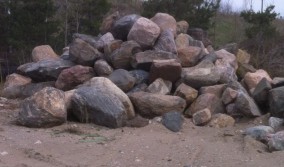
Fieldstones:
The earliest markers for graves were natural fieldstone, some unmarked and others have the deceased's name and age etched into the stone with a metal awl..
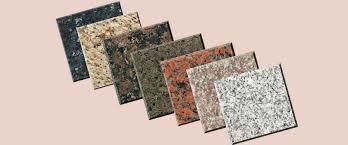
Granite:
Granite is a durable igneous rock that makes for a long lasting tombstone. People began to use granite for cemetery monuments in the 1860s and it remains a popular stone for memorials to this day. Granite is formed from magma which cooled about ten miles below the earth’s surface. Whenever granite shows up at the surface of the earth that means the ten miles of earth covering it have eroded away over time leaving the granite visible.
Granite comes in a variety of consistencies and colors determined by the composition of the minerals in the rock. Quartz, mica, and various feldspars make up most of granite and give it a characteristic speckled look..
Granite is a hard stone that is very difficult to carve by hand. New carving methods include using computer-controlled rotary bits and sandblasting over a rubber stencil. Sandblasting can create virtually any kind of artwork or epitaph.
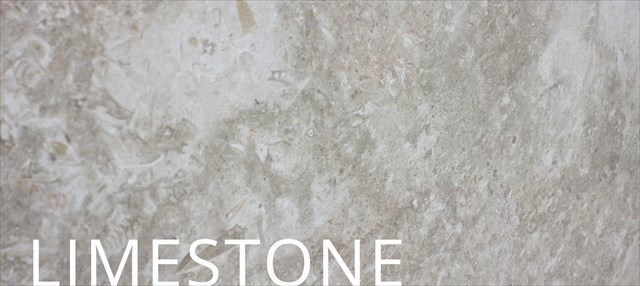
Limestone:
Headstones made of limestone were most popular from 1780-1930, but limestone was used much earlier to make the first sarcophagi. Sarcophagus literally means “flesh eat,” a rather disturbing name which stems from the unusual limestone used to make sarcophagi which ate away at human flesh.
Limestone is formed from calcite and silicate sediment, not sand. Impurities in the sediment will create darker limestone, but lighter varieties with fewer impurities are the most prized. The calcite and silicate either directly precipitate from the seawater or are obtained from the abandoned shells of sea creatures lying on the ocean floor. Some limestone contains fossils of these organisms. Limestone commonly forms in tropical or subtropical seas where calcite and silicate are abundant.
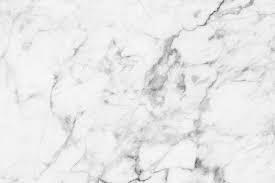
Marble:
After limestone is metamorphosized at high temperatures and pressures it becomes marble. The purest marble is perfectly white and has a sugary texture. Marble is highly sought after for its elegant beauty. Marble may be beautiful, but over time its glory fades as carbonization brought on by rainfall causes its surface to recede, rendering headstone inscriptions illegible. Marble is also easily stained with lichens or soot.
Marble was in vogue from 1780-1930. The world’s most prized marble has no impurities and comes from Carrara, Italy. Michelangelo used Carrara marble to carve his famous statue of David.
Both limestone and marble take carving well. Marble is a recrystallized form of limestone. The mild acid in rainwater can will slowly dissolve marble and limestone over time, leaving inscriptions unreadable.
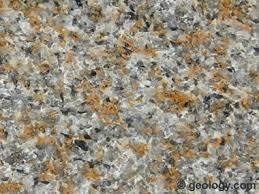
Sandstone:
Sandstone is a sedimentary rock formed from sandy broken up pieces of other rocks deposited at the bottom of a river or sea. When these deposits were subjected to intense pressure, they condensed into a new rock, sandstone. The color of sandstone differs widely across sandstone species depending on where they formed and how they weathered. Sandstone is often striped with different colored sediment. In addition to miscellaneous rock pieces, sandstone often contains quartz and feldspar, and is held together by silica, calcite, or iron oxides.
In colder climates, moisture gets between the layers of the porous sandstone, and as it freezes and thaws the stone eventually crumbles to dust.
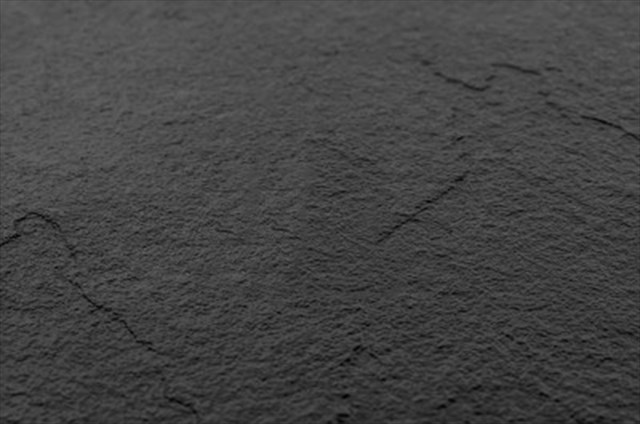
Slate:
Slate, like marble, is sedimentary rock that was metamorphosized to become a new variety of stone. Unlike marble, slate is formed from sedimentary rock made of mud and possibly volcanic ash, not limestone. Slate tends to be dark grey or tinted deep purple or green from the volcanic ash. It is layered in thin sheets that peel apart easily. Gravestones made of slate are often coated with a protective material to prevent water from getting between the layers and pushing them apart. Once the coating is on, slate weathers well given its hard nature. Being hard isn’t always good for a gravestone. It is highly difficult to carve inscriptions into slate. Still, professional gravestone carvers in the later 1600s and early 1700s made impressive carvings on slate.
Slate is a dark and very smooth stone, is slightly porous and is also weathered by the physical erosion, through the freezing and thawing of moisture.
Concrete:
Concrete is easy and inexpensive to use. Information can be easily etched or stamped into the wet material, and it will last for a long time, especially if material is added to the mix to reinforce it’s strength. However, like other porous materials, concrete is subject to mechanical weather from the thawing and freezing of winter weather.
Weathering of Rock
Gravestones are ideal subjects for studying how rocks weather, because they are uniform in shape and have dates on them which give a general idea of how long the stone has been standing.
Weathering is the breakdown of a stationary rock. Weathering is different than erosion which only occurs when a rock is moving. The way a rock weathers depends on the environment and the chemical composition of the rocks. There are 3 main forms of weathering: physical, chemical and biological weathering.
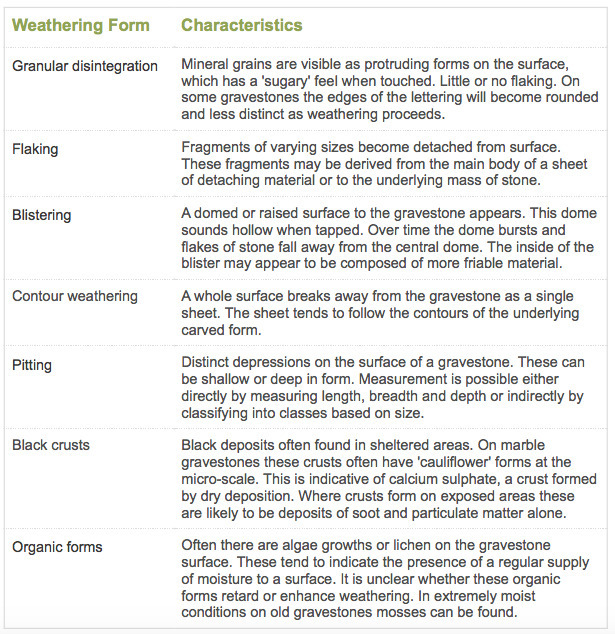
Lichens, moss and ivy growing on gravestones do not harm or degrade the stone, but they may discolour it or cover the lettering on a marker make it illegible. Plants and lichens help protect the gravestones from chemical or physical weathering, and the stones provide a nice habitat for these organisms.
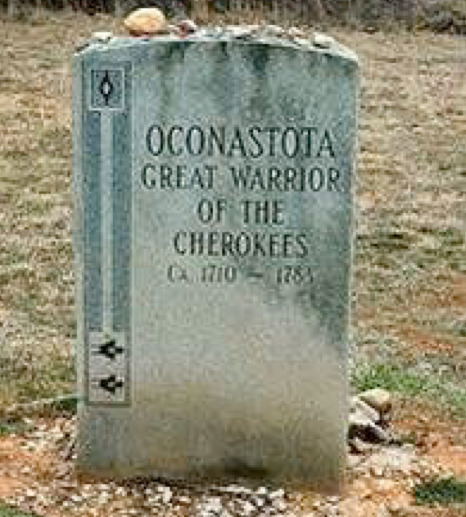
Granite
Granite holds up well under weathering, though the mica in it may degrade leaving it pitted. Stains from soot can darken granite, and lichens, moss, and ivy growing on the stone can change its appearance as well.
Polished Granite has only been used since railway transport enabled rocks to be brought from other areas in the last 100-150 years. These rocks usually show limited signs of weathering. If there is any weathering, the weakest minerals (feldspars - white/pink/yellow) weather by chemical erosion. This can be observed in coarse-grained granites, which begin to form pits in the surface which may feel rough under the fingers.
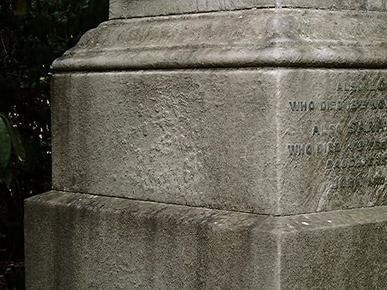
Marble
Marble gravestones mainly decay by dissolution by acidic rainfall (all natural rainfall is slightly acidic, with a weak carbonic acid with a pH of 5.6). The end result is that matrix and grains are removed from the surface of the gravestone producing a 'sugary' surface. If you pass your hand over the gravestone surface it will have a slightly roughened feel. Marble that has weathered unevenly, has raised patches which are more resistant.
The pillar (above) shows raised lead lettering, the marble beneath having weathered faster than the lead. The surface and sheltered parts of marble memorials have been blackened by the deposition of atmospheric material.
Sandstone
Sandstone is probably the least durable rock used in cemeteries. Monuments and headstones made from sandstone were popular from 1650-1890. Flaking of the surface of sandstone can produce large and small coherent flakes which become detached. Often the flake remains attached to the surface for so long that organisms begin to live in the gap between the flake and the gravestone, possibly causing biological weathering of the surface. Eventually the flake becomes detached, leaving an uneven surface. Different rates of detachment produce a rough and discoloured surface, which can be very friable. Black crusts can be deposited on sandstone gravestones. These result from the deposition of particulate matter such as soot, but can also form by the reaction of sulphur dioxide and calcium carbonate that may be present. Carving of a surface can produce micro-environments that might enhance weathering.
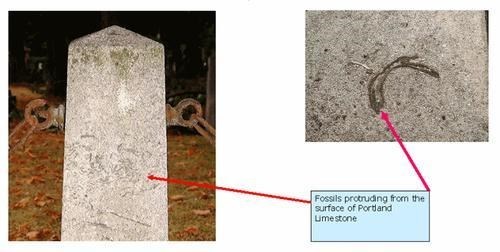
Limestone
Limestone is composed of at least 80% calcium carbonate (CaCO 3) which is very prone to dissolution by acid rain (weak carbonic acid). However, it is noticeable how fossils in limestone tend to be more resistant and thus protrude from the stone.
Logging Requirements
In order to log this EarthCache, please visit all 6 waypoints, throughout the Cemetery, and answer each of the following questions at each waypoint. E-mail your answers to the CO at the top of this page.
1) What is the oldest recognizable date found on this monument? Describe this monument (What is it?).
2) What type of weathering (physical, chemical and biological) is happening here? (Is there more than one form?)
3) From the cache page description, what indicators do you see of weathering identified in Question 2.
4) Finally, based on your observations above, what type of rock do you think this monument/ headstone/ crypt is made from. If there is more than one material, be sure to identify them all.
Optional:
5) Feel free to include photos with you online log, of any of the monuments, signs of weathering or anything else you find interesting in the area. Lots to see here!
References:
https://en.wikipedia.org/wiki/Headstone
https://www.findagrave.com/cemetery/639424/Hamilton-Cemetery?
https://en.wikipedia.org/wiki/Hamilton_cemetery
http://www.apcrp.org/Headstone%20Making/How%20to%20make%20a%20headstone.htm
http://www.cemeteries.org.nz/Memorials/4.%20Headstone%20materials.pdf
http://thesciencenotebookblog.blogspot.ca/2016/07/cemetery-series-cemetery-geology.html
https://www.ucl.ac.uk/earth-sciences/impact/geology/london/citycemetery/weathering/factors