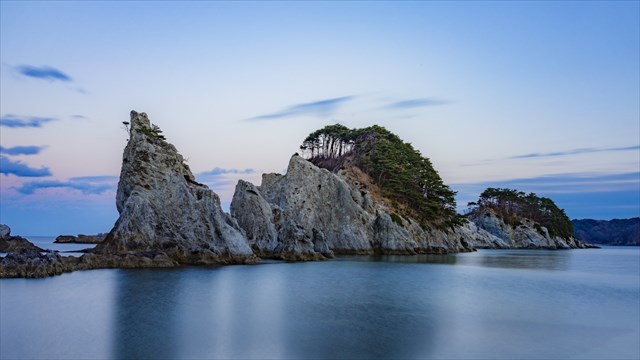
浄土ヶ浜は、海上に鋭く尖った岩が林立した宮古市の景勝地です。江戸時代に僧侶がここを訪れ、"さながら浄土のごとし"と感嘆したことから浄土ヶ浜と言われるようになったと伝えられています。
三陸海岸は至る所で美しい岩石海岸の風景が見られますが、浄土ヶ浜のピラミッド状に並ぶ岩石は他では見られない特徴的なものです。
◎浄土ヶ浜の形成
浄土ヶ浜周辺は、約5200万年前にマグマが地下に入り込み地中で固まった岩石(火山岩)からできています。地殻変動により火山岩の地盤が隆起し周囲の地層が浸食されて今の岬を形成しました。地表にでた火山岩は長い時間波の浸食を受け続け鋭く尖ったピラミッドの様な形になりました。
◎火山岩
火山岩には多くの種類がありますが、日本では大きく分けて玄武岩・安山岩・流紋岩の3種になります。
1. 玄武岩
玄武岩は、有色鉱物を多く含んでいるので一般に黒っぽい色をしています。富士山や伊豆七島の火山の溶岩は主にこの玄武岩でできています。このほか、九州の唐津地方などには玄武岩が小規模な溶岩台地をつくって広く分布しています。
2. 安山岩
安山岩は、玄武岩に比べて有色鉱物に割合がやや少ないので一般に玄武岩よりも白っぽい色をしています。日本の多くの火山を作っている溶岩は主に安山岩です。
3. 流紋岩
流紋岩は、有色鉱物の量が少ないので一般に白っぽい色をしています。しかし、流紋岩質のマグマが鉱物の粒ができる前に急に冷え固まってしまうと、黒曜石(十勝石)とよばれる黒色の天然ガラスになります。また、流紋岩質のマグマが冷え固まる時にその中にふくまれていた水蒸気が急にふきだすと、非常に穴の多い岩石(浮石・軽石)になります。流紋岩は、日本の現在の火山からはあまりふきだしていません。
浄土ヶ浜は三陸復興国立公園・三陸ジオパークとして遊歩道が整備されており、成り立ちについての分かりやすい説明板が観察ポイントごとに設置されています。更に近くで観察したい場合は遊覧船に乗られることをお勧めします。遊覧船からは青の洞窟やそそり立つ岩壁を身近に観察することができます。遊歩道には駐車場から簡単にアクセスできます。
このキャッシュはアースキャッシュです。下記のTaskを実行してください。(Task実行無い発見ログは削除される場合があります。)
Task
下記の質問の答えをキャッシュオーナーにメールしてください。
浄土ヶ浜を構成する主な岩石は次の内どれですか?
1. 玄武岩 2. 安山岩 3. 流紋岩
公開座標で岩石を観察して、その岩石の特徴を教えてください。
2. 遊歩道を歩いて、又は遊覧船から海岸の岩石・青の洞窟内外壁を観察し、この場所が火山岩で構成されている証拠を教えてください。
English
Jodogahama is a scenic spot of Miyako City where sharply pointed rocks stand at the sea. During the Edo period, A monk visited Jodogaha and he said "It looks like Pure Land". So this beach came to be called Jodogahama.
The Sanriku coast is a beautiful rocky coastal landscape everywhere, but the rocks lined up in Pyramidagahama's pyramid are distinctive features that can not be seen elsewhere.
◎Formation of Jodogahamahama
The vicinity of Jodogahama Beach consists of rocks (volcanic rocks) that magma entered the basement about 52 million years ago and solidified in the ground. The volcanic rocks uplifted due to crustal deformation and the surrounding strata were eroded to form the current cape. The volcanic rocks on the surface have been subjected to the erosion of the waves for a long time and have become like a sharply pointed pyramid.
◎Volcanic rock
There are many types of volcanic rocks, but in Japan there are three main types, basalt, andesite and rhyolite.
1. Basalt
Basalt has a lot of colored minerals, so it is generally dark in color. The volcanic lava of Mt. Fuji and Izu seven island is mainly composed of this basalt. In addition, in Karatsu district of Kyushu etc. there are small lava plateau of basalt and it is widely distributed.
2. Andesite
An andesite generally has a whitish color than basalt as it is slightly less colored mineral than basalt. The lava making many volcanoes in Japan are mainly andesite.
3. Rhyolite
Rhyolite is generally whitish in color because of the small amount of colored minerals. However, if the rhyolitic magma suddenly cools and solidifies before the mineral granules are formed, it becomes a black natural glass called obsidian (Tokachiishi). Also, when the rhyolitic magma cools and hardens steam suddenly falls into it, it becomes a very holey rock (floating stone / pumice stone). Rhyolite is not spurting out much from the current volcano in Japan.
Jodogahama has a promenade as a Sanriku Reconstruction National Park · Sanriku Geopark, and easy-to-understand explanatory boards are established for each observation point. If you want to observe it closer, we recommend you to board a pleasure boat. From the pleasure boat you can observe the blue caverns and the rocky walls close by. Easy access from the parking lot to the boardwalk.
This cache is the earth cache. Perform the following Tasks.
Task
Send email the answer to the question below to cache owner.
Question1
Which of the following are the main rocks that make up Jodogahamahama? "1. Basalt 2. Andesite 3. Rhyolite"
Observe the rocks at the public coordinates and tell us the characteristics of that rock.
Question2
Walk through the promenade or observe the outer wall of the coastal rock / blue cave from the pleasure boat and find the evidence that this place is made up of volcanic rock and tell me it.