Can't see the wood for the ASH tree!
This cache is part of the series 'Can't see the wood for the trees'. It tests your knowledge of the trees and shrubbery of the British woodlands and also enables you to help your child's education too, if you decide to bring them out for the day geocaching.
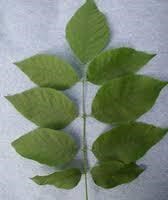
Common ash is found across Europe, from the Arctic Circle to Turkey. It is the third most common tree in Britain. It is currently being affected by Chalara dieback of ash, a disease caused by the Hymenoscyphus fraxineus fungus (previously Chalara fraxinea). When fully grown, ash trees can reach a height of 35m. Tall and graceful, they often grow together, forming a domed canopy. The bark is pale brown to grey, which fissures as the tree ages. Easily identified in winter by smooth twigs that have distinctively black, velvety leaf buds arranged opposite each other.
The leaves pinnately compound, typically comprising 3-6 opposite pairs of light green, oval leaflets with long tips, up to 40cm long. There is an additional singular 'terminal' leaflet at the end. The leaves can move in the direction of sunlight, and sometimes the whole crown of the tree may lean in the direction of the sun. Another characteristic of ash leaves is that they fall when they are still green.
Ash is dioecious, meaning that male and female flowers typically grow on different trees, although a single tree can also have male and female flowers on different branches. Both male and female flowers are purple and appear before the leaves in spring, growing in spiked clusters at the tips of twigs.
Once the female flowers have been pollinated by wind, they develop into conspicuous winged fruits, or 'keys', in late summer and autumn. They fall from the tree in winter and early spring, and are dispersed by birds and mammals.
The black buds and clusters of seeds are key features. The tree could be confused with rown (Sorbus aucuparia) and elder (Sambucus nigra). Elder has fewer leaflets and those of the rowan are serrated. It can be identified in the winter by the distinctive black buds and flattened twigs.
The Cache
This particular cache is hidden at hip height between the road and the kissing gate. This container is a small clipbox container, just the right size for small trackables and swaps.
|
I like my caches to be found, and I am always happy to help you find / solve them, but, the rules of geocaching are:
1. Find the cache.
2. Sign the logsheet and log it online to say that you found it.
Any online logs without a signed log sheet will result in online logs being deleted.
3. Return the cache exactly as you found it. DO NOT TAKE IT HOME.
|
If the next cache you are heading for is GC7Q0GW Can't see the wood for the LAUREL, please note the update regarding footpaths and private property on the cache page. PLEASE take care when crossing the road from this cache, the road is very busy.
Congratulations to Sair81 for the FTF!