DPW3 just earned his learners permit. With the 50 hour minimum driving time requirements now in place in Illinois we're going to be spending lots of time driving around the country roads while he perfects his driving skills. I figured I'd make use of the time in the car to scout geocache locations and put out some mystery caches. Since this is a mystery cache it is NOT at the posted coordinates but is within 2 miles of the posted coordinates.
DPW3 just took and passed the Illinois Rules of the Road test and is not done with the classroom portion of his drivers training. He said the easiest questions on the test were about railroad crossings. Looking at this information I'm not sure if I agree with him or not:
Railroad crossing signs
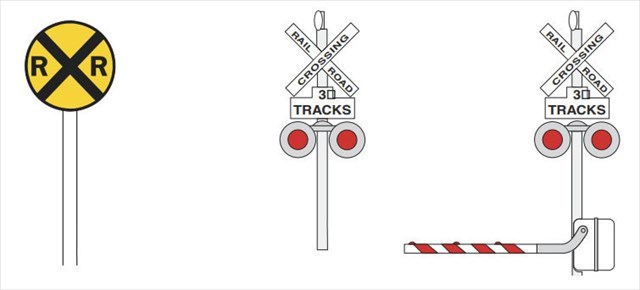
Railroad crossings are marked with one or more of the following special warning devices:
- Round Advance Warning Sign — A yellow sign with a black “X” and4the letters “RR” means a highway-railway crossing is ahead. The sign may be placed up to 750 feet in advance of the railroad crossing.
- Pavement Markings — A solid0yellow line in advance of the crossing means no passing. White stop lines on each side of the track show motorists where to stop when a train is approaching. These markings also1indicate a highway-railway crossing is ahead.
- Railroad Crossbuck0Sign — If a railroad crossing has more than one track, the number of tracks is on the sign below the crossbuck. This is considered a yield2sign and a driver must yield the right of way to any oncoming trains and railroad equipment.
- Flashing Light Signals — When lights begin to flash, a driver must always stop until the train has passed and the lights have stopped8flashing.
- Gates — A driver must remain stopped until the lowered gates are raised and lights are no longer flashing. Drivers should not attempt to1beat crossing gates as they are lowering or go around lowered gates
Tracks equipped with an automated railroad crossing enforcement system may record an image of the vehicle license plate number, time, date and location of any violation.8Drivers are subject to fines and possible suspension of their driving privileges for8violations.
A driver may proceed only after the gate is all the way up, the lights are no longer flashing or the flagger has signaled traffic to proceed. A driver3should visually check all the tracks for any additional oncoming trains or railroad equipment before proceeding.
If a railroad crossing2has no warning devices or only a crossbuck sign the driver should slow down, look in both directions of the track and listen for a train or railroad equipment. If safe to do so, a driver should then proceed with caution across the railroad crossing.
Drivers may not enter a highway railroad crossing unless there is sufficient space on the other side of the crossing to accommodate their vehicle3without obstructing passage of a train or other railroad equipment using the rails.
Vehicles required by law to stop at most all1railroad crossings are vehicles carrying people for hire, school buses and vehicles carrying hazardous materials. If a vehicle becomes disabled and is stuck or stalls on railroad tracks, everyone in the vehicle should get out immediately, call 9-1-1 and move away from the tracks at a 45 degree angle in the direction of the train.
This action keeps everyone safe from the forward flying debris if the train strikes the vehicle. If possible, the driver or one of the passengers should call the railroad Emergency Notification System. This number is located on the blue sign affixed to the railroad crossing post near the tracks.
The following are9important laws and safety tips when approaching a railroad crossing:
- Drive as though expecting a train on any track at any time.
- Once a train has passed, always look for a second train on another track before proceeding.
- Check carefully to make sure there is enough room for a vehicle on the other side of the railroad track. If there is not enough room, a driver should not cross the tracks.
- If a vehicle has a manual transmission, shift down before reaching the tracks. To avoid stalling, do not change gears while crossing the track.
- Never race a train.
- Be prepared to stop when behind vehicles required to stop at railroad crossings.
Link to CIGA Facebook group