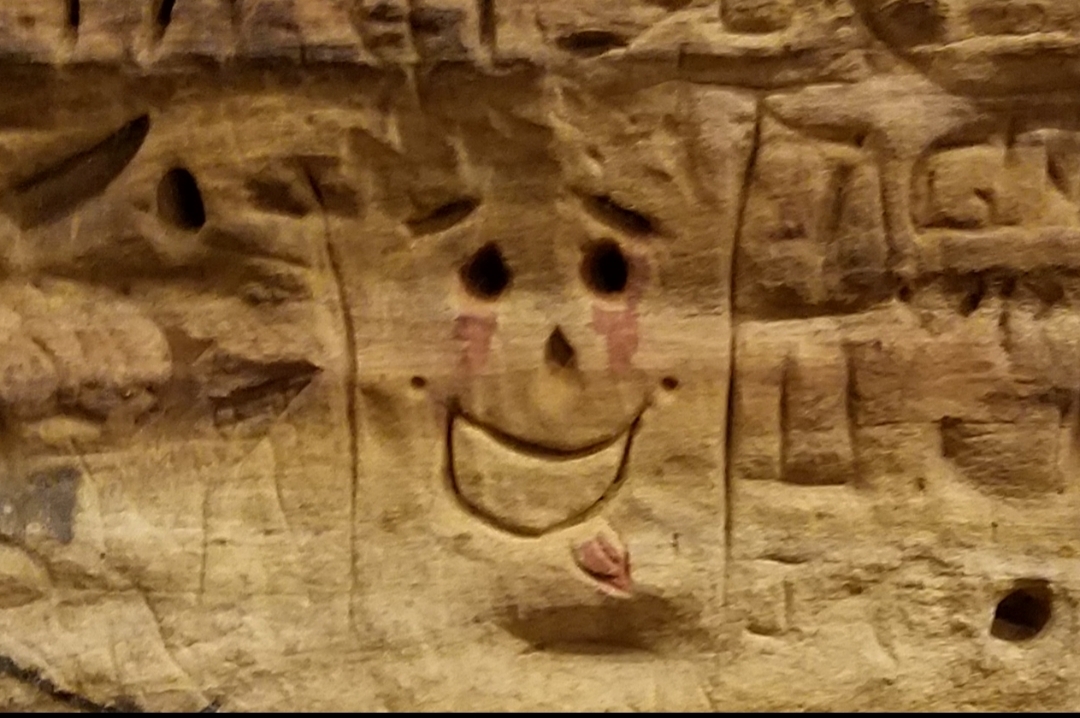
Welcome to the Robbers (Haunted!) Cave Earthcache
This cave is currently accessed via a building built directly on the site and requires an entrance fee. You may schedule a public or private cave viewing here. Note from Joel: If anyone arrives in the near future, it will look like everything is closed simply because the brewery is closed. But by booking a tour ahead of time online, he says he will open the building for your tour.
*Remember, your tour guide is a valuable resource.*
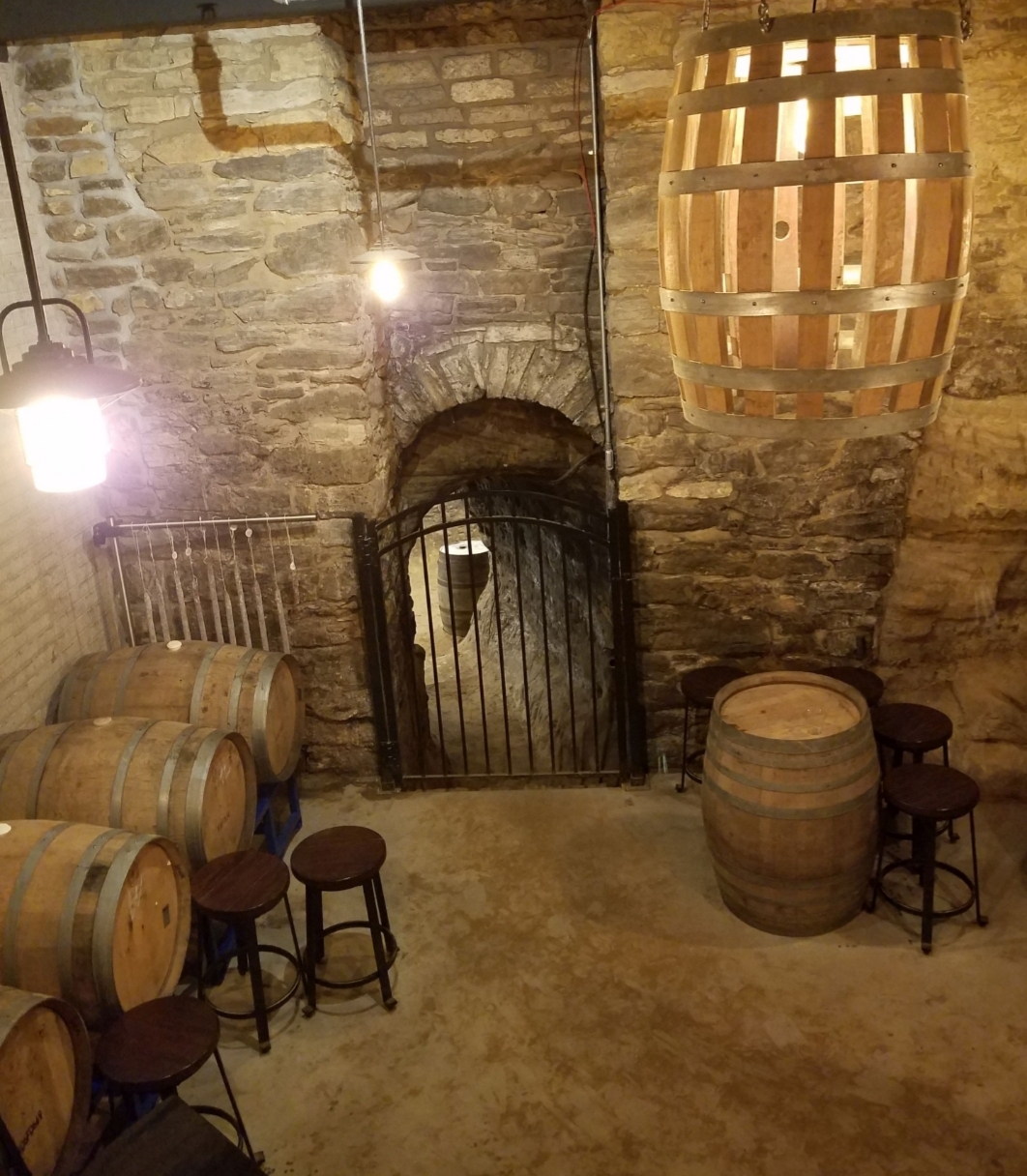
Your journey begins in a barrel room where the earth's temp and humidity level are both perfect for the fermentation process.
All the tunnels of this 500 ft by 62 ft deep cave are connected, for a total of 5,600 square feet, and anywhere from 700-900 lineal feet depending on if you count the cross tunnels that make it near impossible to get lost. Though there are some indications that a manmade wall once separated this cave from an extensive underground network, word is that those passages likely have collapsed anyway. With talk that bandits used this cave as a hideout, perhaps their spirits still roam these passages.
Dakota Formation
The Dakota Formation (also Dakota Sandstone) is a geologic formation composed of sedimentary rocks deposited in the late-Early to early-Late Creteceous Western Interior Seaway. These are among the oldest Cretaceous rocks in the northern Great Plains, including Kansas, Nebraska, Iowa, Minnesota, and Wisconsin. There, it consists of sandy, shallow-marine or beach deposits with intermittent, marine-influenced mud-flat sediments, and occasional stream deposits.
The sandstones of the Dakota Formation form the Dakota Aquifer, an important water source in some areas of the Great Plains.
Cave Formation
Many sandstone caves were formed from the erosion of a sandstone bed. The sandstone was washed away by groundwater that created pipe-shaped cavities in the sandstone. Over the years, more groundwater helped shaped the cavities, filling many of them with stream sediments and items from the surface, such as wood, that over time become petrified in the sandstone. Petrification is the process by which organic matter exposed to minerals over a long period is turned into a stony substance. At Robber's Cave, they found two petrified items low in the sandstone layers deposited there long ago. *You should find out on the tour what those items are.
These caves formed in the walls of the valleys along deep rivers at the base of cliffs, carved out by water and wind. The water loosens the natural cement holding the sand particles together, then the moving water and wind carry away the grains of sand.
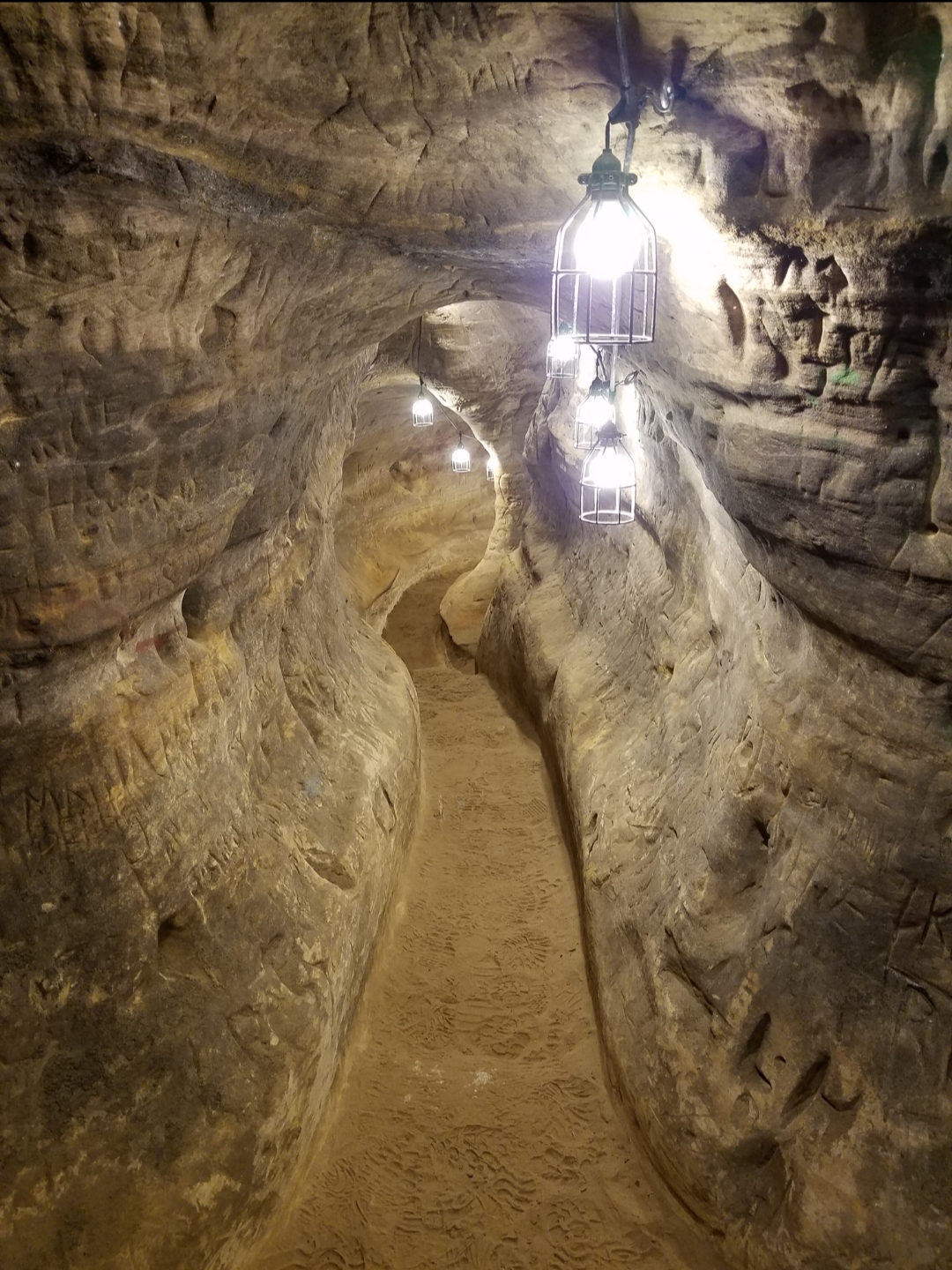
Early photos showed that there used to be a cliff on the west end where flood waters from the nearby Salt Creek & Beal Slough Rivers would flood to help create this cave, now evidenced by water lines. There were 3 entrances in the cliff, but only one was natural. Unfortunately, the cliff was accidentally destroyed by a quarry. The majority of this cave was hand-carved from that one natural opening prior to the 1870s, exposing many interesting sandstone layers inside. Iron ore and limonite are responsible for some of the color variances, especially visible in tunnel 2.
Alive or Dead? Caves can be classified in various ways including the contrast between active and relict: active caves have water flowing through them; relict caves do not, though water may be retained in them. Types of active caves include inflow caves ("into which a stream sinks"), outflow caves ("from which a stream emerges"), and through caves ("traversed by a stream").
How to log a smiley
To log a find, please visit the cave then send us your answers to the below questions via geocaching.com messaging. Include "GC7N0EE Robber's (Haunted!) Cave" in the subject line along with your answers.
1) What type of sandstone is Robber's Cave?
2) In tunnel 2, there is a thick, darker layer near the floor and a striped, lighter material the rest of the way to the ceiling. What are the two materials that make these layers distinct?
3) Describe the ceiling shape of tunnel one in comparison to the ceiling shape of tunnel two. Why are they different?
4) Is this cave alive or relict? Explain why you think so.
5) What 2 petrified items did they find buried deep in the sandstone?
6) The area near Fat Man's Misery filled up with mud and muck. How much fell in, and what caused that to happen?
7) (Optional but encouraged) With your log, include a photo of yourself in the cavern as irrefutable proof of your visit.
A special thanks to Joel Green & Mesozoic for their assistance in developing this earthcache over the past year.




Sources:
• Photos by J&LA (c)2018
• https://traveltips.usatoday.com/caves-sandstone-minnesota-60005.html
• http://www.amazingcaves.com/learn_formed.html
• https://en.m.wikipedia.org/wiki/Cave
• Wang, Herb (2003) "Saga of the Dakota Sandstone"
• Monroe, James S. and Wicander, Reed (1997) The Changing Earth: Exploring Geology and Evolution (2nd edition) Wadsworth Publishing Company, Belmont, California, page 610, ISBN 0-314-09577-2
• "Geology of the Quarry: Dakota Sandstone" Dinosaur National Monument, National Park Service