
La Calle Cruz Conde fue creada, siendo alcalde José Cruz Conde, tras el ensanche de la Plaza de las Tendillas en el año 1924. Su planteamiento se basa en el mismo principio que animó el primer gran “ensanche” de la ciudad a comienzos del siglo XX: el Paseo del Gran Capitán. Se dibuja sobre plano una avenida amplia y recta que luego se ejecuta sobre el terreno expropiando las viviendas necesarias. La idea de la época era modernizar y facilitar el acceso a un casco histórico de urbanismo abigarrado y calles estrechas que se consideraba en la época un lastre para el desarrollo. En dirección contraria permitía también acceder de una forma rápida a la Estación de Tren y a la plaza de Toros de los Tejares.
Desde su nacimiento se convirtió en una de las principales calles de la ciudad y desde luego la calle comercial por excelencia. Se instalaron en ella los mejores establecimientos comerciales, en su mayoría hoy desaparecidos. En los años 1960 la calle era conocida como el tontódromo, por ser el lugar de paseo para gran parte de la sociedad cordobesa para ver y ser visto.
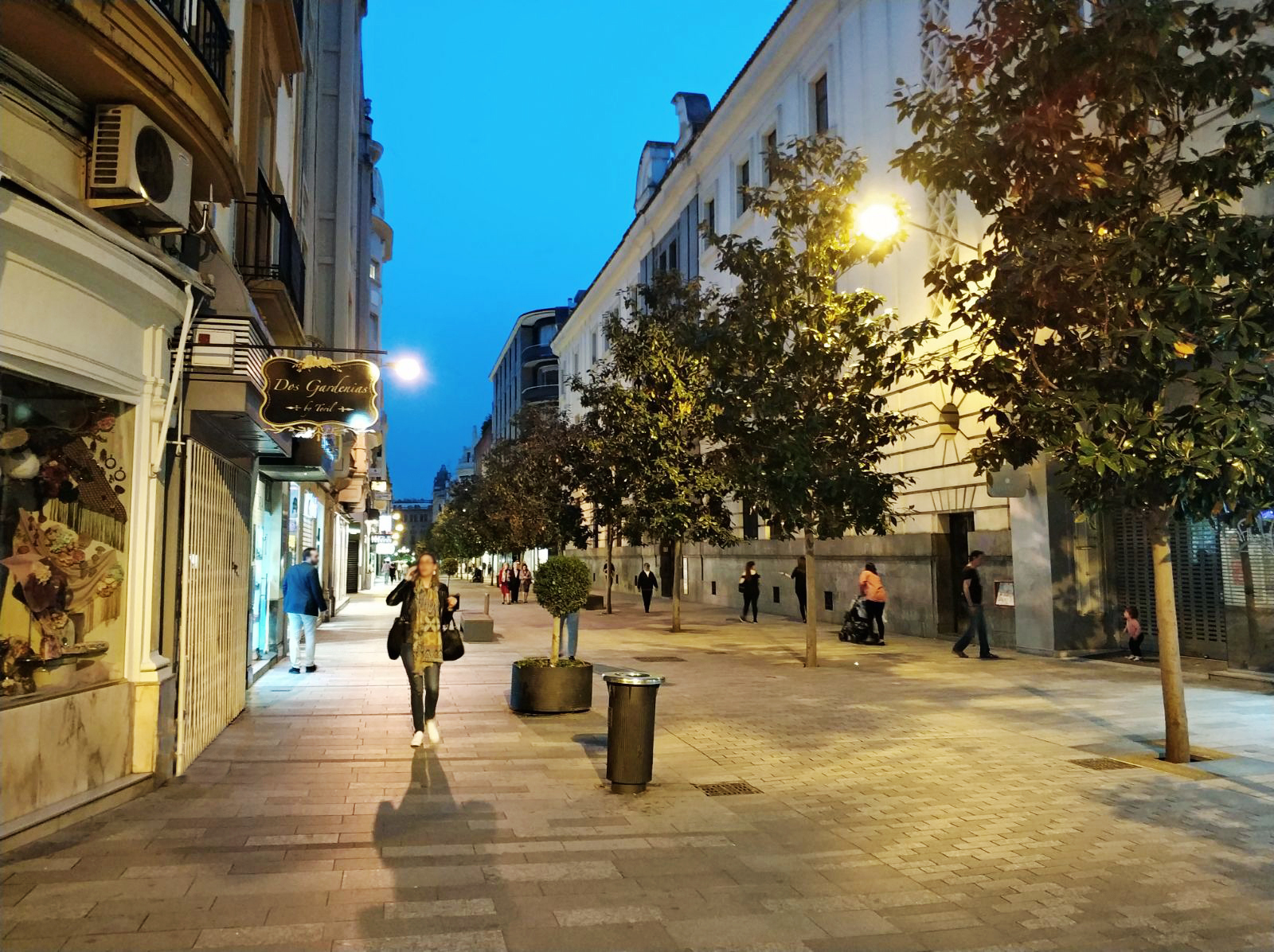
En el año 2010 y tras varias polémicas sobre el uso de la misma, se decide la peatonalización de la calle con cargo a los fondos Proteja de la Junta de Andalucía. La reforma terminó en abril de 2011, y lo que a priori parecía una simple cuestión de acerado y mobiliario urbano se convirtió en algo distinto: en una nueva calle con árboles donde se podía pasear y mirar tranquilamente los escaparates, sentarse a descansar en alguno de los bancos o incluso, con el tiempo, tomar café o una cerveza en una de las nuevas terrazas. Todo ello sin ruidos de motores.
La reforma encerraba más sorpresas: un pavimento bicolor en algunas zonas muestra las antiguas calles que se vieron alteradas cuando se creó esta nueva arteria a principios del siglo XX. Piezas de bronce en el suelo indican donde estaba parte del foro de la Córdoba romana y en el extremo de la calle que llega a Ronda de los Tejares, otro cambio de color en el pavimento muestra por donde cruzaría el lienzo norte de la antigua muralla de la ciudad. Una manera simple y original de mostrar la historia de esta calle, lo que ya no está y no se puede recuperar, pero sí se puede recordar.
Y sobre esta historia del urbanismo local, que se recuerda en el actual pavimento de la calle, va el recorrido de nuestro multi-caché que podrás resolver contestando a las siguientes
-PREGUNTAS-
-ENGLISH-
Cruz Conde Street was created, being mayor José Cruz Conde, after the widening of the Plaza de las Tendillas in 1924. Its approach is based on the same principle that animated the first great "expansion" of the city at the beginning of the century XX: the Paseo del Gran Capitán. A wide and straight avenue is drawn on a plane that is then executed on the land, expropriating the necessary houses. The idea of the time was to modernize and facilitate access to a historic center of variegated urbanism and narrow streets that were considered at the time a drag on development. On the other hand, it also allowed a quick access to the Train Station and the Plaza de Toros de los Tejares.
In the year 2010 and after several controversies about the use of it, the pedestrianization of the street is decided by the Proteja funds of the Junta de Andalucía. The renovation ended in April 2011, and what a priori seemed like a simple matter of steel and street furniture became something different: in a new street with trees where you could walk around and look at the shop windows, sit down to rest in one of Banks or even, over time, drink coffee or a beer in one of the new terraces. All without engine noise.
The reform contained more surprises: a two-tone pavement in some areas shows the old streets that were altered when this new artery was created at the beginning of the 20th century. Bronze pieces on the floor indicate where part of the forum of the Roman Cordoba was and at the end of the street that reaches Ronda de los Tejares, another change of color on the pavement shows where the northern wall of the old city wall would cross. the city. A simple and original way to show the history of this street, what is no longer there and can not be recovered, but it can be remembered.
And about this history of local urbanism, which is remembered in the current pavement of the street, is the route of our multi-cache that you can solve by answering the following.
-QUESTIONS-

Puedes validar la solución a tu puzzle con
certitude.