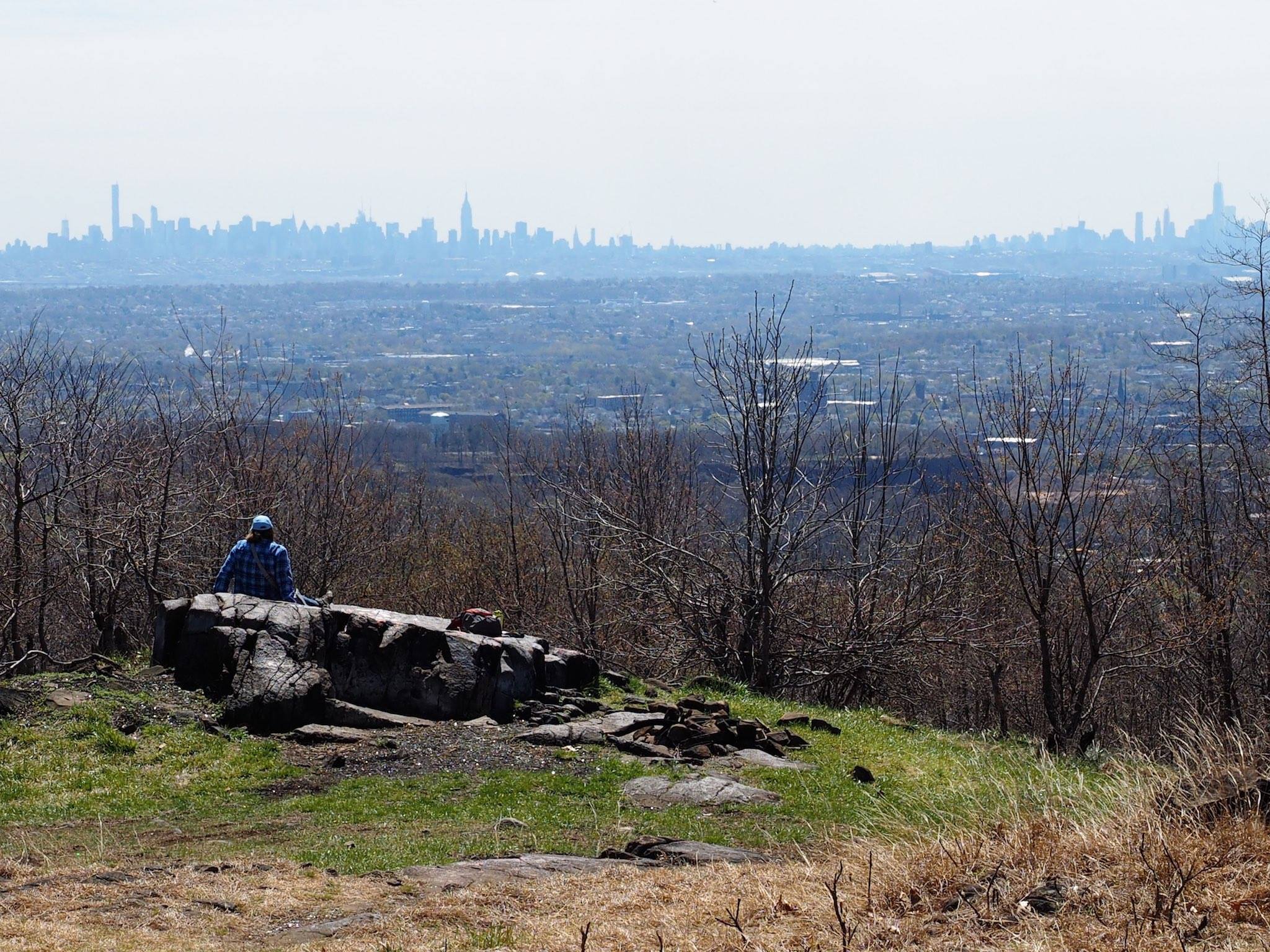
Photo taken by: Weathernowcast
High Mountain rises to a height of 879 feet and is located in northern New Jersey. It is said that when Henry Hudson sailed to America in 1609, the first land he sighted above the horizon as he approached New York Harbor was the summit of High Mountain.
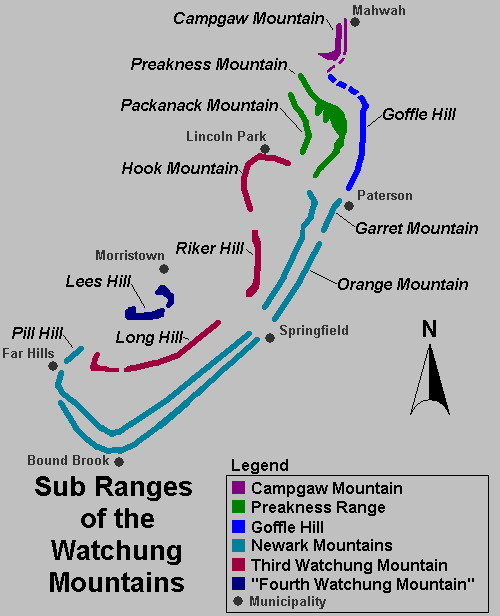
High Mountain is located in the Preakness Range of the Watchung Mountains. The Watchung Mountains are a group of three long low ridges on volcanic origin between 400-500 feet high, parallel to each other. The Preakness Range is the sub-range of the Watchung Mountains, and is located in the northern part of the Watchung Mountains, near Wayne, NJ.
The Watchung Mountains were formed about 200 million years ago when magma entered the Newark Basin. The magma, which was iniitally contained within the basin formed large intrusions like the Palisades Sill, but eventually broke through to the surface through large eruptions. Each time the basin filled with basalt, which cooled into trap rock, a period of limited volcanic activity followed, which allowed sediments to be deposited atop the previous layer of basalt. The slow cooling of magma formed systematic vertical fractures within the rock, which formed rock columns.
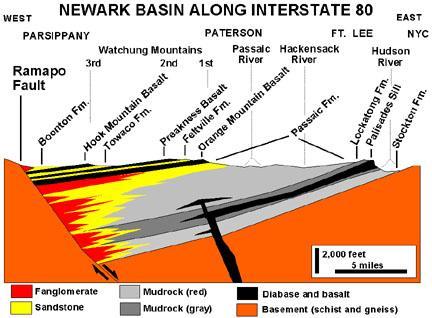
Throughout the early Jurassic which lasted from 201.3-174.1 mya (million years ago), the Newark Basin experienced extensive dipping and folding. The western edge of the basin plunged into the crust, tilting the basin to an angle of between 5-25 degrees. This is best illustrated by the image above. Over millions of years, erosion began to eat away at the tilted rock of the basin, and soon encountered the basalt layers which are less prone to erosion. As a result, the surrounding sedimentary rock experienced greater erosion, which caused the basalt layers to project prominently above the surrounding terrain.
Logging Requirements:
- How were the Watchung Mountains formed and how many years ago?
- At the summit (listed coordinates), you will find an exposed trap outcrop. Find a vertical fracture (it looks similar to a "quartz" crystal, but basalt instead). How many exposed sides does it contain?
- Does the entire outcrop appear to contain vertical fractures? If not, why do you think this is the case?
- (Optional) Upload some pictures of the view, or any wildlife that you have observed.