The cache is not at the posted coordinates. This Wherigo cache is part of the Florida Finders Fest 2018 Butterfly geo-art. See below, to determine where the cache is.
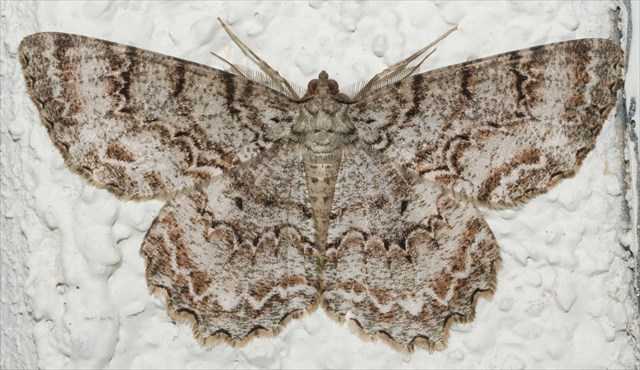
The Tulip-Tree Beauty Moth gains camouflage on a variety of trees resulting in more than just tulip tree leaves for dinner.
The brown and ivory coloring on this moth make it almost impossible to see when it is resting on tree bark. Its wings remain completely flat so it has a low profile. The zigzag patterns and scalloped edges blend in with the variations on a trunk. Though fond of tulip trees, this species' caterpillar also feeds on the leaves of yellow poplar, paw-paw, red bay and sassafras trees. Adults are active from mid-spring through the summer and into early autumn in some regions. They are attracted to lights.
The caterpillar is pale brown on top and whitish on bottom. Dark lines and spots decorate its dorsal side (back). Thin yellow rings around segments are sometimes visible. The head color ranges from bright yellow to muted brown with speckles. In the mid 1930's, the Tulip-Tree Beauty caterpillar ate the leaves off a majority of the sassafras trees in Connecticut. Such damage has not been seen in recent times.
Play this “Play Anywhere” Wherigo cartridge to get the final coordinates.
Wherigo Link
Note: The rather curious hints found in this series refer to the Wherigo questions, not the actual hides.