
ITALIANO
Nel 1895, con l’apertura del Cimitero Maggiore e il contemporaneo smantellamento dei cimiteri di quartiere, si pose il problema dei cortei funebri, che avrebbero dovuto trasportare le salme dei defunti per diversi chilometri, fino all’area periferica del Musocco, dove era stato costruito il nuovo cimitero. Fu così che il comune mise a disposizione dei tram particolari, che svolgessero la funzione di tram funebri. Il convoglio era composto da due vetture, in livrea completamente nera: una dove veniva caricato il feretro e l’altra per il trasporto dei parenti del defunto, che era dotata di ogni comfort: sedili in velluto, tappezzerie, vetri smerigliati per rispettare la privacy, riscaldamento durante l’inverno e ventilatori per il periodo estivo. Ben presto i Milanesi, con particolare e cinico sarcasmo, ribattezzarono questo tipo di tram “la gioconda”.
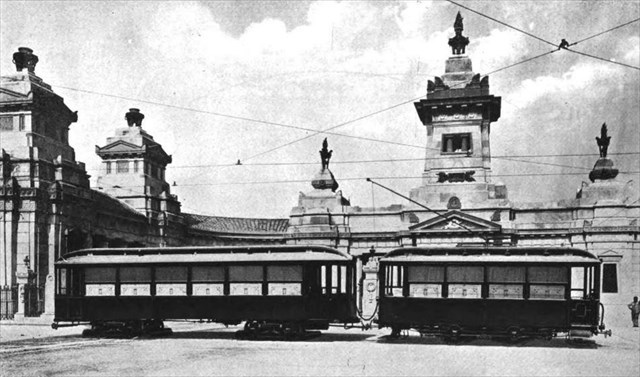
Una gioconda di fronte al Cimitero Maggiore
La stazione di partenza si trovava nel tratto finale di Via Bramante (oggi Via Luigi Nono), dove confluivano i cortei di tutte le parrocchie per il trasporto finale al camposanto. La stazione comprendeva due sale per il deposito temporaneo dei feretri e una sala per le benedizioni e i discorsi funebri da tenersi prima del cosiddetto “ultimo viaggio”. All’esterno vi era un elegante tettoia in ferro a tre campate, con quella centrale più alta delle due laterali, destinata alla partenza del convoglio funebre. Dato il successo di questi tram, nel 1907 il comune aprì una seconda stazione, in Porta Romana, che servisse i quartieri a sud e a est di Milano. I convogli partiti da lì percorrevano la cerchia dei bastioni fino a raggiungere la stazione di via Bramante, da cui poi proseguivano lungo Viale Certosa fino al Cimitero Maggiore.
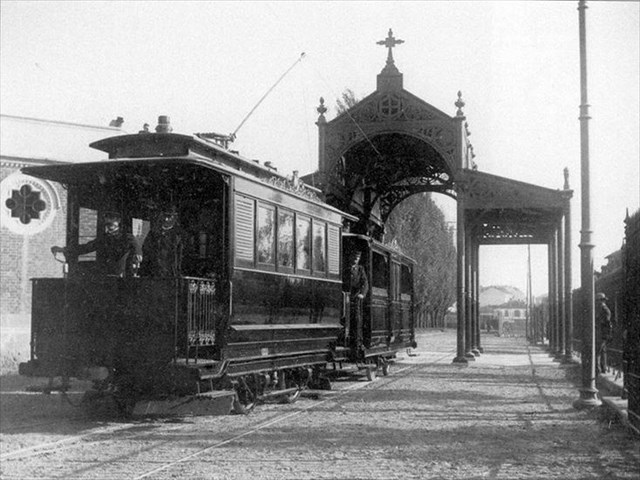
Una gioconda in partenza dalla stazione di Via Bramante
Con la diffusione dei primi veicoli a motore, i tram funebri furono sempre meno utilizzati, finché il comune non sospese definitivamente il servizio nel 1928. La stazione di Via Bramante fu smantellata, mentre quella di Porta Romana divenne prima un circolo ricreativo per i dipendenti ATM, mentre oggi ospita le terme di Milano. Le gioconde, invece, diventarono convogli di servizio per la manutenzione delle linee… ovviamente dopo essere state riverniciate!
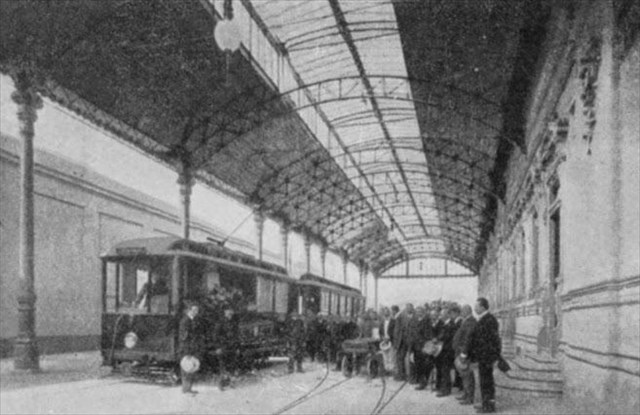
Corteo funebre alla stazione di Porta Romana
LA CACHE: Le coordinate iniziali sono vicine al luogo dove un tempo sorgeva la prima stazione funebre di Milano, più precisamente puntano su una fermata del tram (Cenisio M5)! Qui ferma un tram che fa esattamente lo stesso percorso che un tempo facevano le gioconde: di che tram si tratta? Il suo numero sarà X. Ora contate il numero di fermate che mancano per arrivare al capolinea (P.le Cimitero Maggiore): questo numero sarà Y. Per trovare il final non vi resta che completare l’equazione qui sotto; per arrivarci potreste prendere il tram proprio qui, ma state tranquilli: non rischiate di salire su una gioconda per sbaglio!
N 45° 30.(X*Y)-6 E 9° 07.(X*Y)+111
ENGLISH
In 1895, the opening of the Cimitero Maggiore (Major Cemetery) and the contemporary dismantling of smaller neighborhood cemeteries created the problem of funeral processions, which should have been done for several kilometers to the suburban area of Musocco, where the new cemetery had been built. So the city council made available some specific trams, which served as funerary trams. The convoy was composed of two cars, in completely black livery: one for the transport of the coffin, and the other one for the transport of the relatives of the deceased; this one was equipped with every comfort: velvet seats, tapestry, frosted glass to respect the privacy, heating in winter and fans for the summer. Soon the people of Milan, with cynical sarcasm, renamed this kind of tram “la gioconda” (the joyous).
A joyous in front of the Cimitero Maggiore
The departure station was in the final part of Via Bramante (today Via Luigi Nono), where the processions of all the city parishes converged for the final transport to the cemetery. The station included two rooms for the temporary storage of the coffins and a room for blessings and funeral speeches to be held before the “last ride”. Outside there was an elegant iron roof with three bays, with the central one higher than the two lateral ones, reserved for the departure of the funeral convoy. Because of the success these trams had, in 1907 the city council opened a new station in Porta Romana, which served the eastern and southern districts of the city. The convoys departed from there and , along the middle circle line, reached the station of Via Bramante, where they continued along Viale Certosa to the Cimitero Maggiore.
A joyous leaving the station in Via Bramante
With the diffusion of the first motor vehicles, the funeral trams were less and less used, until the council definitely suspended the service in 1928. The station of Via Bramante was dismantled, while the one in Porta Romana became first a recreational club for ATM employees, while today it hosts the thermal baths of Milan. The joyous became convoys used for the maintenance of the lines... of course after being repainted!
Funeral procession at the Porta Romana station
THE CACHE: Listed coordinates are close to the place where the first Milan funeral station stood in the past; precisely, they point to a tram stop (Cenisio M5)! Here stops a tram that does exactly the same path that the joyous once did: which tram is it? Its number is X. Now count the number of stops left to get to the terminus (P.le Cimitero Maggiore): this number will be Y. To find the final you just have to complete the equation below; to get there, you can take the tram right here, but don’t worry: you don’t risk to get on a joyous by mistake!
N 45° 30.(X*Y)-6 E 9° 07.(X*Y)+111