The cache is not at the posted coordinates. This puzzle cache is part of the Florida Finders Fest 2018 Butterfly geo-art. See below, to determine where the cache is.
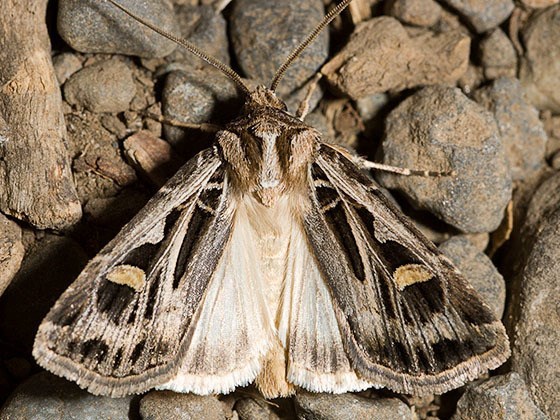
The name says it all: the Dingy Cutworm Moth is dull and it's a pest, eating through crops and leveling fields.
The unremarkable colors of this moth helped name it, but the pattern on it is distinctive. The yellowish kidney shaped spot on each forewing and the hairy 'shoulders' make it a bit more unique than most brown moths. Forewings have a short fringe of hair around their edges.
It is an Owlet moth, a member of one of largest moth families around the world. Twenty five percent of all moths come from this family and this particular species is found all over the North American continent.
Like most moths, they are nocturnal and are most active at night, but some activity in the daytime isn't uncommon. They are also attracted to lights. Adults are active from late summer to fall, not minding the cooler weather.
The larvae of this species are known to be a terrible agricultural pest. They feed on popular produce like apples, corn, beans (including soybeans) and tobacco. These crops can be decimated, eaten (or 'cut') down to ground level, and the loss of revenue can be astounding.
Solve this challenging trivia question, to figure out where the final is at!
Q86 – Where does the word Jurassic come from?
A1 – Latin, for Telletubby = N29° 28.288' W81° 49.783'
A2 = Greek for Tomato Soup = N29° 28.298' W81° 49.783'
A3 – Celtic for Forest = N29° 28.308' W81° 49.783'
Note: The rather curious hints found in this series refer to the puzzle questions, not the actual hides.