은대리 주상절리 설명
기둥 형 조인트 란 교차로 가깝게 간격을 둔 일련의 파절 (조인트라고 함)이 폴리곤 프리즘 또는 기둥의 규칙적인 배열을 형성하는 지질 구조입니다. 기둥 형 조인트는 많은 유형의 화산암 및 암석이 냉각되고 수축함에 따라 형성됩니다.
이 지역은 높이가 약 20 미터 인 원주 형 조인트의 웅장한 전망을 가지고 있습니다. 차탄천의이 부분은 북한의 국경 바로 위에 위치한 추가령 화산으로부터의 고대 용암 흐름의 위치였다. 그것은 일반적으로 많은 양의 물을 형성해야하는 지질 형성이 풍부하기 때문에 세계의 다른 내륙 화산 지대와는 분명 다릅니다. 이 차탄천은 용암이 웅덩이에 들어갈 수 있었던 고대의 강바닥의 위치이기도하므로 원주 형 관절을 만들 수 있습니다. 수백만 년이 흐르면 스트림이 주상절리를 침식하여이 장엄한 벽을 볼 수있었습니다. 여기에있는 동안 다른 근처의 지오 캐시를 방문하여 난방, 냉각 및 침식의 결과로 형성 될 수있는 다른 종류의 형성에 대해 알아 보는 것이 좋습니다.
주상절리 현성
은대리 형성 현무암 형성된다. 현무암은 화성암 인 화성암이다. 용암이 지구 표면에 분출 된 후에는 용암이 냉각됩니다. 그러나 용암은 냉각되기까지 시간이 걸릴 수 있으며 냉각되면 온도 구배가 발생할 수 있습니다. 가장 일반적으로 용암 흐름 상단은 용암 흐름 하단보다 더 시원합니다. 은대리 형성의 경우에는 냉각 용암 수영장의 꼭대기에서 더 빨리 냉각시키는 데 도움이되는 대형의 상부로 흐르는 물도있었습니다.
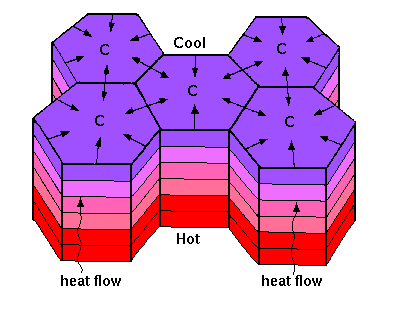
용암이 식 으면 수축합니다. 왜냐하면 뜨거운 것은 일반적으로 차가운 것보다 더 많은 공간을 차지하기 때문입니다. 사물이 수축 할 때, 종종 균열이나 파절이 일어납니다. 균등하게 이격 된 중심에서 수축이 발생하면 (위 다이어그램 참조) 육각형 파절 패턴이 발생합니다. 수축이 균등하지 않은 경우 5면 또는 7면의 균열과 같은 다른 형태의 균열이 발생할 수 있습니다. 예를 들어, 용암 흐름의 두께 나 조성이 다른 경우 수축이 균등하게 이루어지지 않을 수 있습니다. 냉각 표면에 형성되는 파열 패턴은 용암이 냉각되면서 길게 기하학적 인 기둥을 형성하는 경향이 있습니다. 따라서, 용암이 냉각되어 현무암을 형성 할 때, 육각형 (또는 다른) 형태로 균열을 일으켜 기둥을 형성 할 수 있습니다. 이 칼럼은 다양한 크기로 구성됩니다 - 일부는 상당히 작으며 일부는 사람보다 넓고 키가 큽니다!
로그하는 방법
1. 주상절리는 어떻게 형성됩니까?
2. 이 관절은 완전히 수직적입니까? 아니면 곡선 또는 수평 관절이 있습니까?
3. 주상절리가 형성되는 온도는 얼마입니까?
4. 주상절리이 지하에있지 않는 이유는 무엇입니까? 왜 지금 그걸 볼 수 있니?
5. 배경의 주상절리로 사진을 찍으십시오. (사진 없으면 로그를 삭제하겠습니다)
6. 내 프로필에있는 메시지로 답변을 보내주십시오. 이 캐시를 "Found"로 기록 할 수 있습니다 (답변이 정확하지 않으면 연락 드리겠습니다).
Eundaeri Columnar Joints Description
Columnar jointing is a geological structure where sets of intersecting closely spaced fractures, referred to as joints, result in the formation of a regular array of polygonal prisms, or columns. Columnar jointing occurs in many types of volcanic rocks and forms as the rock cools and contracts.
This area has a magnificent view of columnar joints with a height of approximately 20 meters. This part of the Chantan Stream was the location of an ancient lava flow from the Chuga Ryeong Volcano located just over the border in North Korea. It is especially distinct from other inland volcanic sites in the world because of the abundance of geologic formations that usually require large amounts of water to form. This stream is also the location of an ancient river bed that the lava was able to pool into, making the creation of columnar joints possible. Then over millions of years, the stream eroded the columnar joints so that you could see this magnificent wall. While you're here it would be a good idea to visit other nearby geocaches to learn about other kinds of formations that can form as a result of heating, cooling, and erosion.
Columnar Joint Formation
The Eundaeri formation is formed of Basalt. Basalt is an igneous, volcanic rock. After lava is erupted onto Earth’s surface, it cools. However, lava may take a while to cool, and as it cools there may be a temperature gradient. Most commonly, the top of the lava flow will be cooler than the bottom of the lava flow. In the case of the Eundaeri formation there was also water flowing over the top of the formation which helped to cool it faster on the top of the pool of cooling lava.
When the lava cools, it contracts. This is because hot things generally take up more space than cool things. When objects contract, they often crack or fracture. When contraction occurs at centers which are equally spaced (see the above diagram), then a hexagonal fracture pattern will develop. If the contraction is not evenly spaced, then other geometries of fractures, such as 5-sided or 7-sided fractures, may occur. Contraction may not be equally spaced if, for example, the thickness or composition of the lava flow varies. The fracture pattern that forms at the cooling surface will tend to be propagated down the lava as it cools, forming long, geometric columns. Thus, as lava cools to form basalt, it may crack in a hexagonal (or other) shape and form columns. These columns form in a variety of sizes– some are fairly small, and some are wider and much taller than people!
How to Log this Cache
1. How do columnar joints form?
2. Are these joints completely vertical or do they have any curved or horizontal joints?
3. What is the temperature that columnar joints form at?
4. Why aren't the columnar joints underground? Why can you see them now?
5. Please take a picture with the columnar joints in the background. (A photograph is required)
6. Please send the answers to be by message on my profile. If your answers are not correct I will contact you. You may log the geocache now.
| I have earned GSA's highest level: |
 |