Welcome to the Hinepango Wetlands!
There is quite a bit of conservation work occuring here, trying to restore these wetlands to their former glory, mostly in the form of the removal of animal and plant pests. As you walk this track you will see a number of animal traps: the possum traps, half way up the trees, are the easiest to see, with their bright blue colouring, the stoat/rat/mice traps are wooden boxes on the ground. There are two trap lines, one along the track here, the other on the edge of the vineyards, on the other side of the wetlands.
The common brushtail possum (Trichosurus vulpecula), was first introduced to New Zealand from Australia in 1837 to establish a fur trade. Between 1837 and 1922, over 30 batches were imported, and these possums and their descendants were liberated at about 464 places. Private individuals were responsible for most of the liberations between 1837 and 1861 and Acclimatisation Societies for most of those between 1870 and 1922. Although liberations were no longer permitted after that date, trappers continued to liberate them illegally until the late 1980s.
Possums are nocturnal and can live anywhere where there is shelter and a varied food supply. They are now widespread across most of New Zealand. The main habitat is forest, and possum densities can be particularly high in podocarp-broadleaf forests. Margins where forest meets pasture are also popular habitat and support very dense populations.
Their main diet is leaves, but possums are opportunistic omnivores. They eat buds, flowers, fruit/berries and nectar, which means they compete with native birds and reptiles for food sources. The growth and life-cycle of a tree or plant is significantly affected when all parts of it are eaten. Possums prefer rātā or kamahi trees, leading to a greater impact on these species. Possums will eat eggs, chicks, invertebrates, including weta, and are significant predators of New Zealand's native snails. They often occupy holes in tree trunks for their nests which would otherwise be used by nesting birds such as kākāriki and saddlebacks.
|
In the ten months from start of trapping here at the Hinepango Wetlands, up to when this cache was released, these pests have been removed:
- 104 possums
- 17 mice
- 12 rats
- 7 weasels
Awesome!!
|
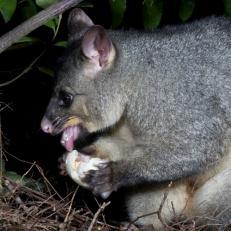
Possum eating an egg
|
The cache has been posted somewhere very obvious. Brace yourself for a quick find!
Supporting the GeoKids program - my caches have treasure, makes them fun for kids to find!