WELCOME TO FAIRMONT STATE UNIVERSITY
Home of the Fighting Falcons

This cache is an official stop on the Fighting Falcons Geotrail. The FFGT is composed of 15 unique hides, located across the campus of Fairmont State University and showcases all it has to offer. Each cache is unique and ranges from traditionals to wherigos, and even includes a virtual! Whether this is your 1st or 1,000th find, the FFGT offers something for everyone!
--------------------------------------------------------------------------------------------------------------------------------------------
Hardway Hall is the centerpiece of the campus, with its elegant design and massive pillars, its hard not to stop and stare. However, beyond the brilliant aesthetic of the building, there is a lot to be learned from the oldest building on campus. Through this earthcache, I hope you walk away with a new appreciation for not only the Earth but how it's materials can be used to build breathtaking things.

Geology is all around us and if not in a unique formation, in architecture! Fairmont State's unique layout and design allow some interesting geological features to be incorporated into the campus. To get credit for this Earthcache you will need to visit three locations around the heart of campus and answer some simple questions. Below is some general information about the rock types you will be encountering.
Sandstone in Architecture
Sandstone is a sedimentary rock composed of sand-sized grains of mineral, rock, or organic material. It also contains a cementing material that binds the sand grains together and may contain a matrix of silt- or clay-size particles that occupy the spaces between the sand grains. Sandstone is one of the most common types of sedimentary rock and is found in sedimentary basins throughout the world. It is often mined for use as a construction material or as a raw material used in manufacturing. In the subsurface, sandstone often serves as an aquifer for groundwater or as a reservoir for oil and natural gas.
Sandstone has been used for domestic construction and housewares since prehistoric times and continues to be used. Sandstone was a popular building material from ancient times. It is relatively soft, making it easy to carve. It has been widely used around the world in constructing temples, homes, and other buildings. It has also been used for artistic purposes to create ornamental fountains and statues. Some sandstones are resistant to weathering, yet are easy to work. This makes sandstone a common building and paving material including in asphalt concrete. However, some that have been used in the past, such as the Collyhurst sandstone used in North West England, have been found less resistant, necessitating repair and replacement in older buildings. Because of the hardness of individual grains, uniformity of grain size and friability of their structure, some types of sandstone are excellent materials from which to make grindstones, for sharpening blades and other implements. Non-friable sandstone can be used to make grindstones for grinding grain, e.g., gritstone.
Shale in Architecture
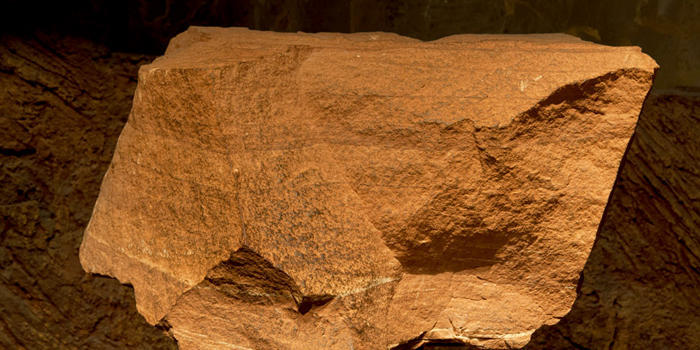
Shale is a fine-grained, clastic sedimentary rock composed of mud that is a mix of flakes of clay minerals and tiny fragments (silt-sized particles) of other minerals, especially quartz and calcite. Shale is characterized by breaks along thin laminae or parallel layering or bedding less than one centimeter in thickness, called fissility. It is the most common sedimentary rock.
Fissility
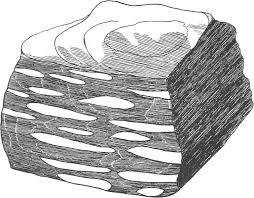
In geology, fissility is the ability or tendency of a rock to split along flat planes of weakness (“parting surfaces”). These planes of weakness are oriented parallel to stratification in sedimentary rocks. Fissility is differentiated from scaly fabric in hand sample by the parting surfaces’ continuously parallel orientations to each other and to stratification. Fissility is distinguished from scaly fabric in thin section by the well-developed orientation of platy minerals such as mica. Fissility is the result of sedimentary or metamorphic processes.
Facies
In geology, a facies is a body of rock with specified characteristics, which can be any observable attribute of rocks such as their overall appearance, composition, or condition of formation, and the changes that may occur in those attributes over a geographic area. It is the sum total characteristics of a rock including its chemical, physical, and biological features that distinguishes it from adjacent rock.
Weathering
Weathering is the breakdown of rocks at the Earth’s surface, by the action of rainwater, extremes of temperature, and biological activity. Weathering is the process where rock is dissolved, worn away or broken down into smaller and smaller pieces. There are mechanical, chemical and organic weathering processes. Once the rock has been weakened and broken up by weathering it is ready for erosion. Erosion happens when rocks and sediments are picked up and moved to another place by ice, water, wind or gravity.
Mechanical Weathering physically breaks up rock. Mechanical, also known as physical weathering, can be divided into two main categories: fracturing and abrasion. Over time, pieces of rock can split off a rock face and big boulders are broken into smaller rocks and gravel.
--Frost Wedging or Freeze-Thaw: Water expands by 9 percent when it freezes into ice. As it expands, it exerts up to 4.3 million pounds per square foot of pressure, enough to open cracks and fissures in rocks. Repeated freezing and thawing allows water to seep deeper into these crevices and enlarge them. Cracks may also allow entry of roots, agents of biological weathering that can also pry apart rock.
--Crystal Formation or Salt Wedging: Crystal formation cracks rock in a similar way. Most water contains dissolved salts. When water in rock fissures evaporates, salt crystals form that, like ice, can force open fissures. This “salt wedging” tends to be most pronounced in arid regions given the high evaporation rates; it also occurs along sea coasts.
--Unloading and Exfoliation: Granitic rocks formed by cooling magma underground and later exposed by uplift and erosion may “exfoliate”: The release of pressure causes strips or sheets of rock to peel away. Rock once compressed under the weight of glaciers may also exfoliate due to unloading: When the glacier finally melts – for example, at the start of an interglacial period – the rock expands from the reduction of pressure. This causes fracturing between the layers parallel to the Earth’s surface. The top layer breaks apart in sheets, having no load above it at all. As the rock below is exposed, it too exfoliates.
--Thermal Expansion and Contraction: Heating causes rock to expand. Cooling causes it to contract. The resulting cracking looks similar to frost wedging, though it tends to take a much longer time. Areas with extreme swings in daily temperature may see higher rates of this kind of wear. The moon has almost no atmosphere and no tectonic activity to weather the rock, and the temperature variation between day and night is 536 degrees F (280 degrees C). Thermal expansion and contraction may, therefore, be the only form of weathering that occurs.
--Rock Abrasion: In dry regions, wind-driven sand abrades exposed rock in a natural form of sandblasting. In streams, rivers and ocean surf, water turbulence causes particles of rock to collide with one another and grind against larger bodies of rock: abrasion that ultimately whittles them into smaller particles. Boulders, stones, and grit embedded in glaciers also abrade the rock surfaces over which the ice flows.
--Gravitational Impact: Rocks toppling off cliffs or steep slopes due to the tug of gravity or swept up in landslides split into smaller pieces, another form of physical weathering by abrasion and impact. The actual gravitational transport of rocks and sediments is known as mass wasting, which isn’t itself a form of weathering but rather a process by which weathered material moves from one place to another.

Organic weathering happens when plants break up rocks with their growing roots or plant acids help dissolve rock. Organic or biological weathering can result from plant or animal activity. Such weather can be quite subtle but can cause significant change over time. Tree roots, because of their size, cause a significant amount of biological weathering. But even much smaller plant-related actions can weather rocks.
--Weeds pushing through road surfaces or cracks in boulders can expand gaps in the rock. These gaps fill with water. When the water freezes, the roads or boulders crack.
--Lichen (fungi and algae living together in a symbiotic relationship) can cause a great deal of weathering. Chemicals produced by fungi can break down the minerals in rocks. Algae consume the minerals. As this process of breakdown and consumption continues, rocks start to develop holes. As described above, holes in rocks are vulnerable to physical weathering caused by the freeze/melt cycle.
Human beings have a dramatic weathering effect. Even a simple path in the woods has an impact on the soil and rocks that make up the path. Major changes affected by humans include:
--Construction moving, scoring, and smashing rock for construction of buildings and transportation systems
--Mining massive projects involve stripping entire hillsides or making major changes to or removing rock from under the surface of the Earth
--Agriculture in addition to moving rocks to make farming possible, human beings also change the composition of the soil through fertilization and application of herbicides.
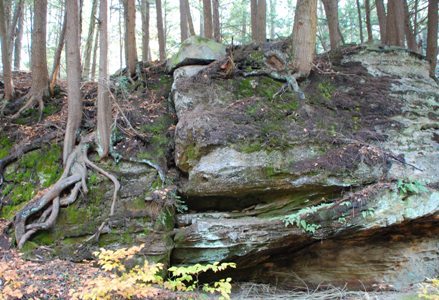
Chemical weathering decomposes or decays rocks and minerals. An example of chemical weathering is water dissolving limestone. Water and many chemical compounds found in water is the main agent of chemical weathering. Feldspar, one of the most abundant rock-forming minerals, chemically reacts with water and water-soluble compounds to form clay. Water contains many weak acids such as carbonic acid. This weak, but abundant, acid is formed when carbon dioxide gas from the atmosphere mixes with rainwater. Sulfur dioxide and nitrogen gases create other types of acid rain that act as chemical weathering agents. Some sources of sulfur dioxide are power plants that burn coal; as well as volcanoes and coastal marshes. Sulfur gases react with oxygen and rainwater to form sulfuric acid. Although relatively weak, acid’s abundance and long-term effects produce noticeable damage to vegetation, fabrics, paints, and rocks. There are different types of chemical weathering, the most important are:
--Solution: removal of rock in solution by acidic rainwater. In particular, limestone is weathered by rainwater containing dissolved CO2, (this process is sometimes called carbonation).
--Hydrolysis: the breakdown of rock by acidic water to produce clay and soluble salts.
--Oxidation: the breakdown of rock by oxygen and water, often giving iron-rich rocks a rusty-colored weathered surface. Oxidation is another kind of chemical weathering that occurs when oxygen combines with another substance and creates compounds called oxides. Rust, for example, is iron oxide. When rocks, particularly those with iron in them, are exposed to air and water, the iron undergoes oxidation, which can weaken the rocks and make them crumble.

The Rock At Ground Zero
To complete this earthcache, you will need to visit three different rock formations, used for three different purposes. The formation of the sandstone present at this location was formed in two principal stages. First, a layer or layers of sand accumulates as the result of sedimentation, either from water (as in a stream, lake, or sea) or from air (as in a desert). Typically, sedimentation occurs by the sand settling out from suspension; i.e., ceasing to be rolled or bounced along the bottom of a body of water or ground surface (e.g., in a desert or erg). Finally, once it has accumulated, the sand becomes sandstone when it is compacted by the pressure of overlying deposits and cemented by the precipitation of minerals within the pore spaces between sand grains.
The stairs leading up to Hardway Hall are the oldest stones on campus. The cornerstone was laid on October 11, 1915. These stones were the first to be laid by masonries when the campus was first built. While it is unclear exactly how old these specific stones are, we can get an estimate of their age based on the weathering and erosion marks outlined between the layers. When visiting the site, run your hand across the stone's surface and take note of what you find.

Question Time!
Visit each of the locations below and answer two out of the three questions from each section to claim credit for this Earthcache.
The Staircase - N 39 28.959 W 080 09.639
1) What type of rock are the steps at ground zero made of? How can you tell?
2) Notice the holes and gaps between each of the steps, what type of weathering caused this?
3) How is the rock composing the stairs different from the surrounding rock?
The Bench - N 39 28.993 W 080 09.583
1) What type of rock is the bench at ground zero made of? How can you tell?
2) Which two forms of organic weathering is present here? (Hint: look at the legs of the bench)
3) Notice the small indentions across the front side of the bench, what do you think caused this?
The Wall - N 39 28.991 W 080 09.616
1) What type of rock is the wall at ground zero made of? How can you tell?
2) Is there any fissility in the facies? If so, how far apart are these bands?
3) Some rocks are black, while others are red and brown, propose the best hypothesis for this phenomenon.
Extra Credit: Take a photo of yourself at your favorite of the three locations. Be sure to avoid revealing the answers.