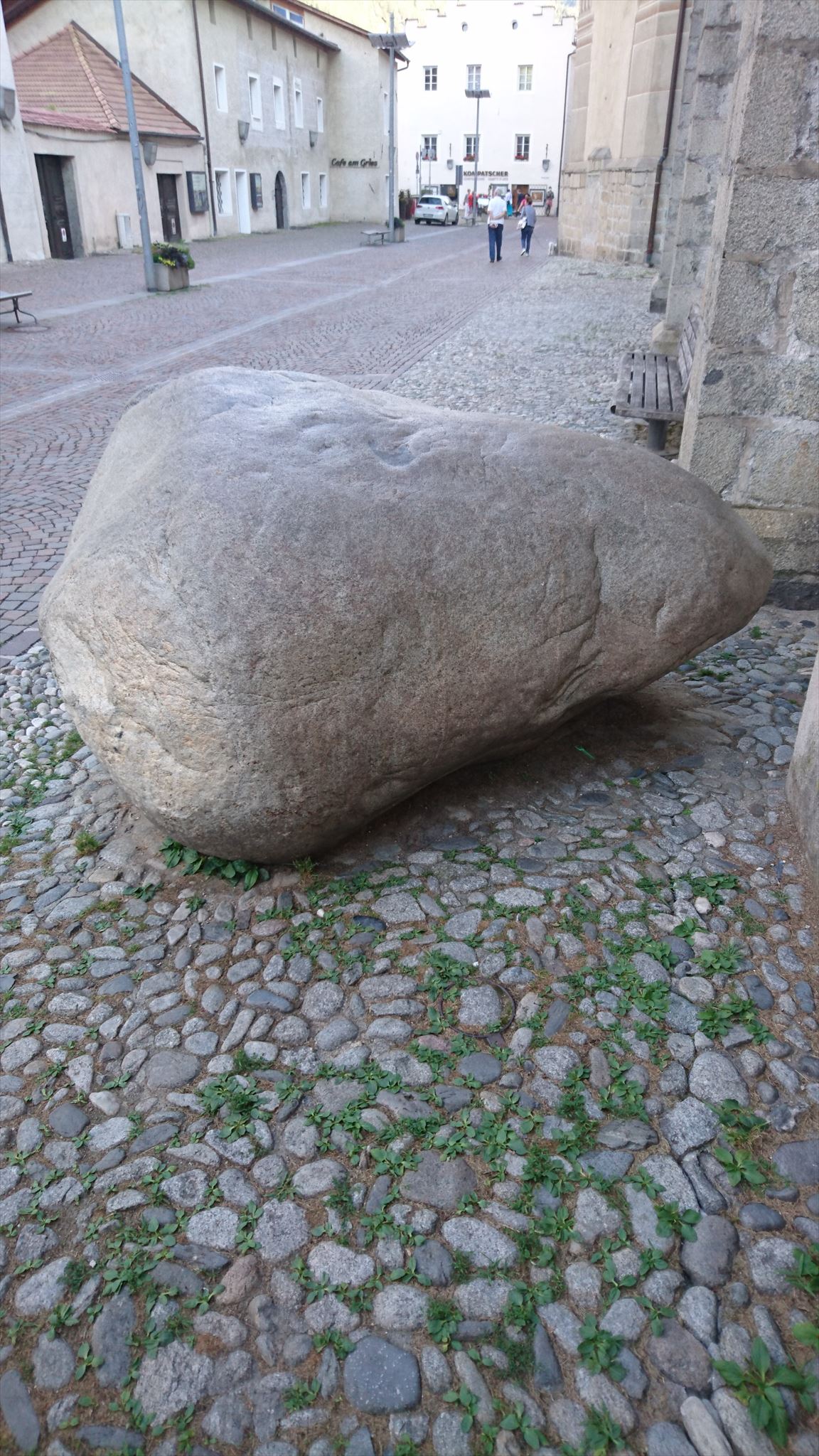

L'ossatura della crosta terrestre
Quella dei graniti è una delle più importanti categorie di rocce in assoluto. A essa appartengono masse rocciose formate a grande profondità nella crosta terrestre (rocce intrusive) ‒ di cui costituiscono la tipologia più diffusa ‒ e rocce che derivano da eruzioni vulcaniche (rocce effusive). Il granito di Bressanone è una pietra di grande tradizione in Alto Adige. Grazie alle sue caratteristiche (resistenza al gelo, durezza) viene impiegato da sempre nel settore edile (pavimenti, scale, gradini massicci, pannelli di rivestimento, pietre per murature) o anche per fontane o altre forme massicce. Il Granito di Bressanone é stato descritto per la prima volta dal geologo Adolf Pichler, che includeva anche un ammasso tonalitico, denominato da lui "Schisto oligoclasico", in questa unita geologica. Oggigiorno vengono suddivise nel Granito di Bressanone e la Lamella Tonalitica di Mules, dato che separate sia tettonicamente che temporalmente (Il granito è datato al Permiano, mentre la tonalite all'Oligocene).
Come si formano i graniti ?
Il granito è una roccia plutonica o intrusiva (Plutone) che si forma nel sottosuolo mediante.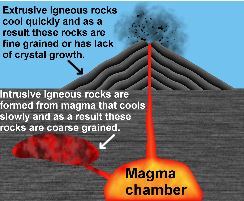 solidificazione di rocce fuse (magma). Il granito, al pari del porfido, è quindi una roccia magmatica. La differenza è il tempo di raffreddamento che la roccia subisce durante la formazione. Mentre il porfido in superficie (eruzioni vulcaniche) si raffredda in tempi relativamente veloci, il granito a circa 2 km di profondità si raffredda molto più lentamente. I cristalli hanno così tutto il tempo di formarsi e creare la tipica struttura ordinata e chiara dei graniti.
Applicazione: il granito di Bressanone è resistente al gelo e versatile. Ad esempio, per gradini, davanzali, pavimentazioni o fontane.
Sbancamento: nella Valle Inarco il granito di Bressanone è la pietra di casa. Non solo perché da sempre è molto utilizzato ma anche perché da lì proviene e viene estratto in occasione di lavori di sbancamento. Questo significa che il granito di Bressanone non proviene dall’estrazione in cava e quindi è da considerarsi un masso erratico.
Per loggare questa Earthcache, andare in questa posizione e rispondere alle seguenti domande. Quindi pubblica una foto di te nel luogo del tuo log. Ovviamente, se non vuoi apparire nella foto, un oggetto personale nella foto è una prova sufficiente della tua presenza. (Secondo le linee guida di Earthcache, è richiesto il fotoritocco dal giugno 2019.)
1.) Descrivi i grani della roccia granitica. Sono grani grossi o grani fini?
2.) Leggi attentamente la descrizione e osserva il masso. Come puoi dire che la roccia è fatta di granito?
3.) Sul pavimento ci sono anche pietre di granito. Descrivi la differenza con il masso in termini di colore e grana.
Puoi loggare immediatamente. Se qualcosa non è corretto, ti contatterò

Das Skelett der Erdkruste
Granit ist eine der wichtigsten Rock-Kategorien überhaupt. Dazu gehören felsige Massen, die in großer Tiefe in der Erdkruste gebildet werden (Intrusivgesteine) - von denen sie am weitesten verbreitet sind - und Gesteine, die von Vulkanausbrüchen stammen (effusive Gesteine). Der Brixner Granit ist einer der traditionsreichsten Natursteine Südtirols. Aufgrund seiner Eigenschaften (Frostbeständigkeit, Härte) wurde er seit jeher am Bau (Böden, Treppen, Massivstufen, Verblendung, Mauersteine) oder auch für Brunnen oder sonstige massive Gestaltungen verwendet. Der Brixner Granit wurde erstmals von dem Geologen Adolf Pichler beschrieben, zu dem auch eine von ihm benannte tonalitische Masse "Schisto oligoclasico" in dieser geologischen Einheit gehörte. Heute sind sie in den Granit aus Brixen und die Lamella Tonalitica aus Mules unterteilt, da sie sowohl tektonisch als auch zeitlich getrennt sind (der Granit ist auf den Perm datiert, während der Tonalit dem Oligozän angehört).
Wie entsteht Granit ?
Granit ist ein Tiefengestein (Plutone), welches unter der Erdoberfläche durch die Erstarrung von Gesteinsschmelzen (Magma) entsteht. Granit ist also wie Pophyr ein magmatisches Gestein. Der Unterschied in der Entstehung liegt bei diesen Gesteinen in der Abkühlungszeit. Während Porphyr an der Erdoberfläche (Vulkanausbrüche) relativ rasch ausgekühlt ist, kühlte der Granit in etwa 2 km Tiefe viel langsamer aus. Dadurch haben die Kristalle Zeit und Ruhe zu wachsen und es ergibt sich die geordnete und klare Struktur der Granite.
Anwendung: Brixner Granit ist frostbeständig und vielseitig einsetzbar. So z.B. als Treppenstufe, Fensterbank, Bodenbelag oder Brunnen.
Abbau: Im Eisacktal ist der Brixner Granit das Hausgestein. Nicht nur weil er immer schon sehr viel verwendet wurde, sondern auch weil er dort zuhause ist und bei Aushubarbeiten geborgen wird. Der Brixner Granit wird also nicht in einem Steinbruch gewonnen und ist somit ein Findlingsgestein.
Um diesen Earthcache zu loggen, begib dich zu dieser Location und beantworte nachfolgende Fragen. Anschließend postet zu eurem Log bitte noch ein Foto von euch an der Location. Wenn ihr selbst nicht auf dem Foto erscheinen wollt, reicht natürlich auch ein persönlicher Gegenstand auf dem Foto als Beweis eurer Anwesenheit. (Laut Earthcache Guidelines ist die Forderung eines Fotobeweises seit Juni 2019 wieder erlaubt.)
1.) Beschreibe die Körnung des Granitfelsens. Besitzt er eine feine oder eine grobe Körnung?
2.) Lies dir das Listing genau durch und schaue dir diesen Felsen an. Wie kannst du erkennen, dass der Felsen aus Granit ist?
3.) Auf dem Boden sind auch Granitsteine. Beschreibe den Unterschied zu dem Felsen in Bezug auf Farbe und Körnung.
Danach könnt Ihr sofort loggen. Wenn irgendetwas nicht in Ordnung sein sollte, melde ich mich.

The skeleton of the earth's crust
Granite is one of the most important rock categories ever. These include rocky masses that are formed at great depth in the Earth's crust (intrusive rocks) - of which they are most widespread - and rocks that come from volcanic eruptions (effusive rocks). Brixen Granite is one of the most tradition-steeped natural stones in South Tyrol. Thanks to its frost-resistant and robust characteristics it has always been used for building structures (floors, stairs, large steps, stone veneer, bricks), wells or other larger compositions. Bressanone Granite has been described for the first time by the geologist Adolf Pichler, which also included a tonalitic mass, named by him "Schisto oligoclasico", in this geological unit. Nowadays they are subdivided into the Bressanone Granite and the Mules Lamella Tonalitica, since they are separated both tectonically and temporally (the granite is dated to the Permian, while the tonalite is from the Oligocene).
How is granite made?
Granite is an intrusive rock (pluton) that originates below the surface of the earth as a result of magma solidification (igneous rock). Hence, like porphyry, granite is a magmatic rock. The difference in their formation lies in their cooling rates. While porphyry cools quite rapidly at the surface (volcanic eruptions), granite cools significantly slower at a subsurface depth of 2 km. Thus, crystals have more time to develop and are thus bigger, resulting in a clear and ordered structure.
Use: This stone is frost-resistant and versatile, thus can be used for a variety of purposes such as for steps, window sills, floor covering and fountains.
Mining: Brixen Granite is a native of the Eisacktal valley: it was found here, retrieved here through excavation and is used here a great deal. This stone is not mined in a quarry, thus goes by definition of a boulder rock.
To log this Earthcache, go to this location and answer the following questions. Then post a photo of you at the location to your log. Of course, if you do not want to appear in the photo, a personal item in the photo is enough proof of your presence. (According to the Earthcache Guidelines, photo-proofing has been required since June 2019.)
1) Describe the grains of the granite rock. Does it have rough grains or fine grains?
2) Read the Listing and have a look at this rock. How can you know that the rocks are made out of granite?
3) On the floor are also granite stones. Describe the difference to the rock in terms of color and grain.
After that you can give your log directly. If anything is not ok, i will contact you.
l'indice delle fonti:
· treccani.it
· Wikipedia
· Fotos intrinsecamente
· suedtirol-stein.com