BENVENUTI A ABBADIA SAN SALVATORE
WELCOME TO ABBADIA SAN SALVATORE

ABBAZZIA DI SAN SALVATORE
L'Abbazia di San Salvatore (nome originale Sancti Salvatoris de Monte Amiata ) di origini antichissime è un monastero cistercense situato alle pendici del monte Amiata, nel territorio del comune di Abbadia San Salvatore (Siena); é posto nei pressi dell'antica via Francigena.
Il complesso monastico, secondo la tradizione, venne fondato nel 742 da Rachis († 757), re dei Longobardi nel luogo dove questi, durante una battuta di caccia, ebbe un'apparizione di Gesù Cristo.
In realtà la fondazione del monastero, affidato ai benedettini, fu curata dal nobile longobardo Erfo, figlio di Pietro († 756), duca del Friuli, e rientrava in un preciso disegno politico di Ratchis, che seppe avvalersi del favore monastico di questi a beneficio della nazione longobarda, ottenendo con la fondazione di un cenobio sulle pendici del monte Amiata il duplice scopo di protezione e controllo dei traffici lungo la strategica via Francigena e di sviluppo agricolo della Tuscia longobarda. Pertanto, già nel 750, Erfo assegnò al monastero fortificato il controllo feudale dei territori amiatini che comprendevano i pascoli del monte Amiata fino alla valle del fiume Paglia attraversata dalla via Francigena.
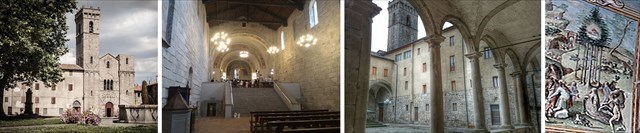
La chiesa, risalente al 1035, presenta una facciata a capanna alta e stretta, affiancata da due torrioni, quello di destra incompiuto e l'altro merlato e arretrata rispettoa questi ultimi.
L'edificio venne costruito con pietra locale, il Peperino di cui la nostra Eartcache tratterà.
L'aspetto attuale è in parte il risultato di restauri degli anni trenta del Novecento. L'interno, a croce latina e navata unica, conserva un Crocifisso ligneo policromato della fine del XII secolo, la Leggenda del duca Ratchis (1652-1653) e il Martirio di San Bartolomeo (1694), entrambi di Francesco Nasini.
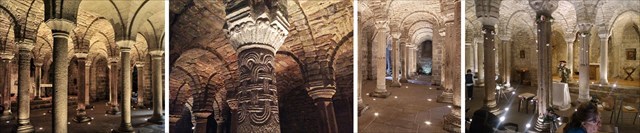
Ma la carattesistica principale dell'Abbazia di San Salvatore è la sua bellissima cripta longobarda con trentadue colonne ed altrettanti capitelli di cui venticinque originali.
In questa abbazia ha costudito, per quasi mille anni, il Codex Amiatinus la più antica copia manoscritta conservata integralmente della Bibbia nella sua versione latina redatta da san Girolamo, di cui si ritiene sia anche la copia più fedele al testo originario. Oggi costudito presso la biblioteca Laurenziana a Firenze.
LA CRIPTA LONGOBARDA
La cripta, secondo alcuni studiosi, sarebbe la chiesa originaria longobarda risalente all'VIII secolo, mentre altri ritengono che sia stata costruita contemporaneamente all'aula ecclesiale superiore, edificata nell'XI secolo.
La cripta presenta una pianta a croce greca; dei quattro bracci, tre sono originali ed uno è ricostruito.
Presenti trentadue colonne con capitelli di cui venticinque originali ognuno decorato con un motivo diverso come sono diverse tra loro anche le colonne, nodi gordiani, teste di montone, foglie di palma, piccole, attorcigliate, ripiegate, fusti a scanalature ottagonali, a 16 facce, tondi. Un tripudio di simboli e di elementi diversi che conferiscono all’ambiente grazia e bellezza che attraverso gli occhi commuove.
Al suo interno è inoltre presente la chiesa originale.
Se riuscite cercate il cosidetto capitello della prima colonna storica in cui si riconoscerebbero i fondatori della abbazia ovvero il Duca Ratchis con sua moglie Thesia insieme all'abate Erfone.
Orario delle funzioni liturgiche (di cui non garantisco la completezza).
Messe: 7:00, 8:30, 10:00, 11:00, 12:00, 17:00 (estivo: 18:00) Lodi: 8:00 Vespri: 16:00
Nei giorni feriali: Lodi, ore 6:00; Santa Messa, ore 7:30; Sesta, ore 12:45; Nona, ore 16:00; Vespro, ore 19:15.
Nei giorni festivi: Lodi ore 8:00; Santa Messa ore 11:00; Vespro ore 16:00 (durante l'ora legale alle 17:00).
 ----TESTO PER RISPONDERE ALLE DONANDE TEORICHE---
LA PIETRA TOSCANA
Il luogo dove ci troviamo risiede nella parte orientale del Montamiata, sul lembo del pianoro dal quale sporge la gran massa di peperino che ne formò il suo dorso.
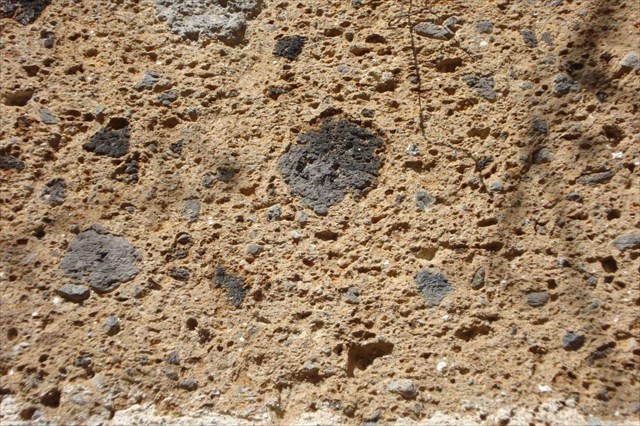
Il Peperino è una roccia vulcanica Sedimentaria presente soprattutto nelle zone di Viterbo utilizzata da sempre, lavorata a blocchi sia per la costruzione e realizzazione di edifici privati e pubblici che per l’arredo urbano.
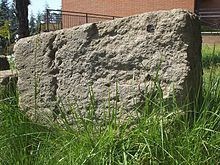
Il nome peperino deriva dal latino tardo lapis peperinus, derivato di piper (cioè pepe), per la presenza di particelle di biotite di colore nere simili a grani di pepe.
Il peperino, una ignimbrite di tipo tufo saldato, deriva dalla cementazione di materiali vulcanici dell'antico Vulcano Cimino. Nel corso dei secoli il tutto si è consolidato, sia per effetto di azioni fisiche connesse con movimenti orogenici, sia per la naturale presenza di cemento formatosi dalla decomposizione di particelle vetrose e di calcio.
Questo processo di formazione rende il peperino resistente al tempo ed agli agenti atmosferici, pur rendendolo facilmente lavorabile.
La formazione del peperino è dovuta ad attività vulcanica iniziata circa 600.000 anni fa e terminata 20.000 anni or sono. Il solidificarsi delle lave emesse dal cono vulcanico diede origine a varie tipologie di minerali: Tufo, Pietra sperone e Peperino. Il peperino è invariabilmente di colore grigio, variabile dalla tonalità chiara alla scura: all'interno della materia sono contenuti frammenti di altri minerali, come gli zeoliti: questi minerali erano spesso utilizzati dalla gente comune per pulire le argenterie; possono trovarsi inclusi nel peperino anche minerali cristallizzati ed amorfi, globuli di calcite, addirittura pezzetti di legno e minerali accessori che possono essere mica, biotite, apatite rutilo, ilmenite o zircone. Questo in parte è il motivo per cui non è un marmo la cui formazione disgrega ogni tipo di elemento presente al suo interno, bologici sopratutto.
LE INGIMBRITI
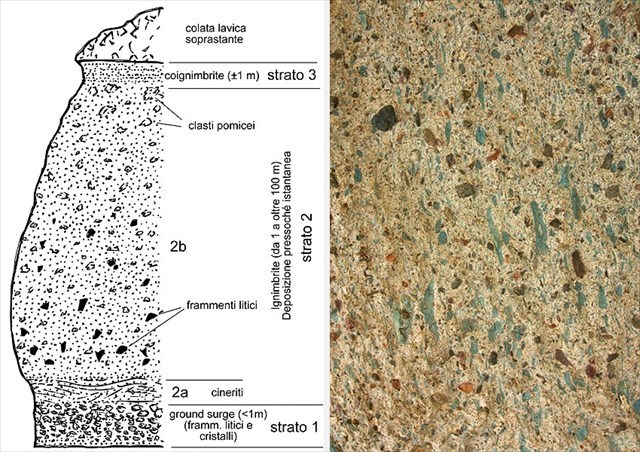
L'Ignimbrite è una roccia piroclastica compatta, solitamente a chimismo da riolitico a dacitico, generata da un flusso piroclastico. A volte particolari condizioni geologiche possono produrre flussi piroclastici trachitici, fonolitici e andesitici, cioè di magmi poco compatibili con questo tipo di prodotti.
L'ignimbrite è formata principalmente da frammenti di piccole dimensioni, con una percentuale medio-alta di vetro vulcanico (minuti frammenti e pomici), insieme a cristalli di origine endogena - principalmente feldspati e biotite - , a volte corrosi o spezzati dal movimento, e frammenti litici. Questi ultimi sono frammenti derivati dalla disgregazione di precedenti colate laviche solidificate, frammenti di rocce varie inglobati nella camera magmatica o staccati dalle pareti del condotto durante la risalita del magma. Se la quantità di lapilli (ed eventualmente di blocchi) di pomice nella matrice di ceneri supera il 50% del volume totale del flusso, invece di flusso piroclastico si parla di flusso pomiceo.
IL TUFO
I tufi - intesi come differenti varietà di tufo - risultano formati in maggior parte da lapilli di dimensioni comprese fra i 2 mm e i 30 mm, emessi durante un'eruzione vulcanica. Col nome di tufiti vengono indicate quelle rocce costituite da materiale vulcanico detritico, eventualmente associato anche a conchiglie marine.
La struttura dei tufi è detta cinerica o vitroclastica per l'aspetto della porzione vetrosa che appare finemente suddivisa e frammentaria.
I lapilli di dimensioni minori riescono a imprigionare talvolta quelli di dimensione maggiore e tale solidificazione viene realizzata anche tramite l'azione dell'acqua.
L'ambiente in cui questi lapilli si depositano può essere estremamente variabile e, insieme alla composizione della roccia, determina le caratteristiche di colore, struttura e tessitura dei tufi.
PER LOGGARE LA CACHE
Le risposte sono tutte contenute nel listing e al GZ.
Prima inviate le risposte e dopo procedete al log.
1 - Cosa è un Ignimbrite?
2 - Secondo te il Peperino nella sua formazione ha subito una:
-Forte pressione
-Non una forte pressione
3 - Il Peperino è un marmo o no? Perche?
4 - RICHIESSTA NON OPZIONALE una foto (in privano NON sul listing) di voi nella chiesa. (Guidelines 2019 GSA Point "6.Logging")
5 -Entrate nella chiesa e andate nel punto indicato sulla pianta della chiesa qui sotto.
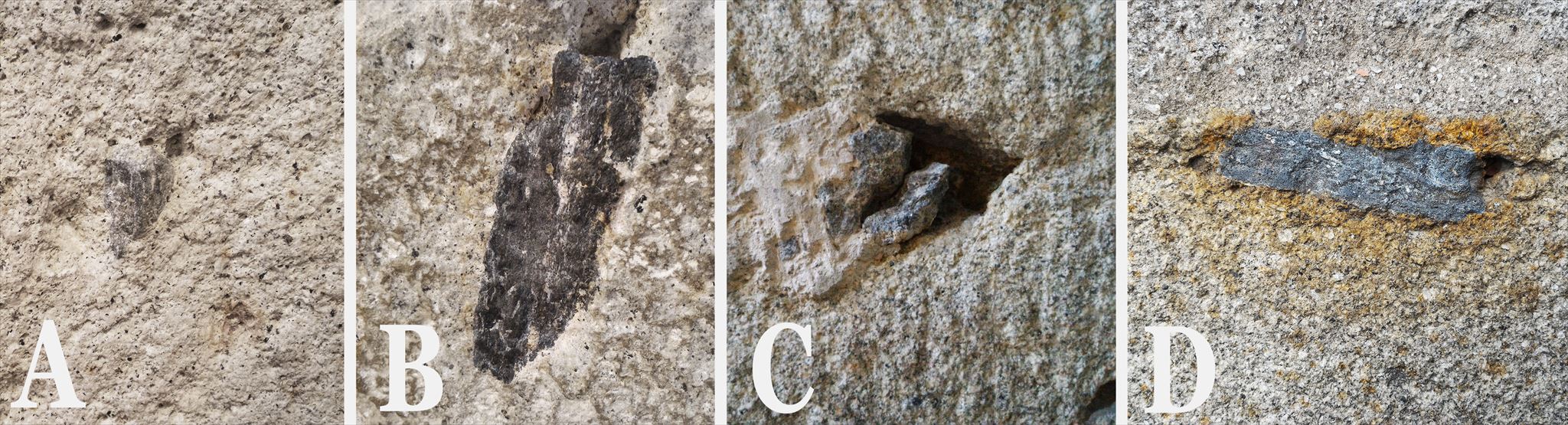
Cè un intrusione di materiale nella pietra all'angolo tra le due porte, a quale di quelle fotografate qui sotto corrisponde?

Log senza risposte verranno cancellati dopo 12 ore
NON verranno accettate:
- risposte scritte in lingua che non sia Italiano o Inglese!
- Write Note di alcun genere.
|

SAN SALVATORE ABBEY
The Abbey of San Salvatore (original name Sancti Salvatoris de Monte Amiata) of ancient origins is a Cistercian monastery located on the slopes of Mount Amiata, in the territory of the town of Abbadia San Salvatore (Siena); It is located near the ancient Via Francigena.
According to tradition, the monastic complex was founded in 742 by Rachis († 757), king of the Lombards in the place where he, during a hunt, had an apparition of Jesus Christ.
In fact, the foundation of the monastery, entrusted to the Benedictines, was cared for by the Lombard noble Erfo, son of Pietro († 756), duke of Friuli, and was part of a precise political design by Ratchis, who was able to use the monastic favor of these to benefit of the Lombard nation, obtaining with the foundation of a cenobio on the slopes of Mount Amiata the dual purpose of protection and control of traffic along the strategic via Francigena and agricultural development of the Lombard Tuscia. Therefore, already in 750, Erfo assigned to the fortified monastery the feudal control of the Amiatini territories that included the pastures of Mount Amiata up to the valley of the river Paglia crossed by the Via Francigena.
The church, dating back to 1035, has a high and narrow gabled façade, flanked by two towers, the one on the right unfinished and the other crenellated and set back from the latter.
The building was built with local stone, the Peperino of which our Eartcache will treat.
The current aspect is partly the result of restoration of the thirties of the twentieth century. The interior, with a Latin cross and single nave, preserves a polychrome wooden Crucifix from the late twelfth century, the Legend of the Duke Ratchis (1652-1653) and the Martyrdom of San Bartolomeo (1694), both by Francesco Nasini.
But the main characteristic of the Abbey of San Salvatore is its beautiful Lombard crypt with thirty-two columns and as many capitals of which twenty-five originals.
For nearly a thousand years, this abbey has treated the Codex Amiatinus as the oldest manuscript copy preserved in its entirety by the Bible in its Latin version written by Saint Jerome, which is also believed to be the most faithful copy of the original text. Today at the Laurentian library in Florence
THE LONGOBARDA'S CRYPT
According to some scholars, the crypt is the original Lombard church dating back to the 8th century, while others believe it was built at the same time as the upper ecclesial hall, built in the 11th century.
The crypt has a Greek cross plan; of the four arms, three are original and one is rebuilt.
Present thirty-two columns with capitals of which twenty-five originals each decorated with a different motif as they are different from each other also columns, Gordian knots, heads of ram, palm leaves, small, twisted, folded, octagonal grooved stems, 16 faces, round. A riot of symbols and different elements that give the environment grace and beauty that moves through the eyes.
Inside there is also the original church.
If you can, look for the so-called capital of the first historical column where the founders of the abbey would be recognized, namely the Duke Ratchis with his wife Thesia together with the abbot Erfone.
Orario delle funzioni liturgiche (di cui non garantisco la completezza).
Messe: 7:00, 8:30, 10:00, 11:00, 12:00, 17:00 (estivo: 18:00) Lodi: 8:00 Vespri: 16:00
Nei giorni feriali: Lodi, ore 6:00; Santa Messa, ore 7:30; Sesta, ore 12:45; Nona, ore 16:00; Vespro, ore 19:15.
Nei giorni festivi: Lodi ore 8:00; Santa Messa ore 11:00; Vespro ore 16:00 (durante l'ora legale alle 17:00).
---- TEXT FOR RESPONDING TO THEORETICAL DONORS ---![]()
THE TUSCAN STONE
The place where we find ourselves resides in the eastern part of Montamiata, on the edge of the plateau from which protrudes the great mass of peperino that formed its back.
The Peperino is a volcanic sedimentary rock present mainly in the areas of Viterbo used forever, worked in blocks for the construction and construction of private and public buildings and for the urban furniture.
The name peperino derives from the Latin tardo lapis peperinus, derivative of piper (ie pepper), due to the presence of black biotite particles similar to peppercorns.
The peperino, a welded tufa ignimbrite, derives from the cementation of volcanic materials of the ancient Cimino volcano. Over the centuries the whole has consolidated, both due to the effect of physical actions connected with orogenic movements, and due to the natural presence of cement formed by the decomposition of vitreous particles and calcium.
This formation process makes the peperino resistant to time and atmospheric agents, while making it easily workable.
The formation of the peperino is due to volcanic activity which began about 600,000 years ago and ended 20,000 years ago. The solidification of the lavas emitted by the volcanic cone gave rise to various types of minerals: Tufo, Pietra sperone and Peperino. The peperino is invariably gray in color, ranging from light to dark: within the material are contained fragments of other minerals, such as zeolites: these minerals were often used by ordinary people to clean the silver; crystallized and amorphous minerals, calcite globules, even bits of wood and accessory minerals that may be mica, biotite, rutile apatite, ilmenite or zircon may also be included in the peperino. This in part is the reason why it is not a marble whose formation disrupts every type of element present in its interior, especially bologna.
THE INRIMBRITI
Ignimbrite is a compact pyroclastic rock, usually a riolitic to dacitic chemism, generated by a pyroclastic flow. Sometimes particular geological conditions can produce trachitic, phonolithic and andesitic pyroclastic flows, that is, magmas that are not compatible with this type of products.
Ignimbrite consists mainly of small fragments, with a medium-high percentage of volcanic glass (minute fragments and pumice), together with crystals of endogenous origin - mainly feldspar and biotite -, sometimes corroded or broken by movement, and lithic fragments. The latter are fragments derived from the disintegration of previous solidified lava flows, fragments of various rocks embedded in the magma chamber or detached from the walls of the conduit during the ascent of the magma. If the amount of pumice (and possibly blocks) of pumice in the ash matrix exceeds 50% of the total volume of the flow, instead of pyroclastic flow it is called pumice flow.
THE TUFF
The tuffs - intended as different varieties of tuff - are formed in large part by lapilli with dimensions between 2 mm and 30 mm, emitted during a volcanic eruption. With the name of Tephites are indicated those rocks made of debris volcanic material, possibly also associated with marine shells.
The structure of the tuff is called cinematic or vitroclastic for the appearance of the glassy portion that appears finely divided and fragmentary.
Smaller lapilli can sometimes imprison larger ones and this solidification is also achieved by the action of water.
The environment in which these lapilli settle can be extremely variable and, together with the composition of the rock, determines the characteristics of color, structure and texture of the tuffs.
TO LOGY THE CACHE
The answers are all included in the listing and the GZ.
First send the answers and then proceed to the log.
1 - What is an Ignimbrite?
2 - According to you Peperino in his training has suffered one:
- Pressure press
- Not a strong pressure
3 - Is Peperino a marble or not? Why?
4 - NON-OPTIONAL REQUEST a photo (not on the listing but in private messages) of you, or GPS, inside the church! (Guidelines 2019 GSA Point "6.Logging")
Thanks.
5 - Enter the church and go to the designated spot on the church plan below.
Is there an intrusion of material in the stone at the corner between the two doors, to which of those photographed below corresponds?
Logs without replies will be deleted after 12 hours
They will NOT be accepted:
- answers written in a language that is not Italian or English!
- Write Notes of any kind.
|