Gletscherschliff am Gupf

Als während des Kältehöhepunktes der jüngsten, der Würm-Eiszeit, der Draugletscher vor etwa 25.000 bis 20.000 Jahren aus Oberkärnten nach Osten bis ins Jauntal vorstieß und erst knapp vor Griffen, Lippitzbach oder Bleiburg endete, strömte er auch über die aus jungtertiärem Gestein aufgebaute Hochfläche von Sankt Margareten im Rosental und Abtei. Diese Hochfläche ist der Rest einer Millionen Jahre alten Landschaft, die vor dem Einschneiden der Drau im Rosental entstand und sich nördlich des Tales auf der Hochfläche der Sattnitz fortsetzt.
Gletscherschliffe
Die abschleifende Tätigkeit eines Gletschers, der sich über einen Gesteinskörper hinwegbewegt, wird als Detersion bezeichnet. Das Resultat der Detersion, also die abgeschliffene Felsoberfläche, wird als Gletscherschliff bezeichnet. Durch das Gleiten des sich bewegenden Eises wird der Untergrund erodiert, obwohl das Eis an sich viel weicher als das Gestein ist. Die schleifende Wirkung entsteht durch das im Eis mitgeführte Schuttmaterial (Moräne). Dabei werden die typischen Gletscherschrammen ("Kritzer") erzeugt. Steine, die an der Sohle oder an den Seiten des Gletschers mitgeführt werden, "kritzen" das anstehende Gestein.
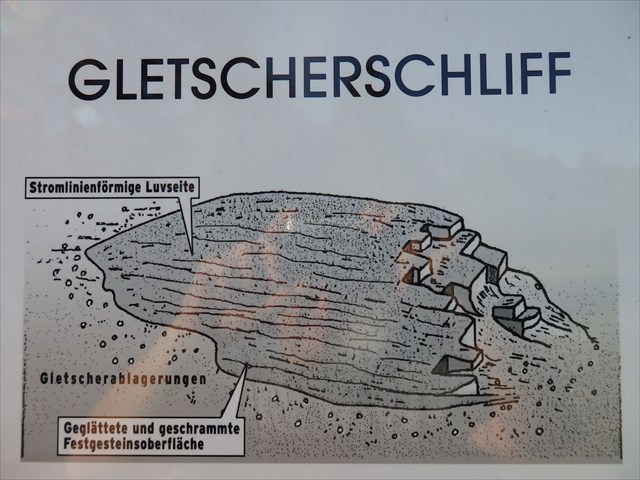
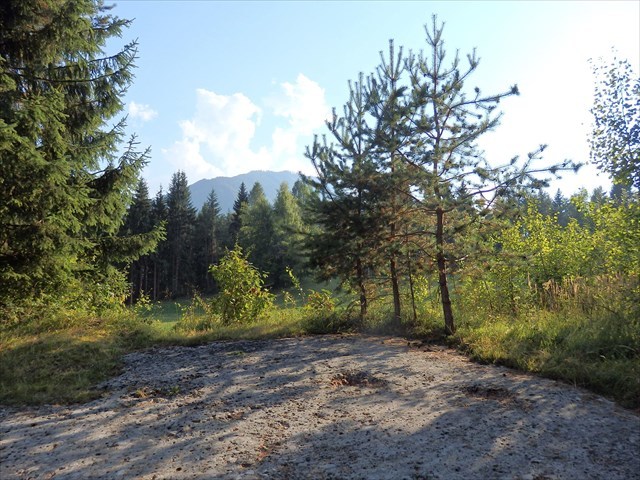
Neben vielen anderen Spuren und Ablagerungen in diesem Raum hat der Eiszeitgletscher hier am Gupf einen etwa 20 Quadratmeter großen Gletscherschliff hinterlassen - eine Besonderheit, da bisher aus der Gegend kein weiterer Gletscherschliff bekannt wurde. Besonders harte Gerölle haben dabei zahlreiche, parallel verlaufende Gletscherschrammen in die Fläche des Gletscherschliffes eingekerbt, die uns heute noch die Richtung der Gletscherbewegung anzeigen.

During the cold maximum of the recent ice age, the Würm ice age about 25.000 to 20.000 years ago, the Drau glacier advanced from Upper Carinthia to the valley of Jauntal and ended just before Griffen, Lippitzbach and Bleiburg. The glacier flow also across the plateau of St. Margareten im Rosental and Abtei, which is built of young tertiary rock. This plateau is the remainder of a landscape millions of years old. It was created in the so-called "Rosental" (Rose Valley) before the river Drau cut into the valley, it continues north of the valley on the plateau of Sattnitz.
Glacial abrasion
Glacial abrasion is the surface wear achieved by individual clasts, or rocks of various sizes, contained within ice or by subglacial sediment as the glacier slides over bedrock. A smooth, polished surface is left behind by glacial abrasion, sometimes with glacial striations, which provide information about the mechanics of abrasion under temperate glaciers. Glacial striations are scratches or gouges cut into bedrock by glacial abrasion. They are usually multiple, straight, and parallel, representing the movement of the glacier using rock fragments and sand grains, embedded in the base of the glacier, as cutting tools.
Among many other traces and deposits in this area, the Ice Age glacier here at Gupf has left behind a glacial polish of about 20 square metres - a special feature, as no further glacial polish has been known from the area so far. Especially hard rocks have carved numerous parallel glacial striations into the surface of the glacial polish, which still show us the direction of the glacier movement today.
Deine Aufgaben zum Loggen dieses Earthcache / Your task to log this Earthcache:
Schicke mir die Antworten auf folgende Fragen per Message über mein Profil:
Send me your answers on the following questions via message:
1.) Beschreibe die vom Gletscher geschliffene Gesteinsplatte mit eigenen Worten (Struktur, Oberfläche)! Um welches Gestein handelt es sich?
Give me a description of the rock plate (structure, surface)! What type of rock is it?
2.) Betrachte die "Kritzer" (Gletscherschrammen) - in welche Himmelsrichtung verlaufen sie? Wie muss die Fließrichtung des Gletschers gewesen sein?
Have a closer look at the glacial striations - in which direction do they run? In which direction has the glacier moved?
3.) Wie breit und tief sind die größten Kritzer? How wide and deep are the largest glacial striations?
4.) Optional: Gerne kannst du ein Foto von dir und/oder deinem GPS vor Ort dem Log hinzufügen!
Optional: If you like, you can add a picture of you and/or your GPS unit near the location to your log entry!
Du brauchst nicht auf eine Logfreigabe zu warten! Sobald die Antworten abgeschickt sind, kannst du loggen! Ich melde mich bei dir, falls irgendetwas nicht passt.
There is no need to wait for a log permission! You can log immediately after you sent me your answers! If there's something wrong, I'll contact you.
Viel Freude beim Erkunden des Objekts! Have fun and enjoy the location!
Quellen / Sources:
Ahnert, Frank (2009): Einführung in die Geomorphologie.
Van Husen, Dirk (1998): Zur quartären Entwicklung in Kärnten. In: Mildner, P. & H. Zwander (Ed.)(1998): Kärnten - Natur. Die Vielfalt eines Landes im Süden Österreichs. Klagenfurt.
wikipedia.org
Informationstafel vor Ort
Die Fotos stammen vom Verfasser / The pictures were taken by the author.
 The most exciting way to learn about the Earth and its processes is to get into the outdoors and experience it first-hand. Visiting an Earthcache is a great outdoor activity the whole family can enjoy. An Earthcache is a special place that people can visit to learn about a unique geoscience feature or aspect of our Earth. Earthcaches include a set of educational notes and the details about where to find the location (latitude and longitude). Visitors to Earthcaches can see how our planet has been shaped by geological processes, how we manage the resources and how scientists gather evidence to learn about the Earth. To find out more click HERE.