This Earthcache is only accessible by a there and back kayak paddle along the seldom travelled Eramosa River from the town of Rockwood. Access from the community of Everton is no longer available, unless you decide to walk in from the Everton Tract and then walk in the river up stream. Note that if you do decide to paddle all the way from Rockwood, that the river becomes unpredictable, ranging from having to potentially walk your kayak in the summer months, to class I and II rapids in the early Spring. You should not need climbing gear to get up onto the ledge as mother nature has provide an approach on the sides of the cliff. If you pay attention to other cliffs upstream, you may notice people taking part in rock climbing those cliffs.
In order to log your find, determine the following:
1) Take elevation readings at
a) water level
b) top of the scree
c) on the ledge that is part way up the cliff.
d) estimate the elevation at the top of the cliff (you do not need to climb to the top)
2) Analyze the scree at the base of the cliff. What is the scree mostly comprised of. Why is there more or less scree here than you may have expected. How far is the base of the bottom end of the scree from the edge of the water. What do you think is happening here. Hey, at least I didn't ask you to calculate the maximum inclination or the angle of repose.
3) While on the ledge, determine the surface area of the ledge or let me know the length and width of it.
4) Does the ledge have an angle or is it mostly level. Estimate the angle if it has one either in degrees or in percentage.
5) Is there loose rocks or debris on the ledge?
6) Over time do you think this ledge will get bigger or will it disappear? In 100 years? 1000 years? 1,000,000 years?
7) Pictures are always nice, like you or your friends on the ledge, but it's completely optional. Have fun and be safe.
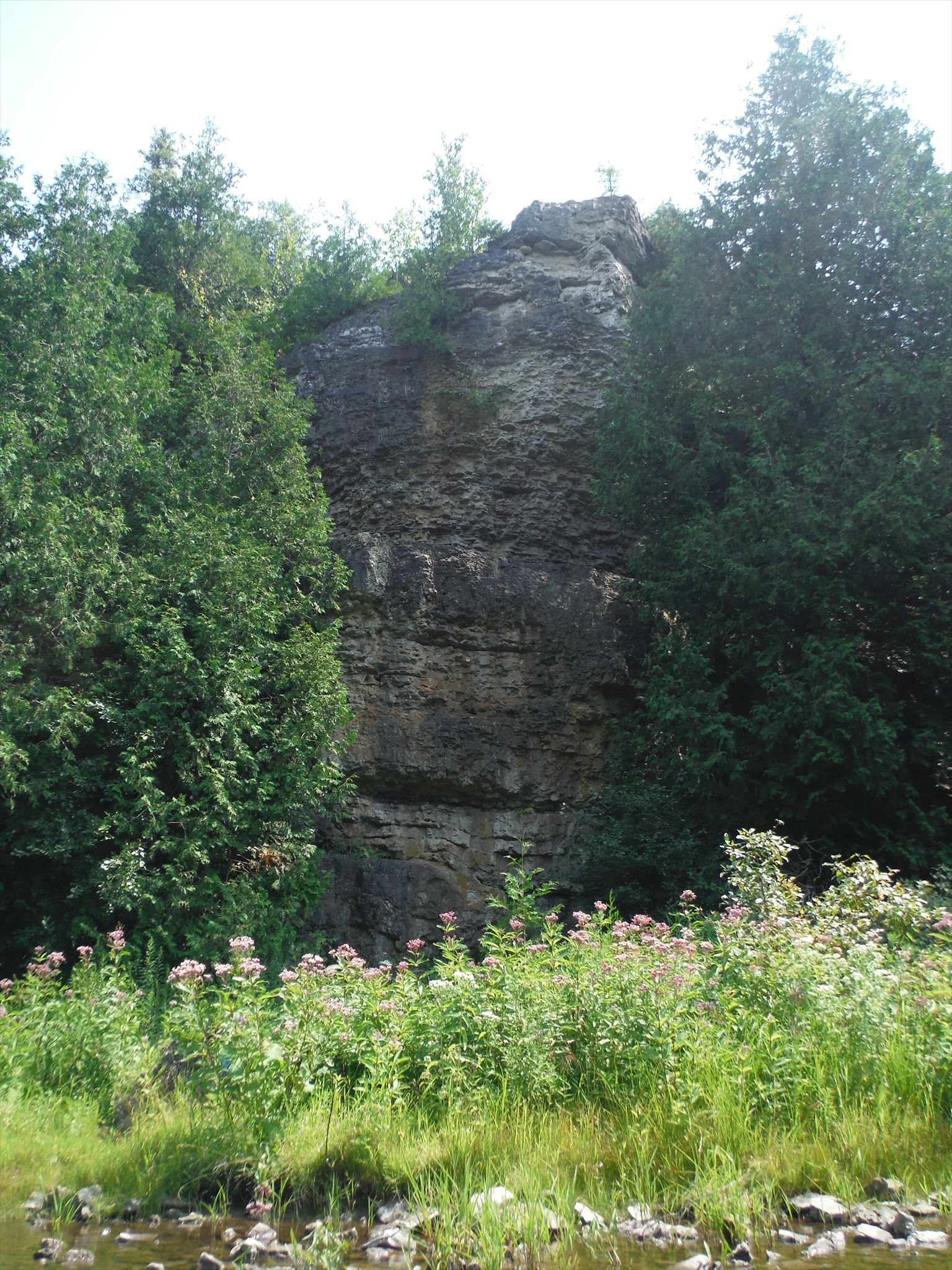
A cliff is a vertical, or nearly vertical, rock exposure. Cliffs are formed by the processes of weathering and erosion. Cliffs are common on coasts, in mountainous areas, escarpments and along rivers. In this case we are along both the Eramosa River and the escarpment. Cliffs are usually formed by rock that is resistant to weathering and erosion. Sedimentary rocks most likely to form cliffs include sandstone, limestone, chalk, and dolomite. Dolomite and limestone are the prominent rocks in the area. Igneous rocks such as granite and basalt also often form cliffs.
An escarpment (or scarp) is a type of cliff, formed by the movement of a geologic fault or landslide, or by differential erosion of rock layers of differing hardness.
A rock ledge is a narrow flat surface or shelf that projects from a wall of rock.
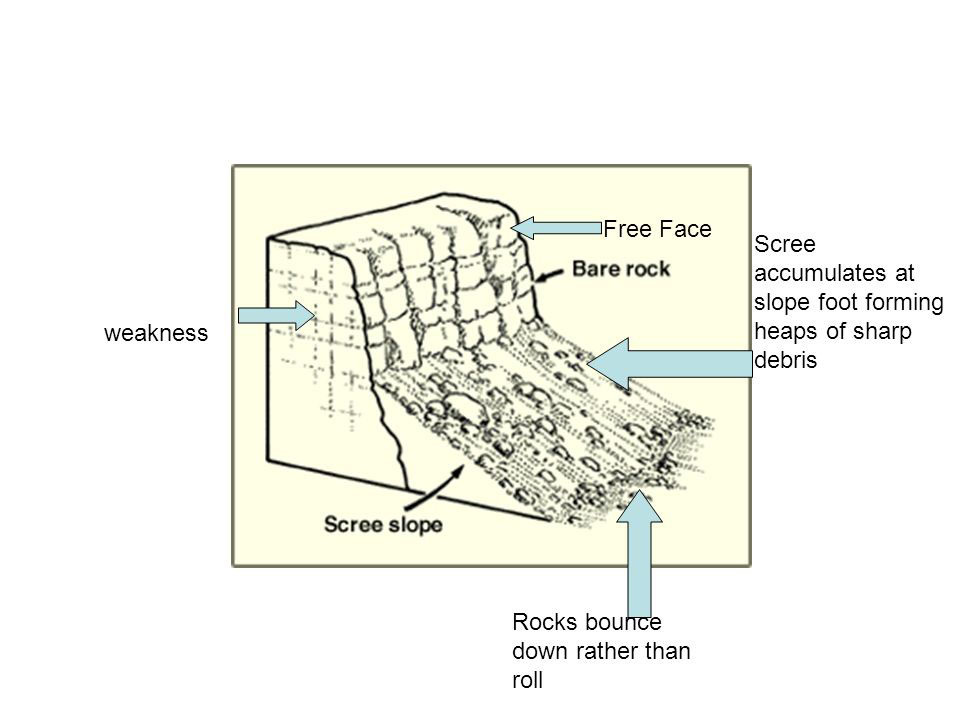
Most cliffs have some form of scree slope at their base. Scree is a collection of broken rock fragments at the base of crags, cliffs, volcanoes or valley shoulders that has accumulated through periodic rockfall from adjacent cliff faces. Landforms associated with these materials are often called talus deposits. Talus deposits typically have a concave upwards form, while the maximum inclination corresponds to the angle of repose of the mean debris size. In arid areas or under high cliffs, they are generally exposed jumbles of fallen rock. In areas of higher moisture, a soil slope may obscure the talus. Many cliffs also feature tributary waterfalls or rock shelters. Sometimes a cliff peters out at the end of a ridge, with tea tables or other types of rock columns remaining.