![]()
![]()
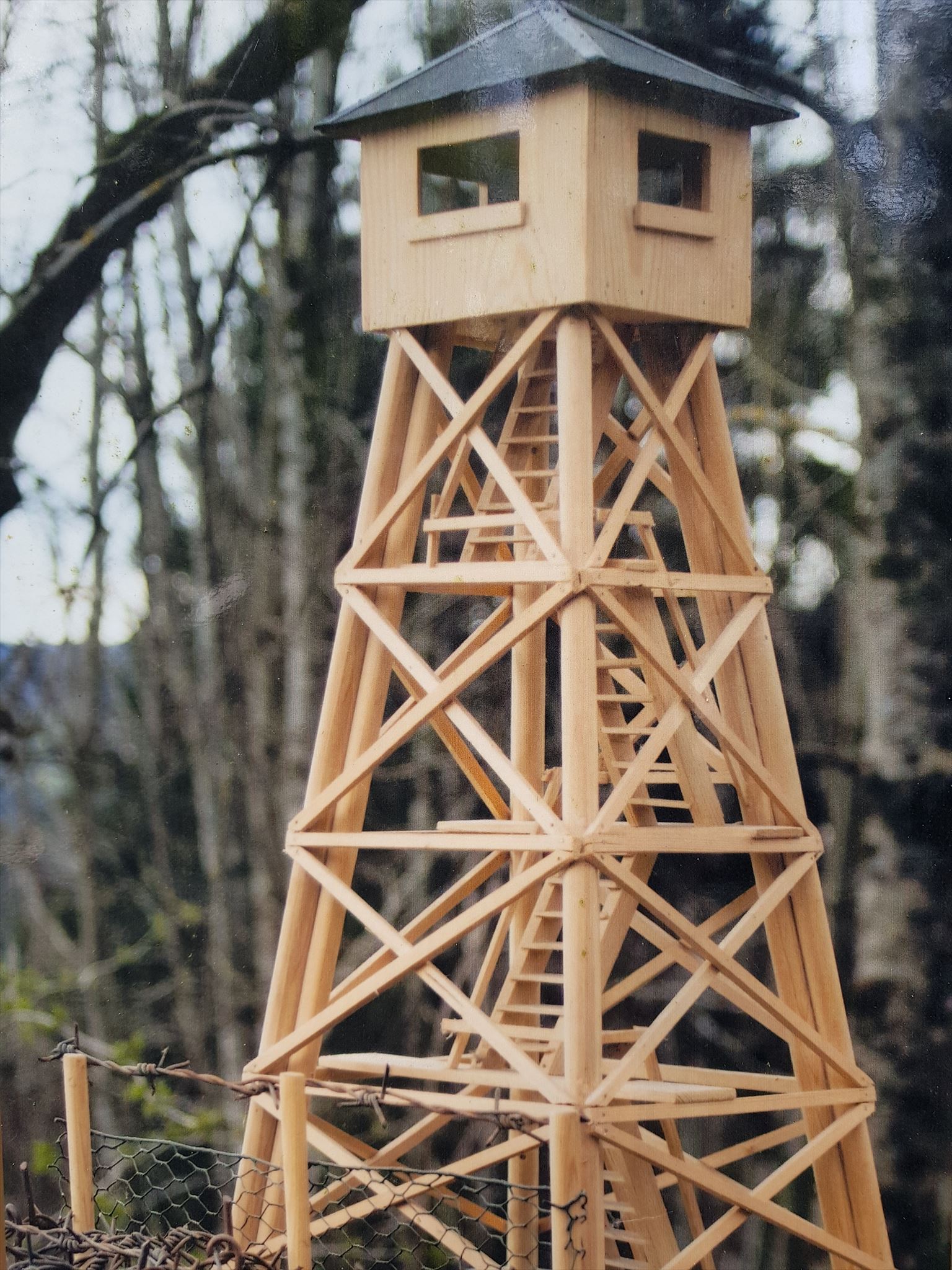
(Maketo stražnega stolpa si lahko ogledate v Koširjevi kašci, v Suhem Dolu. / A wooden model of the watchtower is on display in the little local museum Koširjeva kašča in the village of Suho Dol).
STOLP
V zavesti prebivalcev občine Dobrova – Polhov Gradec ostaja močan spomin na vojno – še zlasti v vaseh Suhi Dol, Planina nad Horjulom, Črni Vrh, Selo in Setnica ter na hribu Goljek. Ležijo namreč v neposredni bližini meje, ki je med drugo svetovno vojno potekala med Nemčijo in Italijo. V Suhem Dolu, na Planini nad Horjulom in na Goljeku so stali trije stražni stolpi, postavljena leta 1942.
Obmejni stolp v Suhem Dolu so zgradili tukaj – na hribu Kovček na Koširjevi domačiji. Da je nekoč na tem mestu stal 30-metrski stražni stolp, danes spominjajo le še betonski temelji, saj so leseno ogrodje razminirali. Na vrhu stolpa so nemški vojaki postavili pokrito nadzorno mesto, do katerega so vodile stopnice. Poleg stražnih konstrukcij so vojaki na vseh treh mestih postavili še bunker in vzpostavili telefonsko povezavo.
MEJA
Leta 1940 so Nemci pri gradnji meje skozi naselja in gozdove zarezali okrog 50-metrski pas. Sestra Ludovika Bradeško je v svojih spominih zapisala: »Nemci so porušili stanovanjske hiše in druge objekte ter posekali lepa in debela drevesa. Nekateri prebivalci mejnih območij so ostali brez domačij in drugega premoženja. Nekaj izmed njih je zbežalo na Koroško.« Ko je bila nemško-italijanska meja leta 1942 zgrajena, so okoli nje nastavili polno min. Preživeli pričajo o tem, da takrat niso vedeli kam stopiti, ker je bilo vse prekopano, prevoženo in polno nevarnosti. Tudi tisti, ki so delali na poljih, so našli eksplozivna telesa vseh vrst. Mine so ubile 9 domačinov.
Meja je močno posegla v življenjski standard in vsakdanji boj za preživetje. »Živeli smo zelo skromno. Kupiti nismo mogli ničesar, ker tudi denarja ni bilo. Kar smo imeli doma, nam je zadoščalo le za preživetje. Nismo imeli drugega veselja, kot da smo bili skupaj. Pred letom 1945 še svete maše nismo imeli vsako nedeljo«, življenje med vojno opisuje Bradeškova, doma iz Srednjega Vrha.
Kako do končne lokacije in do zaklada:
N 46 02. Brezovec minus Zalaznikova Bajta
E 14 12. Somen minus Veternik
![]()
![]()
ENGLISH VERSION:
THE TOWER
Powerful memories of war are still embedded in the consciousness of the residents of the Municipality of Dobrova – Polhov Gradec, particularly those living in the villages of Suhi Dol, Planina nad Horjulom, Črni Vrh, Selo and Setnica and on the Goljek hill, close to where the German-Italian border ran during WW II. The area's three border watchtowers, built in 1942, stood in Suhi Dol, Planina na Horjulom, and on Goljek.
The watchtower in Suhi Dol was built right here at the Košir Homestead on the Kovček hill. Today, the only reminder of the fact that the homestead used to be the site of a 30-metre-high watchtower is the tower's concrete foundations, whereas the wooden superstructure, topped with an enclosed surveillance platform accessible by stairs, was blasted. Next to each of the area's three border watchtowers, a bunker was built and a telephone line was installed.
THE BORDER
In 1940, during the construction of fortifications along the German-Italian border, soldiers created an approximately 50-metre-wide border zone running through villages and woodland. In her memoirs, Sister Ludovika Bradeško from the village of Srednji Vrh recounts that they demolished residential and other buildings and cut down beautiful thick trees. Some of the people living in the area were left without homes and possessions, and a number of them fled to Carinthia.
When the construction of border fortifications was completed in 1942, the border zone was laid with countless mines. Survivors testify that it was hard to know where to step as everything was dug up, run over, and full of danger. While working in the fields, people would come across all kinds of explosive devices and the number of those killed by mines amounted to nine.
The border had a devastating impact on the standard of living. Daily life became a struggle. »We lived with very little. We couldn't buy anything as we had no money. What we grew at home was barely enough to survive. The only thing we enjoyed was being together. Before 1945, not even the mass was held every Sunday«, says Sister Bradeško in her account of life during the war.
How to get to the final location and the treasure:
N 46 02. Brezovec minus Zalaznikova Bajta
E 14 12. Somen minus Veternik
Vir / Source: Infotabla / Infoboard