-- Ελληνικά --
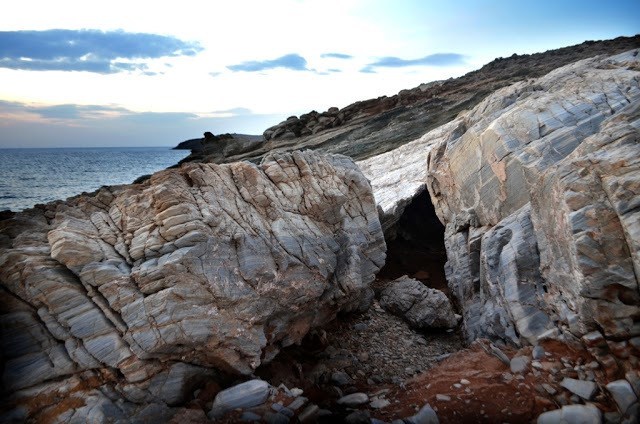
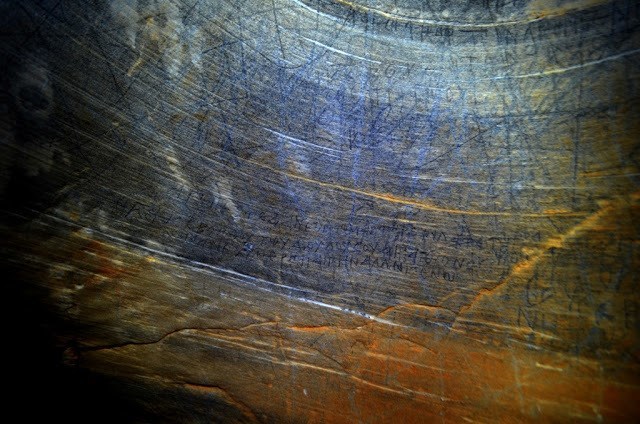
"Σπήλαιο των Γαστριών: Βρίσκεται δυτικά των Κιονίων, στην Πλατειά Άμμο. Το σπήλαιο αυτό, μήκους 50 μέτρων, παρουσιάζει εξαιρετικό γεωλογικό και ιστορικό ενδιαφέρον. Η είσοδός του σχηματίζεται ανάμεσα στα παραθαλάσσια βράχια του ομώνυμου ακρωτηρίου, ενώ το εσωτερικό του είναι ιδιαίτερα εντυπωσιακό. Ένα ιδιόμορφο ημικυκλικό κτίσμα αποζημιώνει τους τολμηρούς επισκέπτες του. Μικροί θόλοι στολίζουν το διάδρομο της εισόδου, του οποίου οι διακλαδώσεις οδηγούν στο άνοιγμα ενός μεγάλου θαλάμου. Σε όλα τα τοιχώματα του σπηλαίου υπάρχουν αμέτρητες επιγραφές, οι περισσότερες από τις οποίες, αν και διαφορετικών εποχών, είναι ανορθόγραφες. Ωστόσο, από αυτές προκύπτει πως κατά τη βυζαντινή περίοδο και την ενετοκρατία, εκεί βρίσκονταν πιθανότατα ναός αφιερωμένος στον Άγιο Στέφανο. Επιπρόσθετα, το σπήλαιο αποτελούσε κρησφύγετο για τους κυνηγημένους χριστιανούς κατά τους πρωτοχριστιανικούς χρόνους. Στη μεγάλη αίθουσά του ορθώνεται μία πέτρινη Αγία Τράπεζα, ενώ γενικότερα ο χώρος έχει σταλακτίτες και είναι καλυμμένος με κρυσταλλώδη ασβεστόλιθο. Σύμφωνα με ενδείξεις, στην περιοχή, κατά την αρχαιότητα, υπήρχαν αργιλικές αποθέσεις, οι οποίες χρησιμοποιούνταν ως πρώτη ύλη για την κατασκευή κεραμικών σκευών. Πιθανολογείται ακόμη ότι σήραγγα που ξεκινάει από το εσωτερικό του σπηλαίου και φτάνει έως το Εξώμβουργο, χρησιμοποιούνταν τα παλαιότερα χρόνια ως δίοδος διαφυγής των πολιορκημένων του Κάστρου."
https://www.tinostoday.gr/2013/01/blog-post_3868.html
Μαγεύτηκα διαβάζοντας την παραπάνω περιγραφή και έβαλα στόχο να βρω και να επισκεφτώ την σπηλιά.
Οι γεωλογικοί σχηματισμοί στην περιοχή και μέσα στην σπηλιά είναι πραγματικά καταπληκτικοί.
Στις δοσμένες συντεταγμένες θα βρείτε την είσοδο της σπηλιάς. Η ομορφιά και η ιστορική σημασία της σπηλιάς είναι εμφανής από την είσοδο.Θα πρέπει να περπατήσετε μερικά μέτρα μέσα σε αυτή μέχρι την μεγάλη κόκκινη πέτρα. Πίσω της υπάρχει μια κεκλημένη άσπρη μαρμάρινη πέτρα και εκεί θα βρείτε ένα μικρό κουτάκι.
Προχωρώντας πιο μέσα η σπηλιά στενεύει αρκετά. Θα χρειαστεί να περάσετε αυτό το σημείο για να επισκεφτείτε τα ερείπια του μικρού ναού. Παρακαλώ, αν πάτε, να έχετε το κατάλληλο εξοπλισμό και να πάρετε όλα τα μέτρα ασφαλείας.
Δεν υπάρχει ξεκάθαρο μονοπάτι, έτσι θα χρειαστεί να κάνετε κάποιο προγραμματισμό.
Θα σας περιγράψω πως πήγαμε εμείς αλλά χτίζονται πολλά οικοδήματα στην περιοχή, οπότε τα πράγματα αλλάζουν.
Να φοράτε γερά παπούτσια, καπέλο, να έχετε φακό και νερό. Ο αέρας μπορεί να αυξήση την δυσκολία της κρύπτης. Να έχετε τα μάτια σας ανοιχτά για λαγούς.
-- English --
"Cave of Gastria: Located west of Kionia, at Platia Ammos. This cave, 50 meters long, is of great geological and historical interest.
Its entrance is formed between the seaside rocks of the homonymous cape, while its interior is particularly impressive.
A peculiar semi-circular building compensates for its bold visitors. Small domes adorn the entrance hallway, whose branches lead to the opening of a large chamber. In all the walls of the cave there are countless inscriptions, most of which, although different times, are misspelled.
However, it appears that during the Byzantine period and Venetian domination there was probably a temple dedicated to St. Stephen.
Additionally, the cave was a hiding place for christened Christians during the Early Christian period. In its great hall stands a stone backyard, while in general the site has stalactites and is covered with crystalline limestone. According to evidence, in the area, in antiquity, there were clay deposits, which were used as a raw material for the manufacture of ceramic pots. It is also probable that a tunnel that starts from the interior of the cave and reaches Exomvourgo, was used in the past years as the escape route of the besieged castle."
https://www.tinostoday.gr/2013/01/blog-post_3868.html
Reading the above description captivated me and I was determined to visit it.
I was amazed of all the geological formations that existed in the area around the cave and in it.
At the given coordinates you will find the entrance of the cave. The beauty and the historical significance of the cave is evident from the entrance. You will have to walk a few meters inside until the big red rock. Behind it there is a slanting white marble rock and there you will find a small cache.
Walking further in the cave it gets narrow alot. You will have to crawl through a tight spot inorder to visit the remains of the church. Please, if you do, have the appropriate gear with you and take all the neccessary precautions.
There is no clear direct path so you will have to do a bit of planning.
I will describe the way we went but there is alot of construction being done, so things might change.
Wear sturdy shoes, hat and take a flashlight and water with you. The wind will increase the difficulty of the cache. Keep an eye out for hares.