


|
ŻEGNAJ WĘDROWCZE
|
Góry Stołowe - kraina zrodzona z morza, miliony lat temu… to jedno z najpiękniejszych i najatrakcyjniejszych pasm górskich w Polsce, miejsce wyjątkowe ze względu na swoje ukształtowanie terenu, przepiękne formacje skalne, unikalne skalne miasta, labirynty oraz osobliwe formy zwane skalnymi grzybami. Wybitne walory przyrodnicze i krajobrazowe sprawiły, ze od 1993 roku ustanowiono tu Park Narodowy Gór Stołowych.
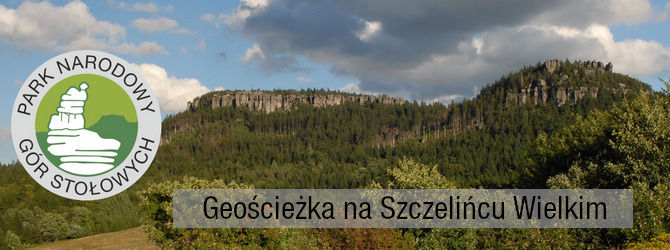
Szczeliniec Wielki to przyrodniczy i turystyczny fenomen. Widoczna z daleka, potężna platforma grzbietu tej góry czaruje skalnym miastem, zabytkowym schroniskiem, ale przede wszystkim fantastycznymi formami skalnymi i panoramami. Ze Szczelińca, we wszystkie strony świata rozpościerają się niezapomniane widoki na góry i doliny Sudetów,. To miejsce unikalne – zwiedzaj, ciesz się górami, zbieraj kesze; ale nie niszcz, nie śmieć - zachowajmy to piękno dla następnych pokoleń.
|

|
|
Dostrzegając, że stoki Szczelińca Wielkiego pokryte są ogromnym rumowiskiem skalnym powstałym na skutek ruchów masowych, a także widząc znacznie odchyloną od pionu ścianę skalną Piekiełka możemy zadać sobie pytanie czy masyw nadal podlega rozpadowi, który zagraża życiu odwiedzających? Szukając odpowiedzi już od kilkudziesięciu lat prowadzone są pomiary masowych ruchów skał. Pomiary prowadzone są w trzech miejscach w przykrawędziowych partiach płaskowyżu. Przyrządy określają, czy i jak przemieszczają się fragmenty góry. Dowiedziono, że większość ruchów ma charakter oscylacyjny i zależy w głównej mierze od sezonowych wahań opadów i temperatury.
|
|
Są jednak miejsca gdzie przemieszczenia bloków są ewidentne. W Piekle stwierdzono ruchy rzędu 1,43mm rocznie w pionie. Może to sugerować, że stoliwo Szczelińca Wielkiego jest nie całkiem stabilne. Nie jest to powód do paniki, w przyrodzie rzadko mają miejsca zjawiska katastrofalne i podobnie jest w Górach Stołowych. Jedyny przykład obrywu skalnego odnotowano w roku 1921,w Borze. To rejon Błędnych Skał. Obryw miał miejsce przy Skalnych Czaszach. Rumowisko widoczne jest na ścieżce, którą wracamy z labiryntu Błędnych Skał (na czerwonym szlaku). Fragment, który odpadł wówczas od ściany skalnej nie wyrządził nikomu krzywdy.
|
|

|
O keszu: Kesz znajduje się przy JEDNOKIERUNKOWYM szlaku trasy turystycznej! NIE ma możliwości dotarcia to kesza w sposób inny niż ścieżką turystyczną od Waypoint T1 "Początek szlaku płatnego" czyli od wejścia do labiryntu. Wejście jest płatne. Cała pętla trasy zwiedzania Szczelińca i labiryntu skalnego to ok 3,5 km.
Działaj rozważnie, by przy podejmowaniu nie narażać się na niebezpieczeństwo - NIE ma konieczności wchodzenia na skały, ani wspinania się na cokolwiek! Bacz na przechodniów aby nie "spalić" lokalizacji kesza. Na zakończenie odłóż go, proszę, dokładnie w to samo miejsce. „Niewidzialność” na najwyższym poziomie!
Na obszarze Parku Narodowego ochronie podlega całość przyrody, swoiste cechy krajobrazu oraz obiekty dziedzictwa narodowego. Zadaniem Parku Narodowego jest nie tylko ochrona tego szczególnego krajobrazu, ale również udostępnianie go dla zwiedzających. Jednak pamiętaj o pewnych zasadach:

- Poruszanie się szlakiem turystycznym jest najbezpieczniejsze dla Ciebie i dla przyrody… nie wychodź poza szlak. Ze szlaku są najpiękniejsze widoki.
- Nabierz w płuca świeżego, górskiego powietrza, nie pal papierosów.
- Skały wokół ciebie nie są dobrym materiałem do wspinania, odpuść sobie wchodzenie na nie. Tam nie ma keszy.
- Kamienie i minerały leżą tu miliony lat… zostaw je dla następnych pokoleń. Nie zbieraj i nie wydobywaj skał i minerałów.
- Jeśli keszujesz razem z psem, twój przyjaciel będzie bezpieczniejszy na smyczy.
|
|
- Przyroda żyje w symbiozie - nie niszcz i nie zbieraj roślin, owoców ani runa leśnego.
- Zwierzęta żyją tu na wolności, to ich dom. Uszanuj ich spokój, nie płosz, nie chwytaj, nie dokarmiaj zwierząt.
- Ciesz się ciszą i odgłosami natury - zachowuj się cicho, nie krzycz, nie śpiewaj, nie używaj odbiorników radiowych. Pozwól innym radować się naszymi górami, nie zakłócaj spokoju pozostałych osób.
- Co przyniosłeś – zabierz ze sobą. Śmieci zabieraj ze sobą i pozostaw w wyznaczonych miejscach przy schronisku lub wejściach na szlak.
|

|
FAREWELL WANDERER
|
Góry Stołowe (the Table Mountains) - a land born of the sea, millions of years ago ... is one of the most beautiful and attractive mountain ranges in Poland, a unique place due to its terrain, beautiful rock formations, unique “rock cities”, labyrinths and peculiar forms called rock fungi. Outstanding natural and landscape values are reasons that the National Park of the Table Mountains has been established here in 1993.
Szczeliniec Wielki is a natural and tourist phenomenon. Visible from afar, a powerful platform of the mountain ridge, it charms with a “rocky city”, a historic mountain shelter, but above all with fantastic rock formations and panoramas. From Szczeliniec there are unforgettable views of the mountains and valleys of the Sudetes, around the world. This is a unique place - visit, enjoy the mountains, collect caches; but do not destroy, do not litter - let's preserve this beauty for the next generations.
|
|
|
The slopes of Szczeliniec Wielki are covered with visible rock rubble formed as a result of mass movements, and the wall of the Hell crevice is significantly deviated from the vertical, which raises a certain anxiety. Looking at the massif of Szczeliniec Wielki, one can ask a question: is it still subject to decay and is it safe for visitors? Records of block displacements in the massif have been carried out for several decades in order to observe movements of mountain fragments and these measurements are carried out in three places in the edge regions of the plateau. As a result of these studies, it has been proven that most movements are oscillatory and depend on seasonal fluctuations in temperature and rainfall.
|
|
However, there are places where displacements of rock blocks are noticeable and in Hell movements of 1.43 mm per year were found. From this a conclusion can be drawn that the Szczeliniec Wielki rock formations are not quite stable. There’s no need to panic, however. Catastrophic events rarely occur in nature. The only recorded large scale event of this kind took place in 1921 in Czech part of the Table Mountains in a place called Bor. A single large piece of rock broke off the main formation. You can still see the debris from the red trail leading back from the Rock Labyrinth. Luckily, the fragment that fell off the rock wall did not harm anyone.
|
|
|
About the cache: The cache is hidden along the ONE WAY tourist trail! It is NOT possible to reach this cache from a different direction but from the trail starting at Waypoint T1 "The beginning of the toll road", the entrance to the labyrinth. Paid entrance at the ticket office next to the shelter. The whole loop of the Szczeliniec and the rock labyrinth trail is about 3.5 km long.
Act carefully so that you take no risks. You do not have to go on rocks or climb anything! Take care of passers-by so as not to disclose the cache location to Mugglers. Finally, put it back, in exactly the same place, please. "Invisibility" at the highest level!
The all of nature, specific landscape features and national heritage objects are protected in the area of the National Park. The task of the National Park is not only to protect this particular landscape, but also to make it available for visitors. However, you neet to remember about certain rules:
- Walking on the tourist trail is the safest for you and for nature... do not go beyond the trail. The trail has the most beautiful views. Do not take shortcuts.
- Inhale the fresh mountain air, do not smoke.
- The rocks around you are not good climbing material, let go of them. There is no cache there.
- Stones and minerals lie here for millions of years ... leave them for the next generations. Do not collect and mine rocks and minerals.
- If you're are here with your dog, your friend will be safer on a leash.
|
|
- Nature lives in symbiosis - do not destroy and do not collect plants, fruit or undergrowth.
- Animals live here in the wild, it's their home. Respect their calmness, do not frigten them, do not seize the animals, do not feed them.
- Enjoy the silence and the sounds of the nature - keep quiet, do not shout, do not sing, do not use radio receivers, do not play music. Let others enjoy the mountains, do not disturb the rest of the people.
- Whatever you brought – take it with you. Take away rubbish with you and leave in designated places near the shelter or entrances to the trail.
|
|
SBOHEM, POUTNÍKU!
|
Stolowe Hory - země, která se narodila z moře před miliony let ... je jedním z nejkrásnějších a nejatraktivnějších pohoří v Polsku, jedinečné místo díky terénu, nádherné skalní útvary, unikátní skalní města, labyrinty a zvláštní formy nazvané Skalni Houby. Vynikající přírodní a krajinné hodnoty způsobily, že od roku 1993 zde vznikl Národní Park Stolovych Hor.
Szczeliniec Wielki (Velká Hejšovina) je přírodní a turistický jev. Viditelný z dálky, masivní platforma horského hřebene, okozluji skalním městem, historickým hostelem, ale především fantastickými skalními útvary a panoramatickými vyhlidkami. Z vrcholu hory se rozprostírají nezapomenutelné pohledy na hory a údolí sudetů, po celém území. Jedná se o jedinečné místo - návštěvujte, užívájte hory, sběrajte cache; ale nezničte, nehazujte odpadky - zachovejte tuto krásu pro příští generace.
|
|
|
Svahy Hejšoviny jsou pokryty viditelnými skalními sutinami, které vznikly v důsledku pohybu hornin. Stěna Pekla se výrazně odchyluje od svislice, což může způsobit určité obavy. Při pohledu na masivu Hejšoviny se dá položit otázka: je stále ještě předmětem rozkladu a je pro návštěvníky bezpečné? Záznamy pohybu hornin v masivu byly prováděny po několik desetiletí, aby bylo možné pozorovat pohyby horských úlomků a tato měření se provádějí na třech místech v okrajových oblastech plošiny. V důsledku těchto studií bylo prokázáno, že většina pohybů je oscilační a závisí na sezónních výkyvech teploty a srážek.
|
|
Existují však místa, kde posuny skalních bloků jsou viditelné. V Pekle byly měřeny pohyby 1,43 mm za rok. Z toho lze konstatovat, že skalní útvary Hejšoviny nejsou zcela stabilní. Není však třeba paniky. Katastrofické události se v přírodě vyskytují zřídka. Jediný zaznamenany takový případ proběhl v roce 1921 v české části Stolových Hor na Boru. Jeden velký kus skály se oddělil od hlavního útvaru. Obrovské balvany stále můžete vidět z červené stezky vedoucí zpět ze Skalniho Labyrintu. Naštěstí fragment, který spadl ze skalní stěny, nikomu neškodil.
|
|
|
O kešce: Keš se nachází vedle turistické stezky – je jednosměrná! Tuto keš NENÍ možné dosáhnout jiným způsobem než turistická trasa z Waypoint T1 "Začátek placene cesty " nebo od vchodu do labyrintu. Vstup je zpoplatněn. Cely okruh prohlídky Hejšoviny a skalního labyrintu je asi 3,5 km.
Buďte opatrní, abyste pri odlovu nemuseli vylézt na kameny nebo lézt na cokoliv! Počínajte si nenápadně, abychom nebudili zbytečnou pozornost. Dávejte pozor na to, aby se keš vyhýbala zmudlování. Nakonec prosim, vracejte schranku a maskování na puvodni misto. Při odlovu je nutná maximalni opatrnost!
V oblasti Národního Parku celá příroda, specifické krajinné prvky a objekty národního dědictví jsou chráněny. Úkolem Národního parku je nejen chránit tuto krajinu, ale také ji zpřístupnit návštěvníkům. Nezapomeňte však na některé pravidla:
- Cestování po turistické stezce je nejbezpečnější pro vás a pro přírodu ... Nenechávejte označenou stezku. Z turisticke cesty jsou nejkrásnější pohledy.
- Dejte si čerstvý horský vzduch, nekuřte.
- Skály kolem vás nejsou dobrým místem k lezení, nechodíte na ně. Není zde žádná keška
- Kameny a minerály leží zde milióny let ... nechávají je pro příští generace. Nesbírejte skály a minerály.
- Pokud jdete se svým psem, váš přítel bude bezpečnější na vodítku.
|
|
- Příroda žije v symbióze - nezničte a nesbírajte rostliny, ovoce ani podrost.
- Zvířata žijí tady ve volné přírodě, je to jejich domov. Respektujte jejich klid, nebojte se, nezachycujte zvířata a ne krmte.
- Užijte si ticho a zvuky přírody - udržujte klid, neříkejte, nepějte, nepoužívejte rádiové přijímače. Nechte ostatní užívat naše hory, nerušíte klid ostatních turistů.
- Co jste přinesli - vezměte si s sebou. Odveďte s sebou odpadky a nechte na určených místech v blízkosti turisticke chaty nebo vjezdu do stezky.
|
|
AUF WIEDERSEHEN, WANDERER
|
Die Góry Stołowe (= „Tafelberge”, dt. Heuscheuergebirge) – vor Millionen von Jahren vom Meer geformt, gehören sie zu den schönsten und attraktivsten Gebirgszügen Polens. Sie besitzen eine Vielzahl einzigartiger Felsformationen, Felsenstädte, Labyrinthe und Pilzfelsen. Kein Wunder also, dass sie seit 1993 als Nationalpark (poln. Park Narodowy Gór Stołowych) unter besonderem Schutz stehen.
Der Szczeliniec Wielki (dt. Große Heuscheuer) ist ein Naturphänomen. Der von weitem sichtbare gewaltige Tafelberg verzaubert durch ein Felsenlabyrinth, eine historische Schutzhütte, vor allem aber durch phantastische Felsformationen und Panoramen. Von hier hat man einen unvergleichlichen Ausblick auf die Berge und Täler der Sudeten, und das in alle Himmelsrichtungen. Besucht diesen einzigartigen Ort, freut Euch an den Bergen, sammelt dabei ein paar Caches; hinterlasst aber bitte nichts zerstört oder vermüllt – bewahren wir das Schöne für kommende Generationen.
|
|
|
Die Hänge des Szczeliniec Wielki sind infolge von Hangrutschungen mit gewaltigen Gesteinshalden bedeckt. Es stellt sich die Frage, ob das Gebirge weiter von Erosion bedroht ist, und ob dies für Besucher eine Gefahr darstellt. Um diese Frage zu beantworten, wird die Verlagerung der Felsblöcke im Heuscheuergebirge schon seit Jahrzehnten aufgezeichnet. Messungen hierzu werden an drei Stellen nahe der Kante des Felsplateaus durchgeführt. Messgeräte registrieren, ob und wie sich die Fragmente des Berges bewegen.
|
|
Man fand heraus, dass der Fels periodischen Schwingungen unterliegt, deren Ursache hauptsächlich jahreszeitliche Temperatur- und Niederschlagsschwankungen sind. Es gibt allerdings auch Bereiche, wo eine deutliche Verlagerung von Blöcken (bis zu 1,43 mm/Jahr) stattfindet. Dies könnte darauf hindeuten, dass der Tafelberg nicht ganz stabil ist. Grund zur Panik besteht allerdings nicht. In der Natur sind Katastrophen eher selten, und so ist es auch im Heuscheuergebirge. Die einzige registrierte Hangrutschung gab es 1921 im tschechischen Teil des Gebirges. Verletzt wurde damals niemand.
|
|
|
Der Cache befindet sich an einem NUR IN EINE RICHTUNG BEGEHBAREN Wanderweg. Es gibt KEINEN anderen Zugang zum Cache als über diesen Weg von Waypoint 1, d.h. vom Eingang zum Labyrinth. Der Eintritt ist kostenpflichtig. Die Wegstrecke (Szczeliniec Wielki + Labyrinth) beträgt ca. 3,5 km.
Handelt verantwortlich und begebt Euch nicht in Gefahr – es besteht KEIN Anlass, auf Felsen oder sonstiges zu klettern! Achtet bitte darauf, das Versteck nicht zu verraten und legt den Cache bitte genau wieder so zurück, wie Ihr ihn gefunden habt. „Stealth Mode“ wird vorausgesetzt!
Auf dem Gebiet des Nationalparks sind Natur, Landschaft und Objekte nationalen Erbes in ihrer Gesamtheit geschützt. Zu den Aufgaben des Nationalparks gehört dem Schutz der Landschaft auch deren Bereitstellung für Besucher. Beachtet dabei bitte einige Regeln:
- Das Wandern auf markierten Wegen ist am besten für Euch und die Natur... verlasst sie deshalb nicht. Vom Weg aus hat man die schönsten Ausblicke.
- Atmet die frische Bergluft ein, raucht nicht.
- Die Felsen ringsum sind kein geeigneter Platz zum Klettern. Verzichtet also darauf, Caches findet Ihr dort keine.
- Steine und Mineralien liegen hier seit Jahrmillionen... nehmt sie bitte nicht mit, sondern lasst sie für die kommenden Generationen liegen.
- Cachen mit Hund? Klar, aber am besten an der Leine.
|
|
- Die Natur lebt in Symbiose – zerstört / pflückt keine Pflanzen, Früchte oder Bodendecker.
- Die Tiere leben hier in Freiheit, in ihrem Zuhause. Lasst ihnen Ihre Ruhe, scheucht sie nicht auf, fangt und füttert sie nicht.
- Genießt die Ruhe und die Stimmen der Natur – verhaltet Euch ruhig, schreit oder singt nicht und benutzt keine Radios oder ähnliches. Respektiert auch die Ruhe der anderen Besucher.
- Nehmt mit, was Ihr mitgebracht habt. Werft Euren Müll in die dafür vorgesehenen Behälter an der Schutzhütte oder am Beginn des Wanderwegs.
|