The site is part of the former Fitz Roy Iron Works; the first iron works in Australia, which operated between 1848 to the 1890’s. In order to log this Earthcache you must visit the posted coordinates, read the following information, then answers the questions below.

History of Iron Ore in Mittagong
A deposit of ‘bog iron’ had been discovered in 1833 quite by accident during excavations for the Great Southern Road through the district to Berrima and beyond. The deposit became widely known and by 1841 a bridge over a nearby creek was called the Ironstone Bridge.
No move was made to exploit the ironstone until 1848 when four ambitious men - John Thomas Neale, Thomas Holmes, Thomas and William Tipple Smith - formed a syndicate, purchased 300 acres of surrounding bush land and set about extracting the ore. The local mine was referred to as the Fitz Roy Iron Mine, in honour of the then Governor of NSW, Sir Charles Fitz Roy, who visited the area in early 1849.
Geology
Iron (Fe) is a metallic element that constitutes about 5.6% by weight of the Earth's crust and is the fourth most abundant element in the crust.

Iron ore is found in sedimentary rocks that formed over 1.8 billion years ago. They formed from chemical reactions that combined iron and oxygen in marine and fresh waters. It is a mineral substance which, when heated, will yield metallic iron and almost always consists of iron oxides.
Bog iron is a form of impure iron deposit that develops in bogs or swamps by the chemical or biochemical oxidation of iron. Deposits can ‘regrow’ within 20 years after harvesting. Bog ore consists primarily of iron oxyhydroxides, commonly goethite (FeO(OH)). Bog ore often combines goethite, limonite, magnetite, vugs, quartz or clay. Bacterial action contributes to formation of the ore.

Iron Oxide Minerals are primarily magnetite and hematite. They can vary in colour from dark grey, bright yellow, or deep purple to rusty red. Iron ore is the raw material used to make pig iron, which is one of the main raw materials to make steel - 98% of mined iron ore is used to make steel.
Magnetite is an iron oxide mineral that is generally black in colour and highly magnetic. Magnetite contains 72.4% iron, which is higher than hematite, but the presence of impurities usually results in magnetite ores having lower ore grade (generally 20-30% Fe).
Hematite is an iron oxide mineral. It is non-magnetic and has colour variations ranging from steel silver to reddish brown. Pure hematite contains 69.9% Fe.
To claim this cache:
- Visit the posted coordinates you will find five samples of iron ore. Describe one of the deposits. Include information about:
Grain size
Colour
Texture
Any other interesting features in the rock
- Use a magnet to determine whether these deposits of iron ore are magnetite or hematite. Report your findings.
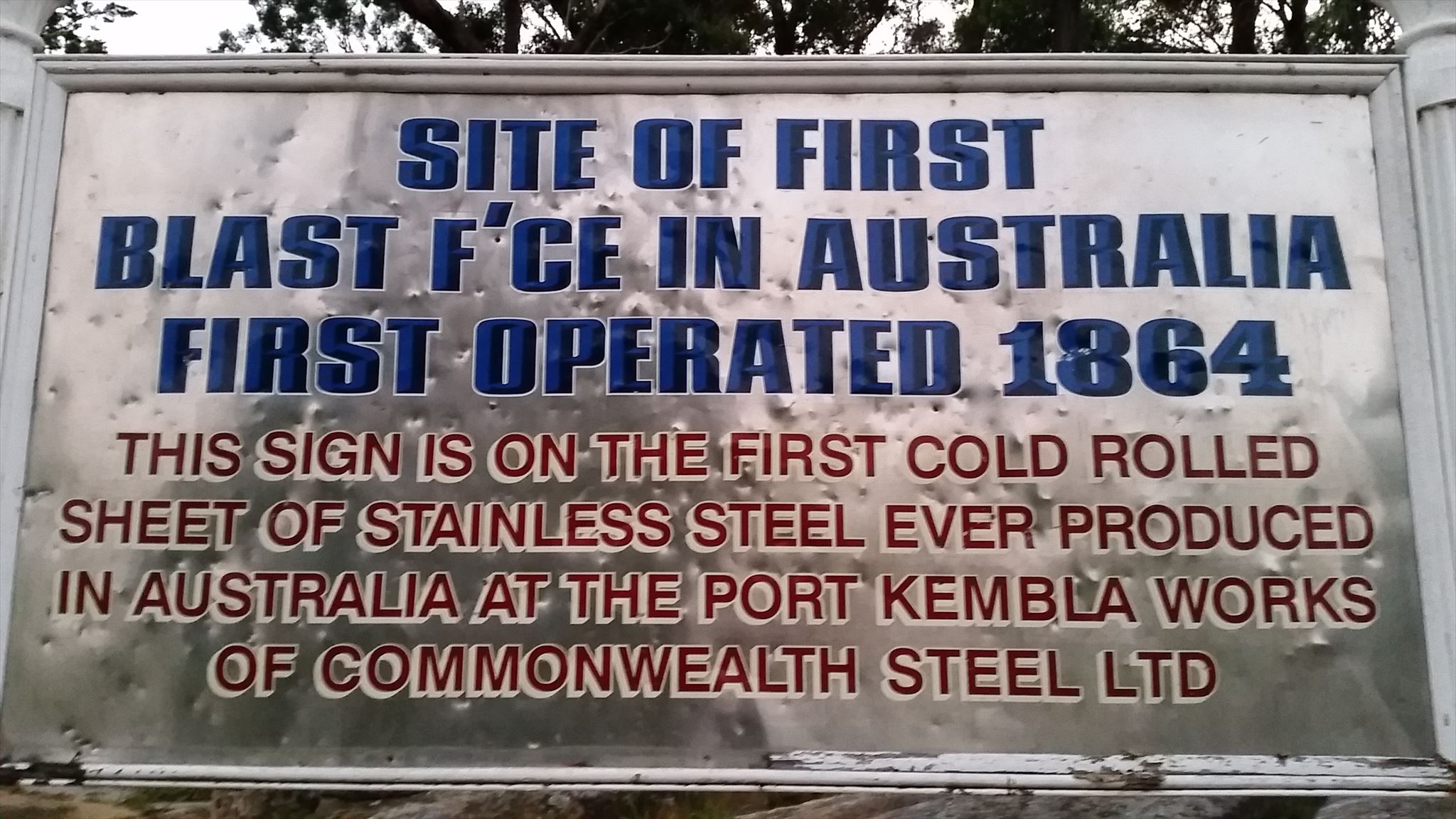
- (Optional) Include a photo of yourself with the first cold rolled sheet of stainless steel ever produced in Australia (that’s the sign pictured above).
Please send your answers to me via the geocaching website - e-mail or message. The answers to these questions should not be included in your log, nor should your log include spoiler photos. You do not need to wait for a reply from me to log your find.
References
Encyclopaedia Britannica. (2016). Bog Iron Ore. Retrieved from https://www.britannica.com/science/bog-iron-ore
Fitzroy Iron Works, Mittagong, NSW, Australia: Archaeological Investigation and Advice, 2005-2006
Geoscience Australia. (2016). Mineral Resources: Iron Ore. Retrieved from http://www.ga.gov.au/scientific-topics/minerals-archive/mineral-resources/iron-ore
Morton, P. (2014). Highlands History: Australia’s first ironworks operated at Mittagong from 1848. Retrieved from https://www.southernhighlandnews.com.au/story/2429124/highlands-history-australias-first-ironworks-operated-at-mittagong-from-1848
Robb, L. (2005). Introduction to Ore-Forming Processes. Blackwell Science Ltd. Retrieved from https://www.sandatlas.org/bog-iron/