This is a 5 stage Wherigo taking you through a gruesome history of imprisonment and torture in Durham - You'll have to get out of jail, avoid punishment and execution by answering 3-4 questions at relevent locations to get the final coordinates for the cache!
The total walk is less than a mile and should take approximately an hour to complete.
*For most of the questions you will need to look at the relevent sections on the cache page below*
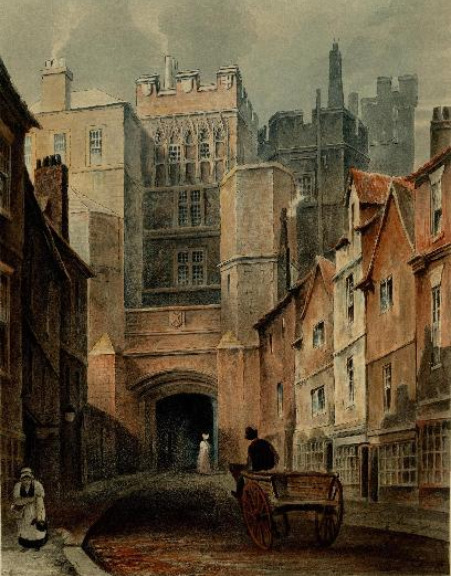
Northgate and Old Durham Gaol circa 1750
Wherigo Information
Click here for link to the Wherigo cartridge's page
If you have not done a Wherigo cache before then don't be afraid to give it a go!....to get started you only need either a compatible GPS or a smartphone with a wherigo app installed.The Wherigo app is easy to download to your phone just like any other app. Once you have downloaded your wherigo app and logged in using your usual geocaching username and password then you just need to find this cache page. You could search for it by its title or GC number.You will then need to download the cartridge and will be given a drop down box to which you will probably choose 'Pocket PC Device'. You'll then be ready to go!
18th Century Durham Prison Life
Some prisons, including Durham, were truly horrible places! Indeed, for some criminals execution might have seemed preferable.
Prisoners were kept herded into awful cells with no heating, no bedding and no sanitation (running water and toilet facilities). It didn't matter what the criminal had done or whether they were awaiting trial. Everyone was treated the same! It was hard in jail. Possessions were stolen from new arrivals, inmates fought each other, it was a life where the strongest ruled.
There tended to be little air, poor ventilation and there was nothing to do. Prisoners were regularly chained together, reducing the need for warders and making a saving for the private organisations that ran the prisons. Prisons were not run by the government but by private organisations for profit. The prisoners had to pay the wardens for their food and you even had to pay to be released! This practice was not outlawed until 1774.
There was also no segregation between women and men in early prisons and some women tried to get pregnant so that they could 'plead the belly.' This meant that if found guilty, she would be transported rather than executed.
Stage 1 Information - Durham County Gaol
The County Gaol was owned by the Bishop of Durham and was rebuilt in Saddler Street in the early 15th century. It was enlarged in 1773 but was still very cramped. It was visited by a number of concerned individuals over time. This included John Howard, the leading prison reform campaigner, who made repeated visits because he was convinced that the gaoler was trying to cover up the bad conditions that prisoners lived in. Another reformer, James Neild, published his findings in the Gentleman's Magazine of 1805. As well as witnessing the primitive conditions of Durham Gaol, Neild also recounted how his visit nearly cost him his life. He had nearly fallen down a deep shaft whilst exploring a dungeon and he was only saved when his coat caught on a nail. Needless to say, Neild was not impressed by his experience! Durham Gaol was also visited by Joseph Gurney and Elizabeth Fry as part of their tour of prisons of England and Scotland.
Extract of Durham Gaol convictions and punishments , 1786
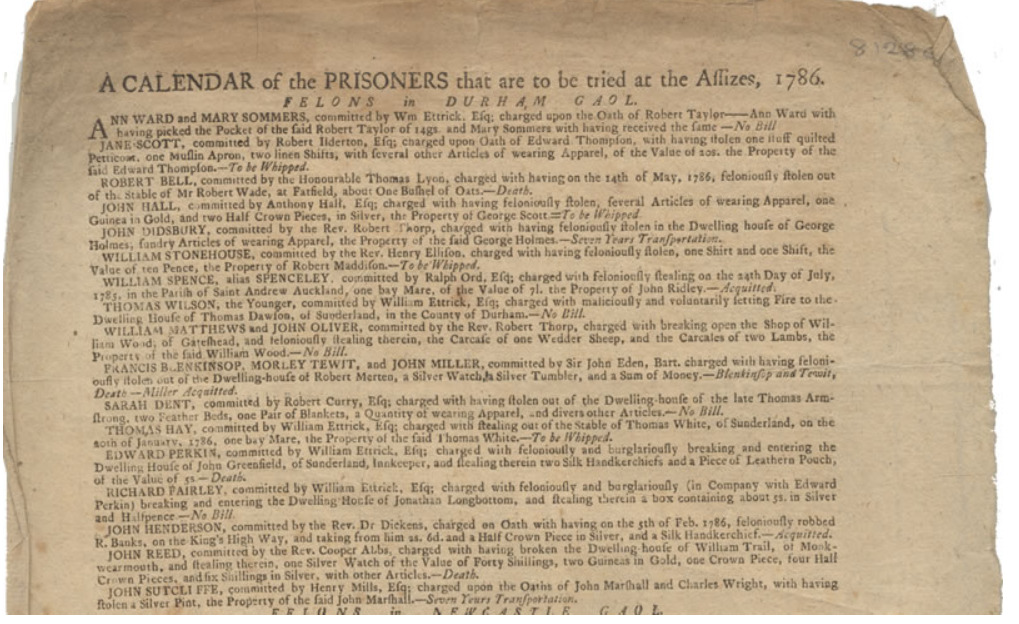
What was it like to be a prisoner here in Durham?
In a word, awful! Before the 1823 Gaol Act, the warder had to pay for the right to run the gaol and made his money back by charging prisoners for their food, drink and 'other services' he provided. These services included releasing prisoners, providing straw for bedding and even providing drinking water! Durham Gaol also had a licence that allowed one of the warders, Bainbridge Watson, to sell alcohol and part of the gaol was used like a pub!
None of the prisoners had an easy time. In 1776 the felons were given rations of 1 pound of bread per day and nothing else. Debtors ate water soup, which was bread boiled in water, and whatever foodstuffs had given from well-meaning people making charitable donations. So bad were the conditions endured by debtors that they even appealed to Parliament for better food and clothing saying they wore rags and had nothing to eat.
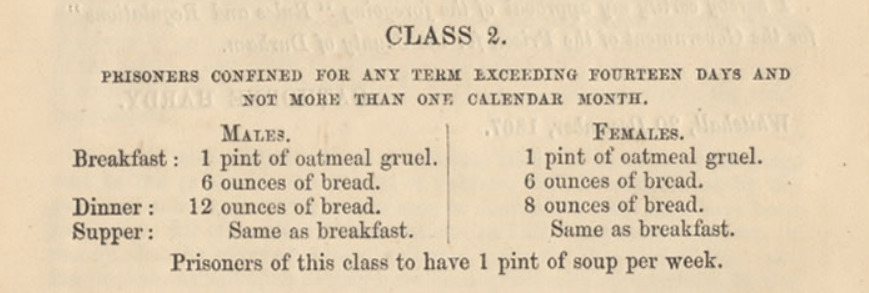
Male and female prisoners were separated but conditions were no better for either sex. At night the felons were put into 5 cells deep in underground dungeons that were badly lit and ventilated by the few holes in the ceiling. These were described by Neild as the 'worst cells in the country." Women also both lived and slept in the same room in foul conditions.
The smell would have been foul as there was no sewer and the rubbish and waste wasn't removed very often. Cells were overcrowded and the felons lay on beds of straw and some mats infested with bugs and insects. Rats would have been a common sight, the filth encouraging their successful breeding. It was a place where the strong bullied the weak and any new inmate could expect to have their few possessions stolen and sold on for food and water. There was usually nothing for the inmates to do except swap stories of their great exploits and plot future crimes and escape plans. In his inspection of 1803, Neild did find prisoners spinning, picking oakum and beating flax but later inspections by Gurney found no evidence of such work being given to prisoners. The gaol was just too small to have space where the inmates could work.
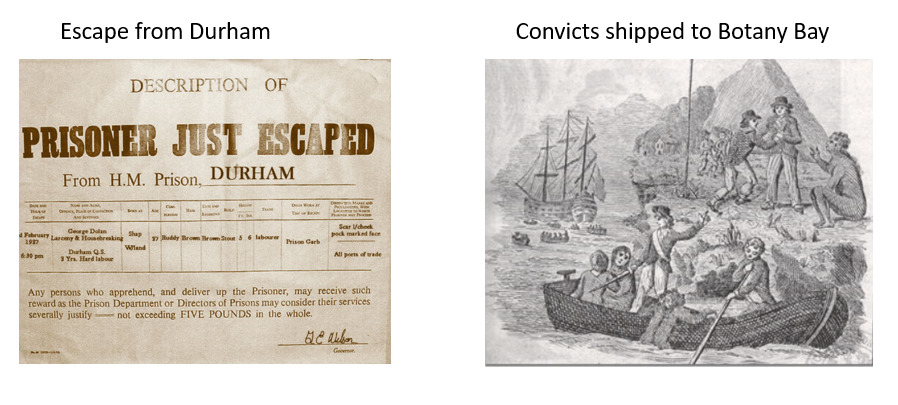
The foul conditions meant that there were frequent attempts to escape but if caught, prisoners faced being clamped in irons - as did those who knew anything (or even nothing) about the escape attempts. When Howard visited he found men who had been chained to the floor for many weeks, which had 'twisted their bodies cruelly and caused great pain' to them. Even worse, in 1818 Gurney found every prisoner in irons because of an escape attempt on the previous day. Gaolers were penalised if anyone escaped plus they were able to extort more money from the felons for removing the irons. Only with the introduction of paid gaolers and the campaign for prison reform did the situation start to improve.
Stage 2 Information - House of Correction (the Bridewell)
Durham County House of Correction (the Bridewell) was no better. Built in 1634 on the north side of Elvet Bridge it was originally set up to help reform idle vagrants by providing work and accommodation in a place of punishment but it soon started to serve as a common prison for felons just like the County Gaol. There wasn't much difference between the two and there were times when they were both run by the same people. Described by Nield as being 'fitter for the reception of coals than for any human being' conditions here were just as bad as at the County Gaol, although there were rooms for people to work and anything the prisoners earned could be kept to pay for food and drink. It too was home to a variety of debtors, felons, transportees, men being forced to join the army or navy instead of being executed, those awaiting execution and a collection of lunatics and vagrants who couldn't be put anywhere else.
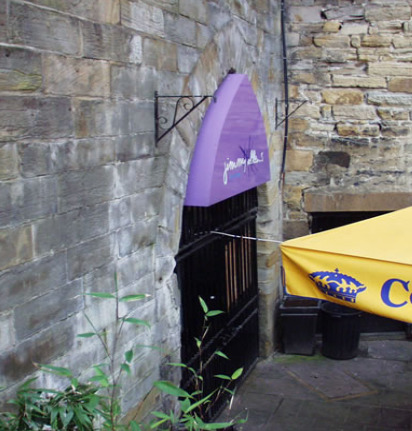
Jimmy Allen
Jimmy Allen was the most famous inmate and the pub has been named after him. Jimmy Allen was a professional musician, a piper, of the highest quality. In his youth he played before kings and nobility but his high spirits caused him lots of trouble. At the age of 70 he was convicted of stealing a horse, a hanging offence, but his sentence was commuted to imprisonment. He wrote several letters to the king during his seven years in the dungeon asking for a pardon, and ironically it arrived a few days after his death. Traditionally it is said that his ghost still plays the pipes in the pub but the current staff have never heard it.
Originally there was a tunnel connecting the House of Correction to a condemned cell in the Town Hall. If you ask the Town Hall staff nicely they will even show the door of the cell to you. A brick wall was built to divide the condemned cell in two and an entrance made leading into the smaller of the two Indoor Marketplace entrances. This was used as a ladies toilet until the 1980’s (the gents was underneath the horse statue in the marketplace) when it was converted into a shop and is now used as a tattoo shop.
The tunnel was plastered out and used as a bomb shelter during the Second World War. In the mid 1970’s the tunnel collapsed in the middle and is now mostly blocked up but the ends are still accessible from both Jimmy Allens and the tattoo shop. It is still possible to look into the dungeons from the remnants of the tunnel. They appear to be used to store furniture.
Stage 3 Information - The Crown Court
From 1816 in Durham, hangings were carried out at the front of the Crown Court with crowds of people coming from far and wide to watch. Some well-off members of the public even hired the balconies of local houses and the Dun Cow pub to get a better view!
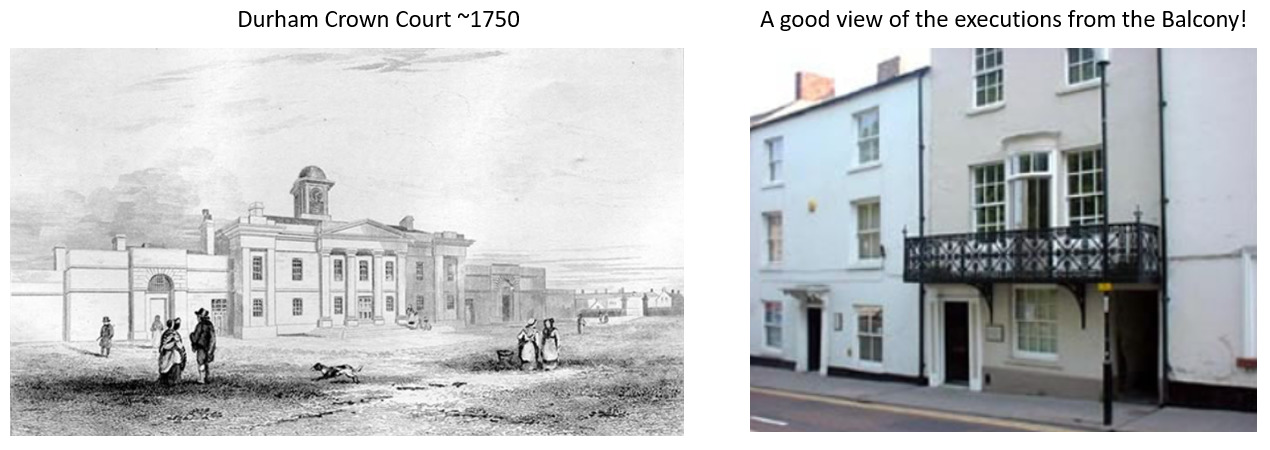
The Bloody Code
The 'Bloody Code' was the name given to the English legal system from the late 17th century to the early 19th century.
It was known as the 'Bloody Code' because of the huge numbers of crimes for which the death penalty could be imposed. If you look at the statute books for the 18th century it would seem as if every crime was punishable by death, even those which we would consider to be very minor or trivial today.
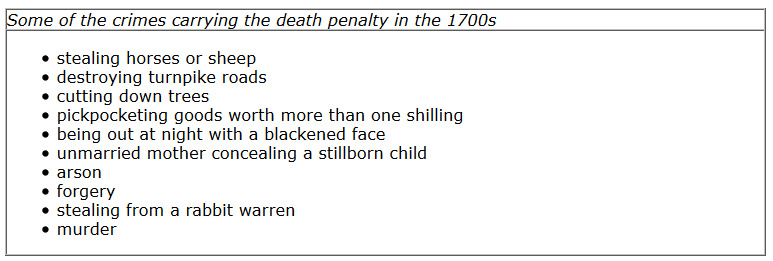
Despite the prevalence of the 'Bloody Code', not everyone found guilty of crime was executed! Other punishments also existed. In medieval times, criminals could be branded (burning a mark onto the skin), or mutilated (chopping off a limb such as an arm or a leg). The guilty could also be publicly whipped or humilated in the pillory or stocks.
Even those sentenced to death might not be executed. Criminals were often given the chance to avoid death by joining the Army or the Navy or to be transported to the colonies in America and Canada, and later Australia. In fact, transportation became a very popular mode of punishment. It has been estimated that over one-third of all criminals convicted between 1788 and 1867 were transported to Australia and Van Diemen's Land (now Tasmania).
It is fair to say that the 'Bloody Code' did not work very well. Trials for serious offences sometimes lasted only a few minutes, there was often no chance for the defence to present their case and, to the modern eye, it seems like it was a lottery whether the accused would be found innocent or guilty. As always, it was easier if you were rich. You could afford proper legal representation and persuade the wealthy and famous to act as character witnesses for you.
However, the main problem with the 'Bloody Code' was that juries were often unwilling to find the accused guilty knowing that the punishment was execution. Indeed, so desperate were some judges to secure results that they deliberately under-valued stolen goods so that the accused would no longer face the death penalty. Evidence suggests that despite the 'Bloody Code' fewer people were hanged in the 18th century than previously. It has been estimated that around 200 hangings took place each year in England and Wales at this time.
Stage 4 Information - Durham Prison
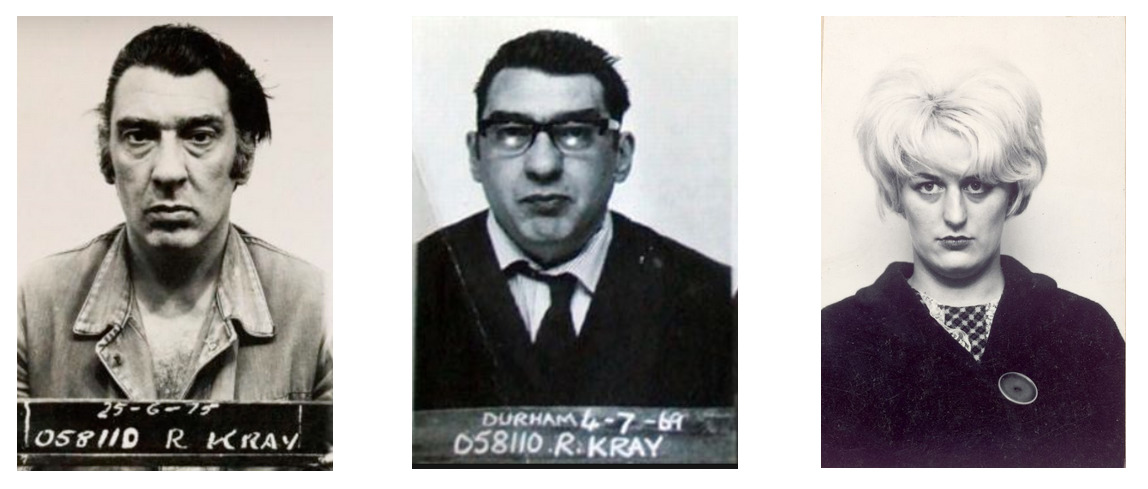
Durham Prison is one of the most famous in the country. It has been the home of some of Britain's most infamous criminals over the years, including Rose West, Myra Hindley, the Kray twins, John McVicar and Frankie Fraser. It is also the resting place of a number of men and women executed and buried in its grounds. Durham has had a number of prisons built within the city walls over the years and the current prison is one of the city's best known landmarks.
The new prison was founded with £2000 paid by Bishop Barrington Shute of Durham who wanted to be rid of the existing gaol which he felt was a traffic hazard. In 1808 Sir George Wood had commented on the poor state of the House of Correction and County Gaol and so moves were made to build a new prison to replace these. With great ceremony the construction of the current prison began on 31st July 1809 when the foundation stone was laid by Sir Henry Vane Tempest.
Large crowds attended to see the Bishop place gold, silver and copper coins of the time into the foundations, bands played and soldiers from the Durham volunteers fired a volley of shots with their rifles to celebrate the occasion but because of problems in its construction, no prisoners were transferred to the new prison until 1819. Indeed, the first architect, Francis Sandys, was jailed for theft of money in building the prison, the plans were heavily criticised and some parts even had to be pulled down and rebuilt.
When it finally opened the new prison had 600 cells and was able to replace both the old House of Correction and the County Gaol. Some prisoners have claimed that the new prison is haunted - saying they have seen something in a cell where one inmate was allegedly stabbed to death by another.
The prison operated a series of punishments for various misdemeanours. This included fettering in irons, flogging, birching, the treadmill and close confinement. The treadmill was introduced as a punishment when a prisoner had severely brokem the prison rules. They were expected to turn the treadmill by walking on it. Each turn was counted and 500 turns was considered a good day's effort. However, as the prisoner became accustomed to the treadmill it became easier for the prisoner to turn so a special screw was introduced which the prison turnkeys could use to adjust the pressure and make it more difficult to turn. This is why prison officers are still known to this day as 'screws'.
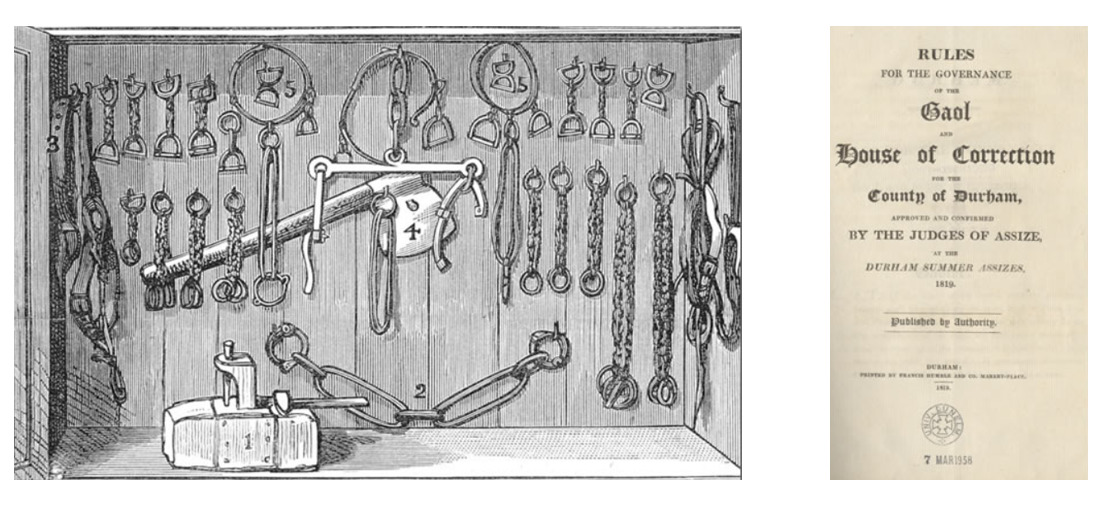
The new prison needed new rules which reflected the changes in attitude to punishment and criminals. After 1819 male and female prisoners were kept apart, as were debtors and felons. Rules forbade drinking, bad language, disobedience, quarrelling and indecency. All prisoners were to be put to work with some being paid for their work when they were discharged. The prisoners were classified and separated according to the crimes they had committed and work was expected to help in reforming the character of these people. Short term offenders had to take away rubbish, level ground, extend gardens whilst longer term prisoners had to pick oakum, work in the workshops etc. Considerable efforts were made to find suitable work for every prisoner but bad weather sometimes made this difficult. In 1820 Visiting Justices were appointed to inspect the prison 3 times every quarter of the year to ensure that standards were acceptable.
Stage 5 Information - The Final
Simply walk a very short way to pick up the final cache!