A Rare Find- Fossils in Queenston Shale
Stone Piers, at Oakville Athletic Park
Bronte Historical Society volunteer Betty Strong provided the following written information on the Bronte Athletic Field:
The Bronte Baseball Team, from 1910-1915, drew such a great interest that a chartered company was formed to secure grounds for a permanent ball park. In 1927, a 7-acre site on Lakeshore Hwy., east of Bronte Village was purchased; this area was named Bronte Athletic Field. Bronte Athletic Association members reached into their own pockets and bought shares to create the sports field. They bought the farmland from William Henry Sargant. It is thought that Major Osler, who had an estate about where Shell Park now stands, may have helped financially. He had a reputation for supporting community activities, sports in particular.
The property was graded, and rolled and a fine stone gateway was erected. A grandstand, changing rooms and booths underneath were provided. The stone pillars are on the Lakeshore Rd. edge of the field – there was an arch between them, made by local blacksmith Bill Johnston. It spelled out “Bronte Athletic Field” in recycled iron wagon wheel rims. This arch was in place as late as 1977. For many years prior to WW 2, Bronte was a strong Baseball power.
As of WW 2, interest in the Bronte Baseball Team waned and the organization folded. The Team surrendered their Charter to Trafalgar Township, which took over the property for a permanent park ground. In the 1960’s, this baseball diamond was described as undersized, not turf covered and used chiefly for Little League and pickup games; this area was part of “Bronte Athletic Field – Town of Oakville”.
Bronte Athletic Field recently underwent major upgrade and now provides newer Athletic facilities. The only remaining resources associated with the early establishment of the field are the two square piers on the north side of Lakeshore West. They no longer include an arch, no longer mark an entrance or pathway into the park, and are surrounded by very modern landscaping. There is nothing at the site to indicate their origin or nature.
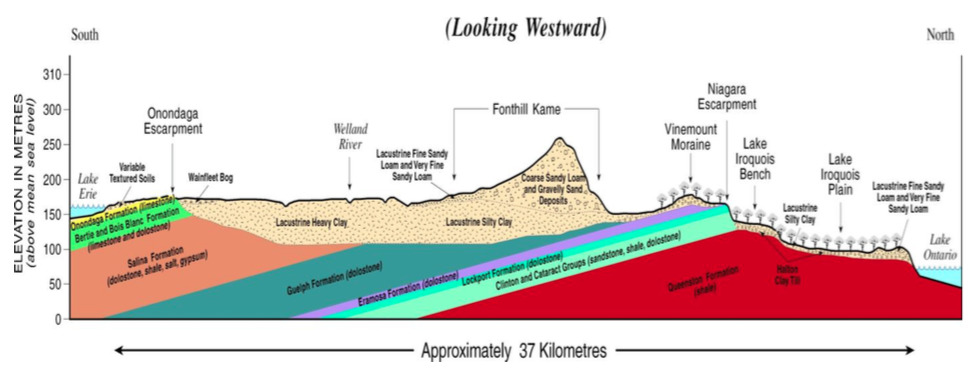
The Queenstion (Shale) Formation
The Queenstion Formation is wedge-shaped, thick (up to 300 metres (980 ft) below Lake Erie). The formation is the topmost Ordovician layer in Southern Ontario.
Rock Beds (Strata)
Beds are the layers of sedimentary rocks that are distinctly different from overlying and underlying beds of other sedimentary rocks. Layers of beds are called stratigraphy or strata. They are formed from sedimentary rocks being deposited on the Earth's solid surface over a long periods of time. Beds can be differentiated in various ways, including rock or mineral type and particle size.
Fossils
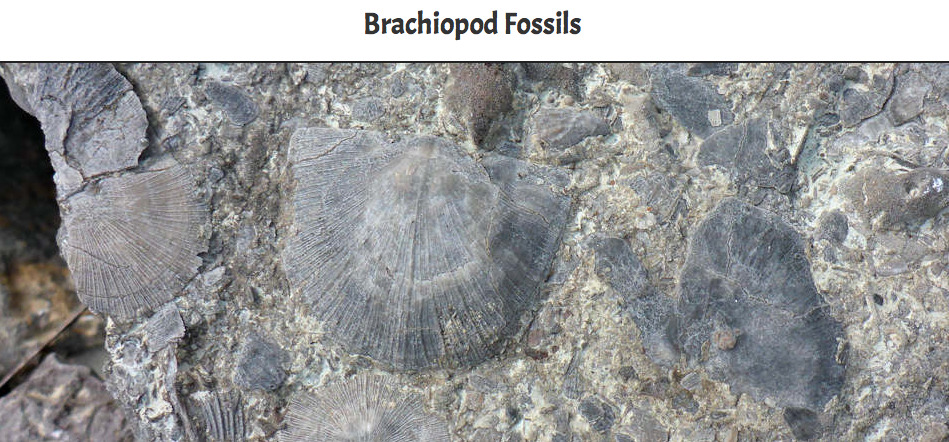
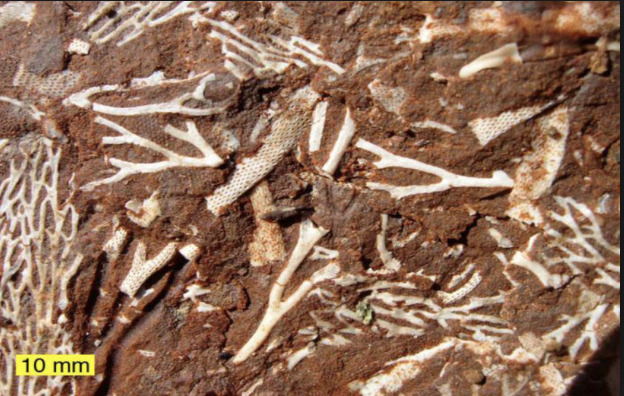
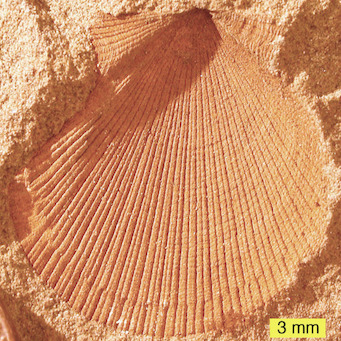
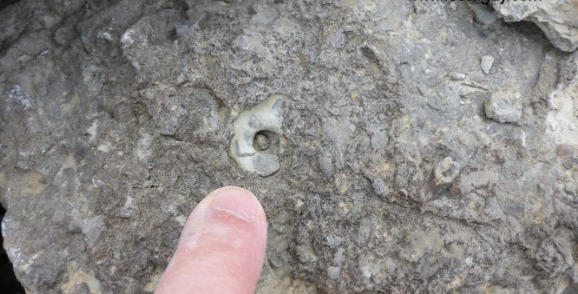
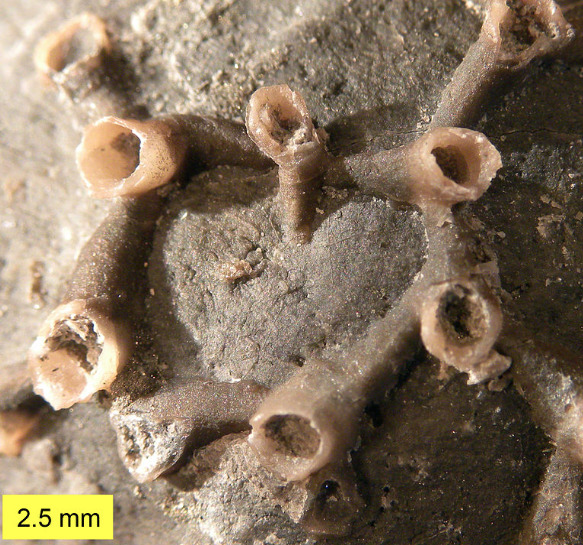
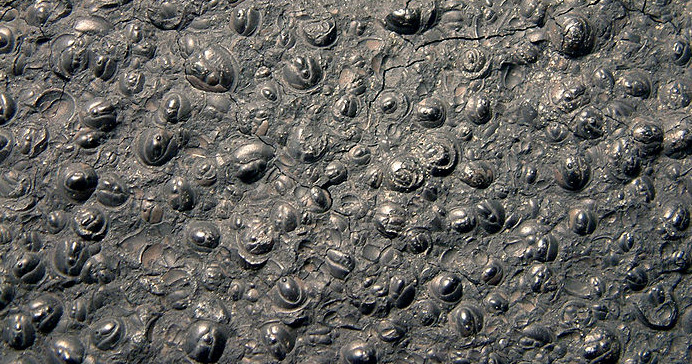
The Queenston formation has no fossils in the uppermost shaley layers and has very few fossil throughout other parts, which makes this location very unique. Here, in the bioclastic beds of the Queenston Shale, the keen eye will likely be able to spot brachiopods, bryozoans, ostracodes, pelecypods, gastropods, tabulate corals, and trilobites. Look closely!
Brachiopod Fossils
Bryozoan Fossils
Ostracode Fossils
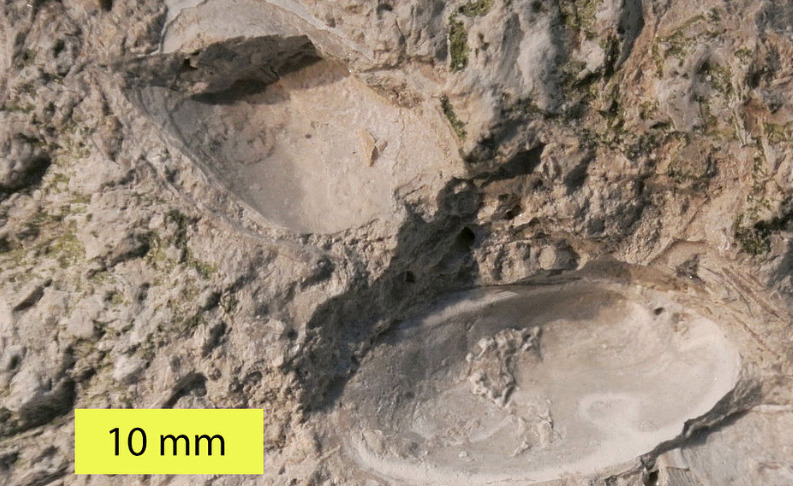
Pelecypod Fossils
Gastropod Fossils
Tabulate Coral Fossils
Trilobite Fossils
Before Claiming a find on this EarthCache, please send your answers to the following question to the CO at the top of the page:
Logging Requirements
1) The Queenston Formation is devoid of fossils in the uppermost layers. Using the image on the page, showing the various rock layers between Lake Erie and Lake Ontario, hypothesize why the shale stones in these piers contain fossils.
2) Find a single rock on one of the stone piers, that has 3 distinctive strata (layers), and describe the appearance of each, including the colour, arrangement of materials as well as particle size in each layer.
3) Fossils - Take a close look at the fossilized layers of the Shale in these piers. Look closely, all the fossils identified above may be found in the shale layers of rocks in these piers. What fossils can you find, and which ones are the most common.
4) (Optional) Photos are always welcome, of GZ, your finds or anything else near GZ. We can all learn from your experience.
Most important, have fun visiting GZ, and do your very best to learn about the stones used in the construction of these 2 piers at the former entrance to the park.
When visiting GZ, I saw something cool, asked questions, did a bit of research, and some hypothesizing myself. Your answers may not be exactly the same as mine, but the important part is that you learn something new. Happy EarthCaching!