
W ovvero "Veronesi & Veronesità", una serie di cache che, dedicata a personaggi, luoghi e tradizioni più o meno noti, si propone di farli conoscere o riscoprire attraverso un "Geo-itinerario" che, non so ancora bene dove mi/ci porterà, ma vuole essere una dichiarazione d'Amore per Verona, la mia città, il suo territorio e le persone che, ciascuno a proprio modo, l'hanno “celebrata” con la propria vita prima ancora che con le loro gesta, piccole o grandi che siano.
W3 - Papà del Gnoco e el Bacanàl
Nato nello storico quartiere di San Zeno, il Papà del Gnoco è la principale maschera del Carnevale di Verona, il sire intorno al quale si svolgono grandiosi festeggiamenti partecipati dall'intera città, con una maschera tradizionale proveniente da quasi ogni quartiere o rione cittadino.
Il nome deriva da papus, ovvero mangiare ed in quanto re ha per scettro una grande forchetta dorata con infilzato uno gnocco di patate; viene rappresentato come un uomo anziano, rubicondo e bonario, con una lunga barba bianca, vestito di broccato color nocciola e mantello rosso, con sul capo il Carroccio, una tuba pentagonale che raffigura il gazebo allestito in Piazza San Zeno per la distribuzione degli gnocchi durante la carestia, dalla quale pendono tintinnanti sonagli e fettucce in raso di diversi colori che simboleggiano i quartieri in cui era suddivisa la Verona medievale... insomma, una sorta di Babbo Natale ante litteram con un mulo al posto delle renne.
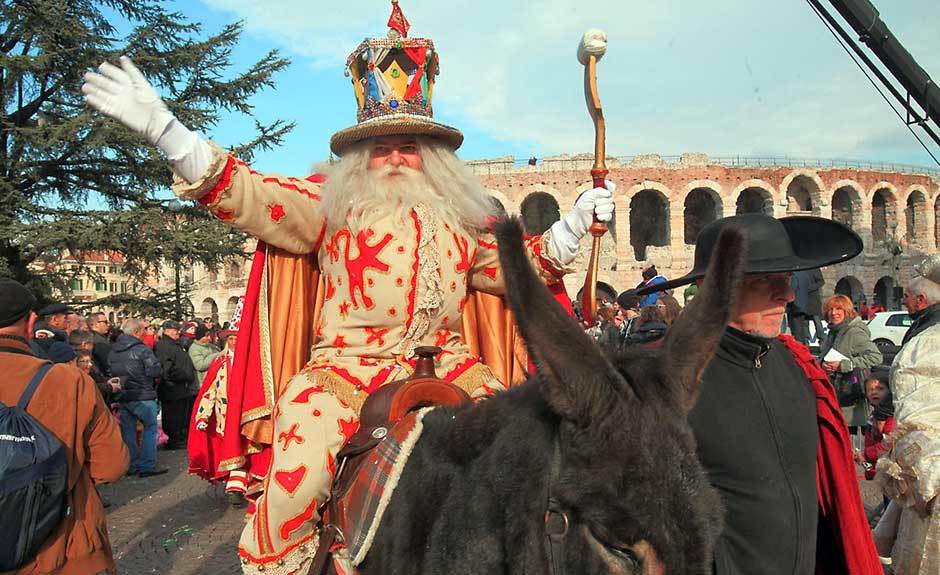
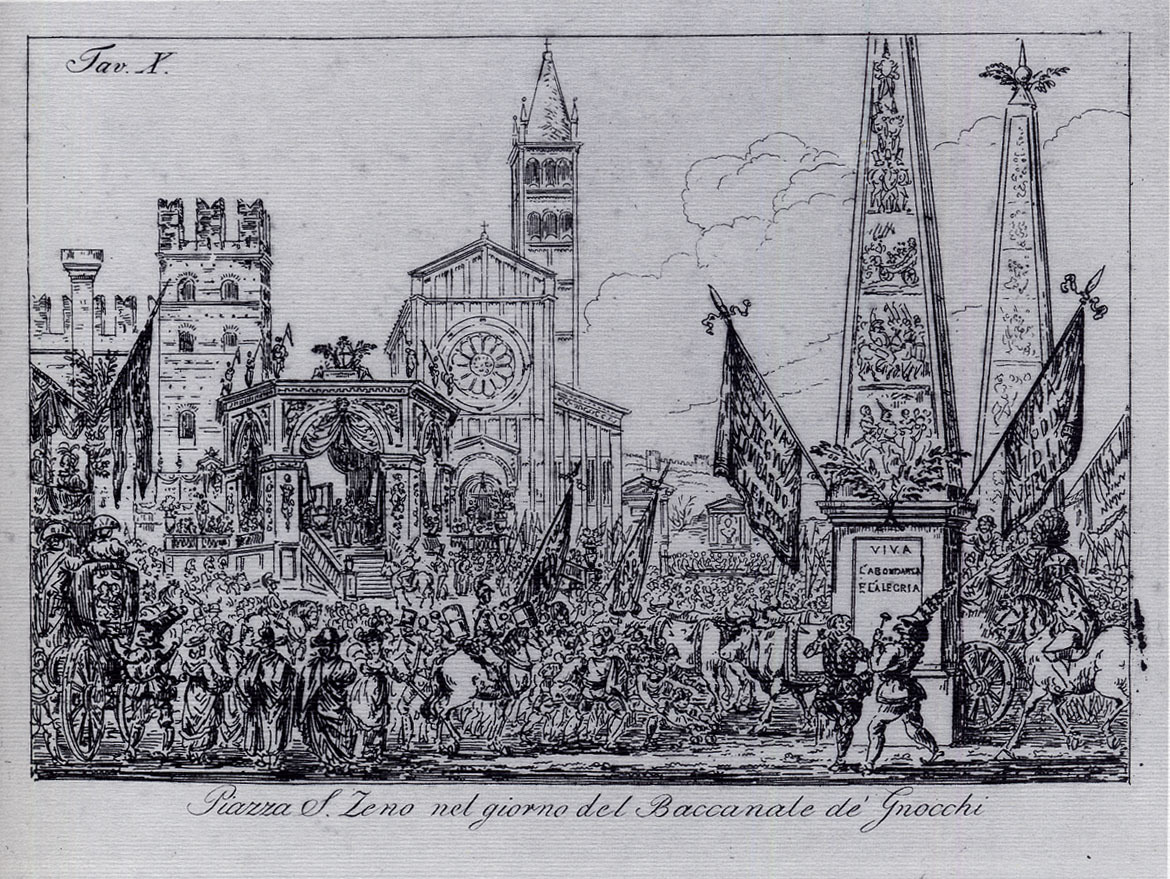
Ma cominciamo dall'inizio... le origini del Carnevale di Verona, il cui nome originale è Bacanàl del Gnoco, si perdono nella notte dei tempi, a cavallo tra il Tardo Medioevo ed il Rinascimento e può essere considerato, a ragione, il carnevale più antico d'Europa tant'è che quest'anno, nel giorno di pubblicazione della cache, si celebra la 489^ edizione.
Storici dell'Umanesimo ammettono che non è fuori luogo trovare le origini del Carnevale Veronese nelle antiche corse del Palio agli inizi del XIII secolo, magistralmente evocate nel canto XV° dell'Inferno della Divina Commedia:
"Poi si rivolse, e parve di coloro
che corrono a Verona il drappo verde
per la campagna; e parve di costoro
quelli che vince, non colui che perde.”
Nella Istoria Veronese scritta da Girolamo Dalla Corte si narra che, a causa delle ripetute e devastanti inondazioni dell'Adige tra il 1520 ed il 1531 e le incursioni dei Lanzichenecchi di Carlo V che combattevano contro Francesco I in Lombardia, la città di Verona venne provata da una carestia senza precedenti, di quelle con la gente che moriva di fame ed i poveri che piangevano e pregavano... sì perchè “quelli”, i poveri, nelle carestie sono sempre stati i primi a rimetterci la pelle; date le circostanze e la precarietà nel reperire le materie prime, i fornai di allora chiamati pistori, avevano cresciuto il loro calmiere per la produzione del pane ed essendoci scarsità di denaro per l'acquisto da parte della popolazione, venne quindi meno l'interesse a produrlo, con i fornai che decisero addirittura di non vendere nemmeno quello già pronto, attirandosi conseguentemente l'ira popolare perchè ritenuti colpevoli di lucrare sulla miseria della gente.
Il 18 Giugno 1531 il popolo insorse nel rione di San Zeno assaltando i forni ed accaparrandosi pane e grano; la rivolta generale fu scongiurata grazie all'intervento di alcuni cittadini che, a proprie spese, decisero di rifocillare gli abitanti più poveri del quartiere e tra di loro la tradizione racconta ci fosse il medico Tommaso Da Vico, “istruttore e restauratore del Baccanale del Gnocco, avendo di sua volontà distribuito ai sanzenati pane, vino, burro, uova, formaggio e vino”... impastando farina, acqua e burro nacque lo gnocco, o macarone di Verona.
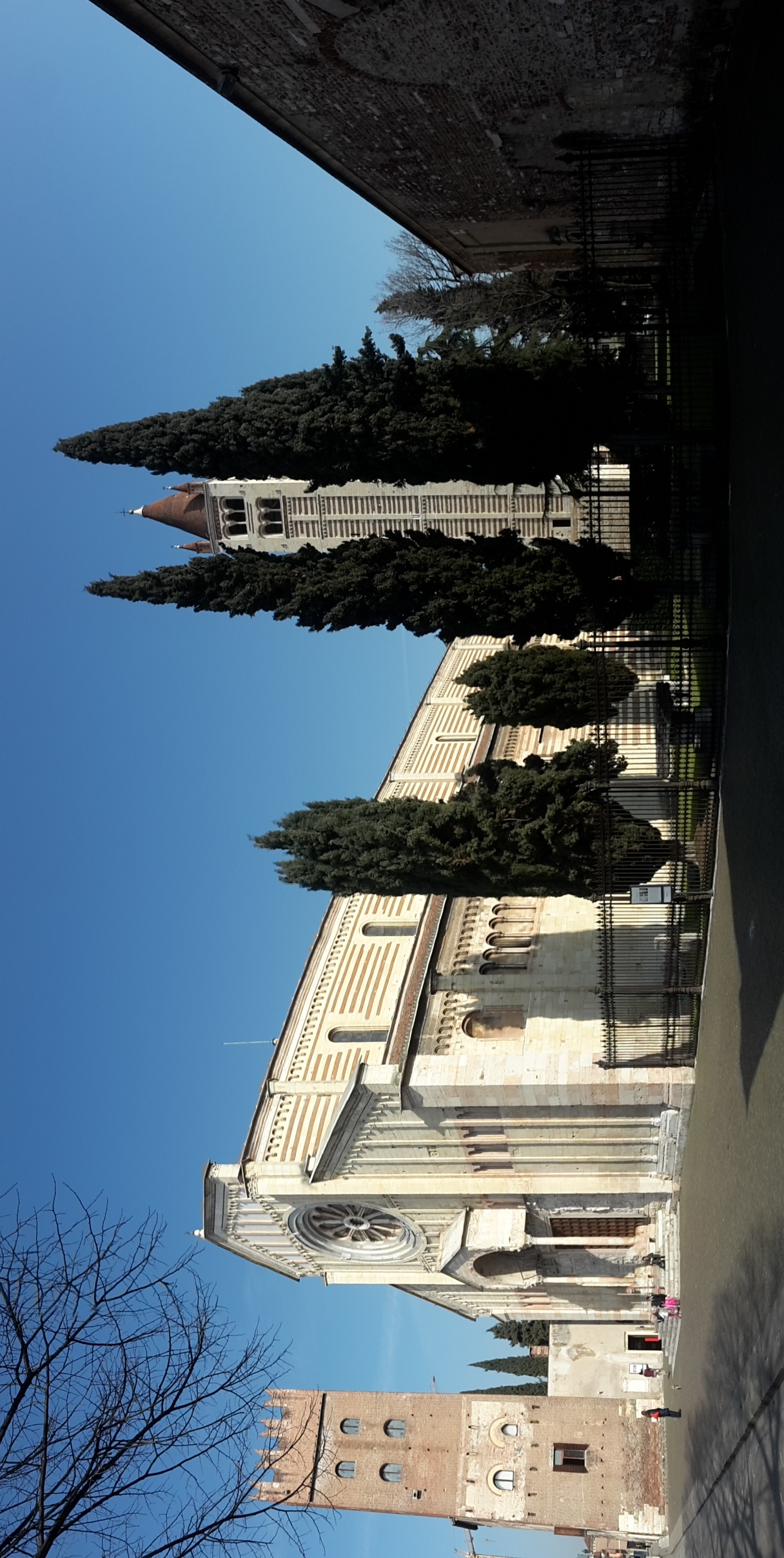
Ancora oggi in Piazza San Zeno, nel giardino a prato tra la basilica e la chiesa di San Procolo si trova il tavolo in pietra al quale venivano invitati i poveri nel Venerdì precedente l'inizio della Quaresima, detto “Venerdì Consolar”, ovvero consolatore, oggi “Venerdì Gnocolar”, sotto lo sguardo soddisfatto del mecenate che, proprio li di fronte sul fianco sinistro della chiesa di San Procolo, ha il proprio busto sepolcrale.
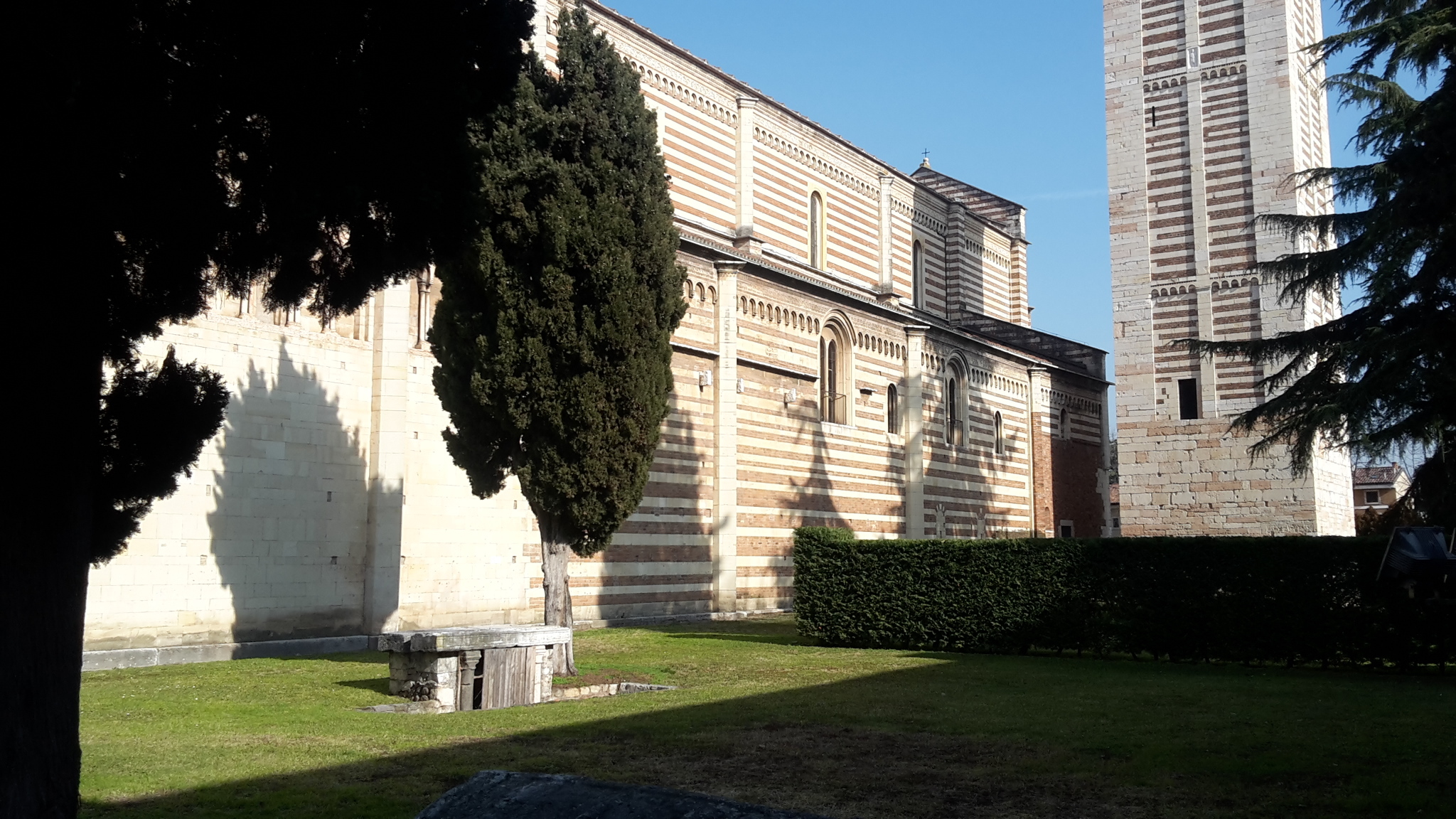
Si narra che, proprio al cosiddetto “Tavolo dei Pitochi”, cioè i più poveri tra i poveri, furono distribuiti i primi gnocchi nel 1531 e la tradizione vuole che Tommaso Da Vico lasciasse per testamento un legato affinché la distribuzione dei generi alimentari venisse fatta tutti gli anni al popolo di San Zeno nel giorno di Venerdì Grasso.
Gli storici hanno trovato molta soddisfazione a rovistare nelle vecchie carte per riuscire a trovare il documento e il testamento esiste! Si trova presso la sezione di Verona degli Archivi di Stato, porta il n. 128, dettato il 13 Maggio 1531 presso il notaio Bonifaccio di Sebastiano Dalla Mano, composto di tre pagine con scrittura minuta, fitta, quasi illeggibile; in esso “Il Dott. Tommaso Da Vico fu Bartolomeo degente a letto, ma sano di mente, dispone di essere sepolto vicino alla chiesa di San Zeno, adiacente al grande tavolo di pietra, dove banchettavano i poveri nel giorno di Venerdì Gnocolar”.
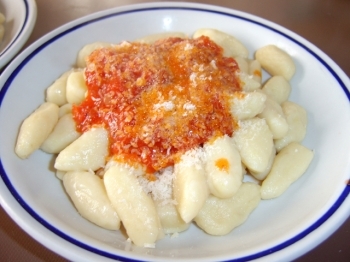
Tradizionalmente eletto fra gli abitanti del rione di San Zeno, da alcuni anni qualsiasi cittadino veronese può candidarsi alla carica di Papà del Gnoco e durante la Domenica di elezione chiunque può partecipare alla votazione, ottenendo come ricompensa un piatto di gnocchi al pomodoro; un voto in più è già sufficiente, ma conquistarlo non è facile!
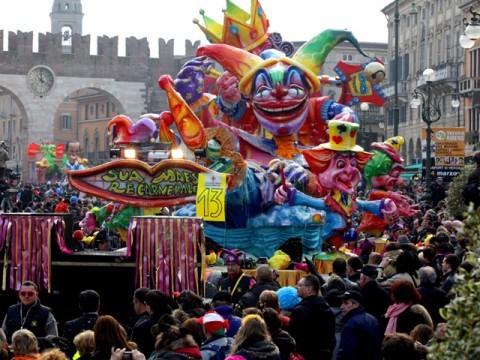
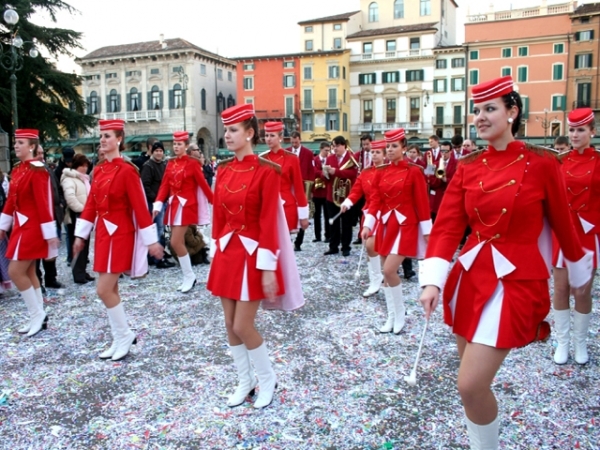
La grandiosa sfilata di carri allegorici e di figuranti inizia solitamente in Corso Porta Nuova e, snodandosi attraverso le principali strade e piazze del centro storico, si conclude naturalmente in Piazza San Zeno, con la partecipazione divertita e spensierata di oltre centomila spettatori di ogni età.
La cache
ATTENZIONE
Questa è una Mistery e pertanto la cache fisica non si trova alle coordinate iniziali, ma comunque entro un raggio di 500 metri.
NON pubblicare immagini spoiler di GZ final!
Log privi di firma sul logbook saranno cancellati senza alcun ulteriore avviso!
Il giorno di Venerdì Gnocolar, durante la sfilata pomeridiana dei carri allegorici, il ritrovamento potrebbe assumere difficoltà 5 per la fitta presenza di babbani.
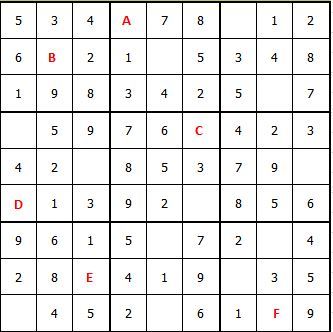
Per trovare le coordinate finali è necessario risolvere il seguente sudoku che, come uno scherzo di Carnevale, fornirà però le coordinate fasulle N 45° 26.ABC – E 10° 58.DEF, le quali dovranno essere corrette cercando nei pressi delle coordinate iniziali i seguenti dati ed eseguire i successivi calcoli:
Stage 1 - Presso l'ingresso principale alla basilica sono posti due leoni scolpiti nel marmo; quanti riccioli conta la criniera del leone di sinistra? = H
Stage 2 - La recinzione tra la basilica e la chiesa di San Procolo è composta da una serie di barre verticali che culminano con una punta decorata da un motivo ondulato; quante sono queste punte? = J
Stage 3 - Qual'è il numero civico posto all'ingresso laterale, sul lato destro della chiesa di San Procolo? = K
...ed ora, finalmente, le coordinate finali:
N 45° 26.ABC - J
E 10° 58.DEF + (H x K)

Buon Geocaching!

W or "Veronesi & Veronesità", a series of caches that, dedicated to people, places and traditions more or less known, aims to make them known or rediscover through a "Geo-itinerary" which, I still do not know where it will take me/us, but wants to be a declaration of Love for Verona, my city, its territory and the people who, each in their own way, have "celebrated" it with their own life even before their deeds, small or great that they are.
W3 - Papà del Gnoco e el Bacanàl
Born in the historic district of San Zeno, Papà del Gnoco is the main mask of the Carnival of Verona, the Sire around which great celebrations take place participated by the entire city, with a traditional mask coming from almost every neighborhood or district of the city.
The name derives from papus, that is to eat and as a king has a large golden fork with scepter with a potato gnocco; he is represented as an old man, ruddy and good-natured, with a long white beard, dressed in hazelnut brocade and red cape, with a Carroccio on his head, a pentagonal tuba that depicts the gazebo set up in Piazza San Zeno for the distribution of gnocchi during the famine, from which hang rattling rattles and satin tapes of different colors that symbolize the districts in which the medieval Verona was divided... in short, a sort of Santa Claus ante litteram, with a mule instead of the reindeer.
But let's start from the beginning ... the origins of the Verona Carnival, whose original name is Bacanàl del Gnoco, are lost in the mists of time, at the turn of the Late Middle Ages and the Renaissance and can be considered, rightly, the oldest carnival in Europe so much so that this year, on the day of publication of the cache, is celebrated the 489th edition.
Historians of Humanism admit that it is not wrong to find the origins of the Veronese Carnival in the ancient races of the Palio in the early thirteenth century, masterfully evoked in canto XV of the Inferno of the Divine Comedy:
"Then he turned, and it seemed to those
the green cloth is running in Verona
for the campaign; and they seemed to them
those who win, not the one who loses. "
In the Istoria Veronese written by Girolamo Dalla Corte it is said that, due to the repeated and devastating floods of the Adige between 1520 and 1531 and the incursions of the Lanzichenecchi of Charles V who fought against Francis I in Lombardy, the city of Verona was provoked by an unprecedented famine, those with people who were dying of hunger and the poor who cried and prayed... yes because "those", the poor, in the famines have always been the first to die; so it happened that due to those circumstances and the precariousness in finding the raw materials, the bakers then called pistori, had raised their prices for the production of bread and there is scarcity of money for the purchase by the population, so the interest in produce it, with the bakers who even decided not to sell even the ready one, consequently attracting the popular wrath because they were found guilty of making money on the misery of the people.
On June 18, 1531, the people rose up in the district of San Zeno, assaulting the ovens and grabbing bread and wheat; the general uprising was avoided thanks to the intervention of some citizens who, at their own expense, decided to restrain the poorest inhabitants of the neighborhood and among them the tradition tells us there was the doctor Tommaso Da Vico, "instructor and restorer of the Bacchanal of the Gnocco, having willingly distributed to the sanzenati bread, wine, butter, eggs, cheese and wine "... kneading flour, water and butter was born the gnocco, or macarone of Verona.
Even today in Piazza San Zeno, in the lawn garden between the basilica and the church of San Procolo is the stone table to which the poor were invited on the Friday before the beginning of Lent, called"Friday Consolar", or comforter, today "Friday Gnocolar", under the satisfied gaze of the patron who, right in front of it on the left side of the church of San Procolo, has his own sepulchral bust.
It is said that, precisely at the so-called "Table of Pitochi", that is the poorest of the poor, the first gnocchi were distributed in 1531 and tradition has it that Tommaso Da Vico left a legacy testament so that the distribution of food was made all the years to the people of San Zeno on the day of Fat Friday.
Historians have found much satisfaction in rummaging through old papers to be able to find the document and the will exists! It is located in the Verona section of the State Archives, bears n. 128, dictated May 13, 1531 at the notary Bonifaccio of Sebastiano Dalla Mano, composed of three pages with small, dense, almost illegible writing; in it "Dr. Tommaso Da Vico Bartholomew was a patient in bed, but sane, disposed to be buried near the church of San Zeno, adjacent to the large stone table, where the poor feast on Friday Gnocolar".
Traditionally elected among the inhabitants of the district of San Zeno, since some years any citizen of Verona can apply for the office of Papà del Gnoco and during the election Sunday anyone can participate in the vote, obtaining as a reward a plate of gnocchi with tomato sauce; one more vote is enough, but conquering it is not easy...
The grandiose parade of allegorical floats and figures usually begins in Corso Porta Nuova and, winding through the main streets and squares of the historic center, naturally ends in Piazza San Zeno, with the amused and carefree participation of over one hundred thousand spectators of all ages.
The cache
WARNINGS
This is a Mystery and therefore the physical cache is not at the initial coordinates, but still within a radius of 500 meters.
DO NOT post spoiler images of GZ final!
Logs without signature on the logbook will be deleted without any further notice!
On the day of Friday Gnocolar, during the afternoon parade of allegorical floats, the find could be difficult 5 rated due to the dense presence of Muggles.
To find the final coordinates it is necessary to solve the following sudoku which, as a Carnival joke, will provide however the phony coordinates N 45° 26.ABC - E 10° 58.DEF, which will have to be corrected by looking for the initial coordinates the following data and perform the following calculations:
Stage 1 - At the main entrance to the basilica there are two lions carved in marble; how many curls does the left lion's mane count? = H
Stage 2 - The fence between the basilica and the church of San Procolo is composed of a series of vertical bars that culminate with a point decorated with a wavy pattern; how many are these tips? = J
Stage 3 - What is the street number at the side entrance, on the right side of the church of San Procolo? = K
... and now, finally, the final coordinates:
N 45° 26. ABC - J
E 10° 58.DEF + (H x K)
Happy Geocaching!