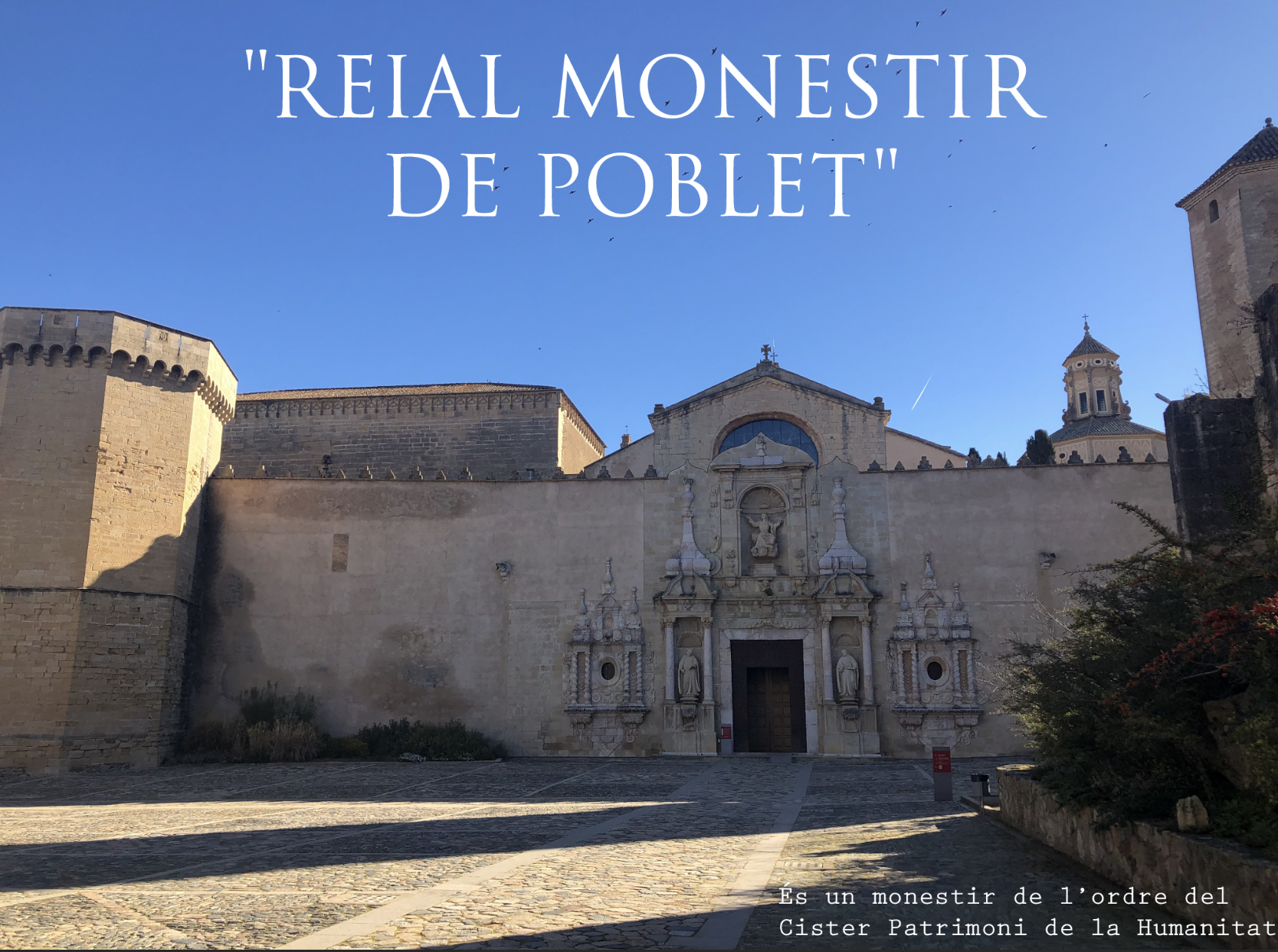
L'èxit de l'aventura cistercenca explica Poblet. Cister és fundat el 1098, i Poblet el 1150, quan encara no han passat cent anys. Els segles XII i XIII són fonamentals en la història del nostre monestir. De fet, ells ens deixen enllestides les principals dependències de la casa: un espai, bell i funcional alhora, per a la recerca de Déu. Aquest espai ens ha arribat gairebé intacte en la seva totalitat. El XIV és encara un segle de grans realitzacions, i també el de la davallada, lenta, però indefectible. Cal dir que la documentació coneguda sobre la vida privada de la comunitat de Poblet no reflecteix al llarg dels segles desviacions notables de l'ideal inicial dels fundadors de Cister i, al seu torn, dels fundadors de Poblet, provinents de Fontfreda. De fet aquesta, l'autèntica història de Poblet, encara no ha estat escrita, ni, segurament, ho serà mai. La dels monjos que, dia a dia, tot enfilant salms, asseguraren el creixement i la continuïtat de la casa, la domus Populeti. Podríem explicar així la successió dels dies i dels anys que completen els segles XV, XVI, XVII i XVIII: Poblet, la institució, la comunitat, els seus monjos, cerquen de donar un nou rostre, formes diferents a allò que viuen en la intimitat del propi cor. No sempre, però, ho podran fer amb la transparència ni amb el vigor del primer ideal. El segle XIX, amb una societat que experimenta canvis profunds, plantarà, amb l'abandó i la progressiva espoliació del monestir desert, la llavor d'un futur recobrament. Un recobrament que farà possible, amb el retorn dels monjos l'any 1940, el retorn també a unes formes de vida més pures, més autèntiques, més profundament benedictines i, per tant, també més evangèliques. Els monjos d'ara, hereus dels antics, mai no ho agrairem prou, perquè l'autenticitat és potser un dels valors més importants que podem i hem d'oferir als homes i dones del nostre temps.
The success of the Cistercian adventure is what actually accounts for Poblet. Cister was founded in 1098, and Poblet in 1151, less than a hundred years later. Both the 12th and 13th centuries are essential to the history of our monastery. Most rooms and buildings were, in fact, finished during those centuries : a space, both beautiful and functional, whereby to seek God. Such a space has come down to us virtually intact. The 14th century was a century of great achievements, but also that of the decline, slow but sure. We must point out that the known records of the time, and which refer to the private life of the community of Poblet, don’t show any noticeable deviations from the original ideals of the founders of Cister and, likewise, the founders of Poblet, who originated from Fontfroide. In fact, this, which is the true history of Poblet, has never been written and probably never will. The history of the monks who, day after day, made the growth and continuity of the house possible, the domus Populeti. Thus we could explain the succession of the days and years over the 15th, 16th, 17th and 18th centuries: Poblet, the institution, the community, its monks, all hasten to find a new visage, new features, forms different from what they intimately live in their hearts. Not always, though, will they succeed in doing so with the transparency and vigour of the first ideal. The 19th century will sow, in a society going through radical changes, the seed of a future recovery, in spite of the abandonment and subsequent plunder of the monastery. A recovery that, along with the monks in 1940, brought back that old way of life, purer, truer, more deeply Benedictine and, therefore, more evangelical. Today the monks, the ancestral ones’ heirs, are perpetually grateful for this legacy, because authenticity is possibly one of the most important values that we can and must offer the men and women of our time.
«Situada a Catalunya, aquesta abadia cistercenca, una de les més grans i més completes del món, envolta la seva església, construïda al segle XII. Unida a una residència reial fortificada, guardiana del panteó dels reis de Catalunya i Aragó, impressiona per la seva majestuosa severitat.»
«This Cistercian abbey in Catalonia is one of the largest in Spain. At its centre is a 12th-century church. The austere, majestic monastery, which has a fortified royal residence and contains the pantheon of the kings of Catalonia and Aragon, is an impressive sight.»