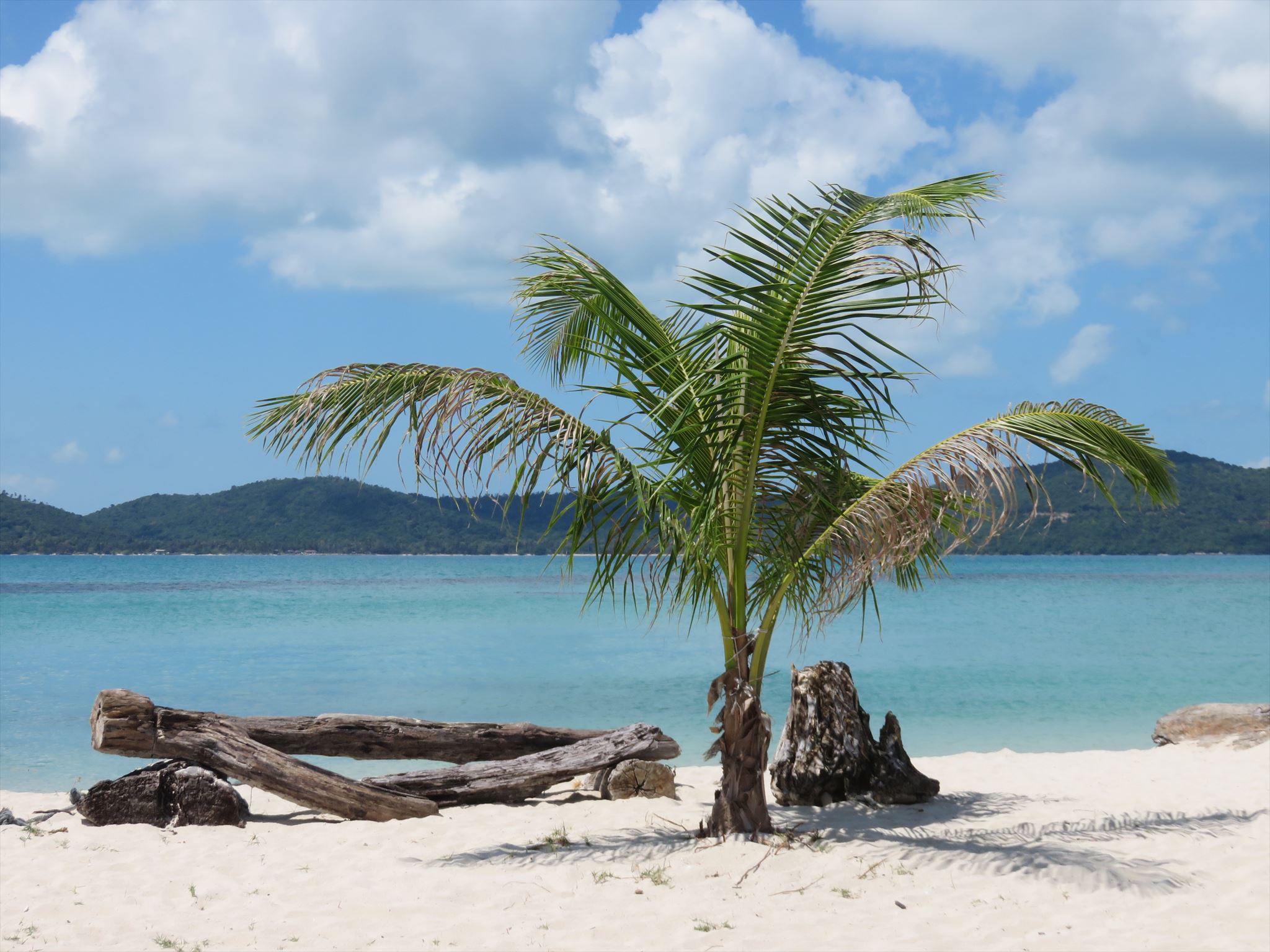
What is sand ?
Sand, in latin sabulum, is made of loose sedimentary rock, its grains' dimension must be between 0,063 and 2 mm (If it is over 2mm, it's called gravel), and it comes from the disintegration of other rocks.
For geologists, the notion of sand covers two aspects : a granulometric aspect, referring to the size of the particles, and a mineralogical aspect, referring to the nature of the grains.
Sand is most often the product of alteration of granite (arenization), due to the decomposition of granite through erosion. Thus, the most frequent of its components is quartz, the least alterable constituent of granite. Sand may consist of other elements, such as volcanic rocks, fossil or non-fossil shell remains (faluns)...
Sand can also be formed by the action of rivers, and waves on the beaches, it represents the finest elements, gravels being larger than sand, but inferior to pebbles. Beaches and dunes are the most visible sand formations.
Source : Geowiki (http://www.geowiki.fr/index.php?title=Sable)
Corallian Limestone
Corallian limestone is a coralliferous sedimentary rock of oceanic origins. It comes from accumulated concretions of corals, sea sponges and other marine organisms along the coast and in shallow seas.
The massifs of coral limestone are today mainly produced by hard corals. These organisms have the faculty of producing limestone at their base. Over the (many) years, they give rise to reefs high from a few tens to several hundred meters. Coral limestone can also be found in the form of pebbles (chalk), due to the effects of marine erosion or earthquakes. Often, these stones can be traced to the coral from which they originate.
Coral sand
Coral sand is a collection of sand of particles originating in tropical and sub-tropical marine environments from bioerosion of limestone skeletal material of marine organisms. One example of this process is that of parrot fishes which bite off pieces of coral, digest the living tissue, and excrete the inorganic component as silt and sand. However, the term "coral" in coral sand is used loosely in this sense to mean limestone of recent biological origin; corals are not the dominant contributors of sand particles to most such deposits. Rather, remnant skeletal fragments of foraminifera, calcareous algae, molluscs, and crustaceans can predominate. Because it is composed of limestone, coral sand is acid-soluble.
https://en.wikipedia.org/wiki/Coral_sand
Questions :
1- What is the size of the "grains" that make up the soil at your feet? What is the name of this type of grain?
2- According to the following color chart, in your opinion, what is the main shade of the sand of Koh Matsum ?

3- Name/Describe/Take a picture of three different types of coral snippets found in the sand.
You can find some help here : https://www.leisurepro.com/blog/explore-the-blue/coral-identification-types-of-coral-part-1/
It may also help to go snorkelling and have a look at the actual corals that can be found in the sea.
4- What other elements compose the sand of Koh Matsum, apart from coral snippets ?
Log this cache "Found it" and send me your answers via geocaching.com (Message Center), I'll get in touch if there is a problem.
A picture of your device (GPS or smartphone) near the coordinates added to your log would be great.
How to get to the coordinates :
It is necessary to take a boat to Koh Matsum. We advise you to consider a day trip or a half day trip from Thong Krut and enjoy snorkelling.
Qu'est ce que le sable ?
Le sable, du latin sabulum, (en anglais sand) est une roche sédimentaire meuble, constituée de grains (grains de sable), dont la dimension est comprise entre 0,063 et 2 mm (plus de 2mm = gravier), provenant de la désagrégation d'autres roches.
Pour les géologues, la notion de sable recouvre deux aspects : un aspects granulométrique, faisant référence à la taille des particules, et un aspect minéralogique, faisant référence à la nature des grains.
Le sable est le plus souvent le produit de l'altération du granite (arénisation), du fait de la décomposition du granite par l'érosion. Ainsi, le plus fréquent de ses composants est-il le quartz, le constituant le moins altérable du granite. Le sable peut être constitué d'autres éléments, tels des roches volcaniques, des restes coquillés fossiles ou non (faluns)...
Le sable peut se former aussi par l'action des fleuves et rivières, et des vagues sur les plages, il représente les éléments les plus fins, les graviers étant de taille supérieure aux sables, mais inférieure aux galets. Les plages et les dunes sont les formations de sables les plus visibles.
Source : Geowiki (http://www.geowiki.fr/index.php?title=Sable)
Calcaire corallien
Le calcaire corallien est une roche sédimentaire calcaire bioconstruite d'origine océanique. Il naît des concrétions accumulées de coraux, d’éponges de mer et d'autres organismes marins le long des côtes et dans les mers peu profondes.
Les massifs de calcaire corallien sont aujourd'hui surtout produits par les coraux durs. Ces organismes ont la faculté de secréter du calcaire à leur base. Au fil des millénaires, ils donnent naissance à des récifs hauts de quelques dizaines à plusieurs centaines de mètres. Le calcaire corallien, par action de l’érosion marine ou des séismes, se retrouve aussi sous forme de cailloux (de craie) : souvent, on peut reconnaître sur ces pierres les traces des coraux dont elles sont issues.
Sable coralien
Le sable corallien est une collection de sable de particules provenant d’environnements marins tropicaux et subtropicaux issus de la bioérosion de la matière squelettique calcaire d’organismes marins. Un exemple de ce processus est celui des poissons perroquets qui mordent des morceaux de corail, digèrent le tissu vivant et excrètent le composant inorganique sous forme de limon et de sable. Toutefois, le terme "corail" dans le sable corallien est utilisé au sens large pour désigner le calcaire d’origine biologique récente; les coraux ne sont pas les principaux contributeurs de particules de sable à la plupart de ces dépôts. Les fragments squelettiques restants de foraminifères, d’algues calcaires, de mollusques et de crustacés peuvent prédominer. Composé de calcaire, le sable de corail est soluble dans l’acide.
Questions :
1- Quelle est la taille des "grains" composant le sol à vos pieds ? Comment s'appelle ce type de grains ?
2- D'après le nuancier suivant, à votre avis, quelle est la nuance principale du sable de Koh Matsum ?
3- Nommez/Décrivez/Photographiez trois sortes de coraux inclus dans le sable.
Vous pourrez trouver de l'aide ici : https://www.leisurepro.com/blog/explore-the-blue/coral-identification-types-of-coral-part-1/
Ca pourrait aussi vous aider de faire un peu de snorkelling et de jeter un oeil aux coraux existants dans la mer.
4- Quels autres éléments composent le sable de Koh Matsum, en dehors des fragments de corail ?
Loguez cette cache "Found it" et envoyez-moi vos propositions de réponses via la messagerie geocaching.com (Message Center), et je vous contacterai en cas de problème.
Une photo de votre appareil (GPS ou smartphone) à proximité des coordonnées ajoutée à votre log serait appréciée.
Comment se rendre aux coordonnées :
Il est nécessaire de prendre un bateau pour se rendre à Koh Matsum. Nous vous conseillons d'envisager une sortie à la journée ou à la demie journée depuis Thong Krut et d'en profiter pour faire du snorkelling.
ทรายคืออะไร
ทรายในภาษาลาบูนซาบูลุมทำจากหินตะกอนหลวมขนาดของเม็ดจะต้องอยู่ระหว่าง 0,063 ถึง 2 มม. (ถ้ามากกว่า 2 มม. เรียกว่ากรวด) และมาจากการแตกตัวของหินอื่น
สำหรับนักธรณีวิทยาความคิดของทรายครอบคลุมสองด้าน: ด้าน granulometric หมายถึงขนาดของอนุภาคและด้านแร่วิทยาหมายถึงลักษณะของเมล็ด
ทรายส่วนใหญ่เป็นผลมาจากการเปลี่ยนแปลงของหินแกรนิต (arenization) เนื่องจากการสลายตัวของหินแกรนิตผ่านการกัดกร่อน ดังนั้นส่วนประกอบที่พบบ่อยที่สุดคือควอตซ์ซึ่งเป็นองค์ประกอบที่เปลี่ยนแปลงได้น้อยที่สุดของหินแกรนิต ทรายอาจประกอบด้วยองค์ประกอบอื่น ๆ เช่นหินภูเขาไฟซากดึกดำบรรพ์หรือเปลือกหอยที่ไม่ใช่ฟอสซิล (faluns) ...
ทรายยังสามารถเกิดขึ้นได้จากการกระทำของแม่น้ำและคลื่นบนชายหาดมันแสดงให้เห็นถึงองค์ประกอบที่ดีที่สุดกรวดที่มีขนาดใหญ่กว่าทราย แต่ด้อยกว่าก้อนกรวด ชายหาดและเนินทรายเป็นรูปแบบของทรายที่มองเห็นได้มากที่สุด
ที่มา: Geowiki (http://www.geowiki.fr/index.php?title=Sable)
หินปูน Corallian
หินปูน Corallian เป็นหินตะกอนของต้นกำเนิดมหาสมุทร มันมาจาก concretions สะสมของปะการังฟองน้ำทะเลและสิ่งมีชีวิตทางทะเลอื่น ๆ ตามแนวชายฝั่งและในทะเลตื้น
วันนี้หินปูนปะการังเป็นหินที่เกิดจากปะการังแข็ง สิ่งมีชีวิตเหล่านี้มีคณะผลิตหินปูนที่ฐานของมัน ในช่วงหลายปีที่ผ่านมาพวกเขาก่อให้เกิดแนวปะการังที่สูงจากไม่กี่สิบถึงหลายร้อยเมตร หินปูนปะการังยังสามารถพบได้ในรูปแบบของก้อนกรวด (ชอล์ก) เนื่องจากผลกระทบจากการกัดเซาะของทะเลหรือแผ่นดินไหว บ่อยครั้งที่หินเหล่านี้สามารถสืบย้อนไปถึงปะการังที่เกิดขึ้นได้
หาดทรายปะการัง
คอรัลแซนด์เป็นคอลเลคชั่นทรายของอนุภาคที่เกิดขึ้นในสภาพแวดล้อมทางทะเลเขตร้อนและกึ่งร้อนชื้นจากการย่อยสลายทางชีวภาพของวัสดุหินปูนของสิ่งมีชีวิตในทะเล ตัวอย่างหนึ่งของกระบวนการนี้คือปลานกแก้วซึ่งกัดปะการังชิ้นส่วนย่อยเนื้อเยื่อที่มีชีวิตและขับถ่ายองค์ประกอบอนินทรีย์เช่นตะกอนและทราย อย่างไรก็ตามคำว่า "ปะการัง" ในทรายปะการังถูกนำมาใช้อย่างหลวม ๆ ในแง่นี้เพื่อหมายถึงหินปูนของแหล่งกำเนิดทางชีวภาพล่าสุด ปะการังไม่ได้เป็นผู้สนับสนุนหลักของอนุภาคทรายในการสะสมสิ่งเหล่านี้ ค่อนข้างเศษซากโครงกระดูกของ foraminifera, สาหร่ายหินปูน, หอย, และครัสเตเชียสามารถครอบงำ
เนื่องจากประกอบด้วยหินปูนทรายปะการังจึงละลายในกรด
https://en.wikipedia.org/wiki/Coral_sand
คำถาม:
1- ขนาดของ "ธัญพืช" ที่ประกอบขึ้นเป็นดินที่เท้าของคุณคืออะไร? ข้าวชนิดนี้ชื่ออะไร
2- ตามตารางสีต่อไปนี้ในความคิดของคุณร่มเงาหลักของเกาะมัตสุมคืออะไร?
3- ชื่อ / อธิบาย / ถ่ายรูปตัวอย่างของปะการังสามชนิดที่พบในทราย
คุณสามารถค้นหาความช่วยเหลือได้ที่นี่: https://www.leisurepro.com/blog/explore-the-blue/coral-identification-types-of-coral-part-1/
นอกจากนี้ยังอาจช่วยในการดำน้ำตื้นและดูปะการังที่แท้จริงที่สามารถพบได้ในทะเล
4- องค์ประกอบอื่น ๆ ประกอบด้วยทรายของเกาะมัตสุมนอกเหนือจากตัวอย่างปะการัง?
บันทึกแคชนี้ "พบว่า" และส่งคำตอบของคุณผ่านทาง geocaching.com (ศูนย์ข้อความ) ฉันจะได้รับการติดต่อถ้ามีปัญหา
วิธีรับพิกัด:
จำเป็นต้องนั่งเรือไปเกาะมัตสุม เราขอแนะนำให้คุณพิจารณาทริปหนึ่งวันหรือครึ่งวันจากท้องกรูดและสนุกกับการดำน้ำตื้น